Loading
Here’s what most retailers regret after their first bulk order goes wrong: they picked a supplier based on price and a nice-looking sample, then discovered the colors faded after three washes or half the sizes ran small. If you’re stocking baseball jerseys for a dealer network or a retail season, that mistake costs you returns, angry coaches, and a shot at repeat business. The fix isn’t complicated, but it does require checking the right things before you sign a purchase order — not after the container arrives.
This guide walks through what actually matters when sourcing baseball jerseys for team retail, including the specific checks that separate a reliable factory from one that will leave you holding defective stock.
Team retailers usually buy in batches of 50 to 1,000+ units per style, spread across multiple sizes and sometimes multiple team logos. That complexity creates more failure points than a simple apparel reorder. The most common problems we see reported by retailers switching suppliers:
None of these are random bad luck. They’re symptoms of a supplier that hasn’t standardized its printing process, color-locking method, or size grading. That’s exactly what a vetting checklist is designed to catch early.
Before committing to a production run of baseball jerseys, walk through this checklist with any candidate factory. Each item exists because skipping it has a specific, predictable downside.
| Check Item | Why It Matters | What Happens If You Skip It |
|---|---|---|
| Sublimation printing capability (not screen print or heat transfer) | Dye-sublimation infuses color into the polyester fiber itself, so it doesn’t crack or peel like transfers | Prints crack, fade, or peel within a season, leading to complaint calls from every team you supplied |
| Fabric swatches with GSM and stretch specs | 140-160 gsm polyester with 4-way stretch keeps players cool and mobile; anything lighter feels flimsy, anything heavier traps heat | You receive jerseys that feel wrong in hand or perform poorly in warm-weather games |
| Verified size grading chart with actual measurements | A chart with real chest, length, and sleeve measurements (not just S/M/L labels) lets you match sizing to your buyer base | Returns pile up because “medium” varies between factories and even between batches from the same factory |
| Production proof — photos or video from an active order | Confirms the factory has real capacity and isn’t outsourcing to an unknown third party at the last minute | Orders get subcontracted quietly, quality drops, and delivery dates slip without explanation |
| Written defect and reprint policy | A supplier confident in its process will put a colorfastness or reprint guarantee in writing | Any printing error or wrong-size shipment becomes a cost you absorb alone |
As a practical benchmark, our factory backs every order with a 1-year colorfastness guarantee and free reprints for printing defects or size errors — the kind of commitment worth asking any supplier to match in writing, not just verbally.
Pricing on baseball jerseys depends heavily on order volume, print complexity, and fabric weight — there’s no flat per-unit rate that applies across the board. That said, retailers should expect the following general pattern when comparing quotes:
| Order Size | Typical Lead Time | Pricing Behavior |
|---|---|---|
| Under 50 units | 7-10 days standard | Higher per-unit cost, but accessible with no MOQ requirement |
| 50-300 units | 7-10 days standard, rush options available | Per-unit cost drops as print setup and dye runs get spread across more pieces |
| 300-1,000+ units | Standard 7-10 days; factories with 1,000+ daily output can hold this even at volume | Best per-unit pricing tier, but requires confirmed sizing before cutting fabric |
A factory with no minimum order quantity is worth prioritizing if you’re testing a new team logo or a small regional club before committing to a full seasonal run. That flexibility matters for retailers who don’t want thousands of units sitting in a warehouse if a design doesn’t sell.
Consider a US high school basketball league that needed uniforms for multiple teams under tight scheduling — a scenario close to a real case where 500+ sublimated jerseys were supplied on a standard 7-10 day production cycle. The process looked like this:
The same sequence applies whether you’re outfitting one team or, as in another case, producing full uniforms for an Australian soccer club’s three separate squads. The volume changes; the checkpoints don’t.
Even retailers who vetted a supplier well the first time sometimes cut corners on repeat orders. Watch for these patterns:
Retailers supplying training gear, like the sportswear delivered to retailers in New Zealand, or event-specific runs, like the 1,000 marathon jerseys produced for a European race, all follow the same discipline: confirm the proof, confirm the chart, then produce.
Before finalizing your next order of baseball jerseys, run through this short list:
If a supplier can’t answer these clearly, that’s a signal to keep comparing options rather than committing a full season’s budget upfront.
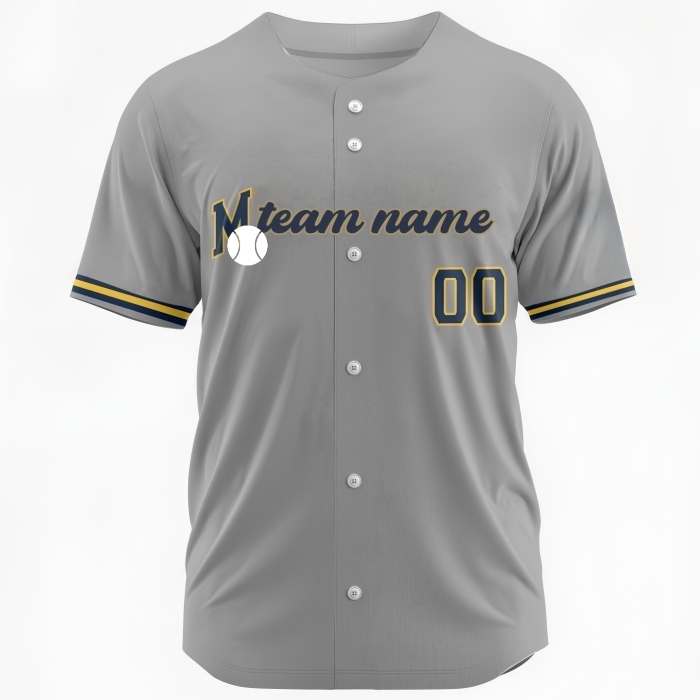
Two factors that don’t show up in a sample photo but affect long-term reliability are location and certification. A factory based in Guiping, Guangxi — a town with a full local industrial chain for jersey manufacturing — typically has faster access to fabric mills and printing consumables, which supports the 7-10 day standard delivery window without last-minute substitutions. Certification matters too: an ISO 9001 quality management system and ISO 14001 environmental management certification indicate the factory follows documented process controls rather than ad-hoc production, which is part of why locked-color inks and verified size charts can be maintained consistently order after order.
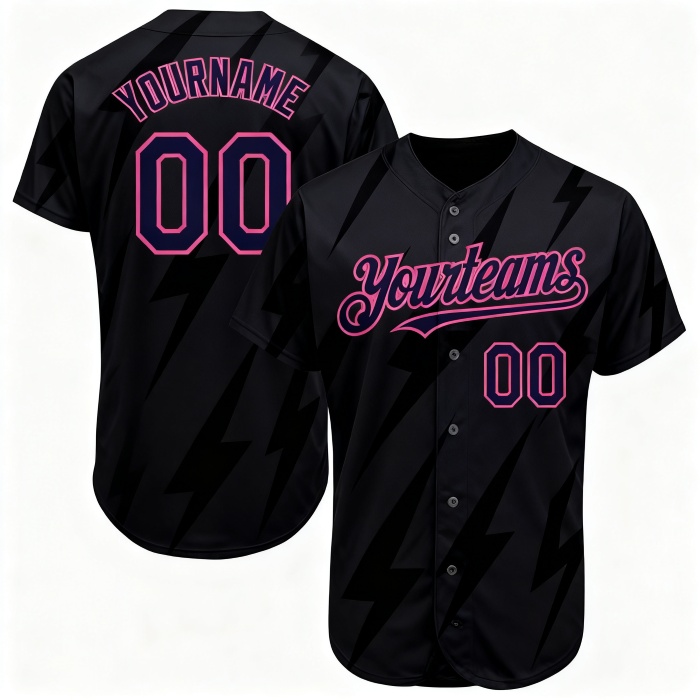
None of this guarantees a perfect order every time — even well-run factories deal with occasional shipping delays outside their control. But a supplier with documented certifications, a real size chart, and a written defect policy gives you something to hold them to, which is more than a low quote on its own ever will.
If you’re comparing suppliers for your next batch of baseball jerseys, start with a fabric swatch and a size chart, not a full purchase order. Reach out for a quote or a sample run, and confirm the print, fit, and colorfastness match what your teams expect before scaling up.






 WhatsApp
 Email
 +8618978569271