Loading
The most common mistake I see buyers make is budgeting based on the factory’s unit price. That attractive FOB (Free on Board) price on a quote is not what a custom Half Zip will actually cost your business. Hidden expenses in freight, customs, and duties can turn a profitable order into a loss. Before you place a bulk order, you must understand your total landed cost—the final price you pay to get that product into your warehouse.
Miscalculating this figure is the single biggest sourcing risk you can take. It directly impacts your retail pricing, your profit margins, and your business’s financial health. In this guide, I’ll share a practical, factory-floor perspective on how to break down every cost component, so you can build a reliable budget and source with confidence. We’ll move beyond the simple unit price to uncover the true cost of your investment.
When you receive a price quote from a manufacturer, it typically covers the core production of the garment. Understanding these components helps you compare apples to apples between suppliers and identify where the value lies. A lower price is not always better if it means compromising on materials or quality control that costs you more later in replacements or lost sales.
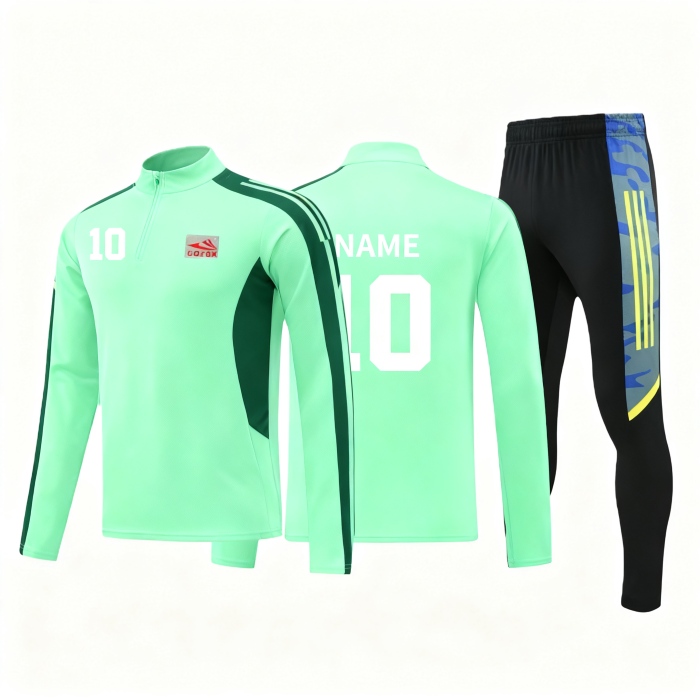
A standard ex-factory or FOB price for a custom pullover includes:
What is often not included is just as important: international shipping, insurance, import duties, and customs clearance fees. The price you are quoted is for the product ready to leave our factory in Guiping; the rest of the journey is what we need to calculate next.
Once your order is produced, the next major expense is getting it from the factory to your warehouse. Freight is a variable cost that depends heavily on volume, weight, and speed. Choosing the wrong method can either delay your launch or erase your profit margin.
Here’s a comparison of the two primary methods for shipping apparel:
| Factor | Air Freight | Sea Freight |
|---|---|---|
| Speed | Fast (5-10 days) | Slow (30-50 days) |
| Cost | High (priced by weight/volume) | Low (priced by container space) |
| Best For | Small, high-value orders, rush jobs, or samples. Our no MOQ policy makes this viable for small clubs. | Large, bulk orders where cost per unit is the priority. Ideal for orders like the 1000+ event jerseys we produced for a European marathon. |
| Risk | Lower risk of damage or delay due to shorter transit. | Higher risk of port congestion, customs delays, and weather disruptions. |
To calculate this cost, you need two things from your supplier: the total CBM (cubic meters) and the total gross weight of your shipment. With these figures, a freight forwarder can give you a precise quote. Remember to include costs for:
Our location in Guiping, Guangxi, provides access to a complete local industrial chain, which helps streamline the initial logistics of getting large orders, like the full uniform sets for an Australian soccer club, ready for international shipment.
Customs is often the most confusing part of calculating landed cost. These fees are non-negotiable and set by the government of the importing country. Guessing or using an outdated percentage will lead to a painful budget surprise.
Having shipped thousands of garments to clients like a US high school basketball league and sports retailers in New Zealand, we understand the importance of correct documentation. We provide a detailed commercial invoice and packing list to make the customs process as smooth as possible for your broker.
A single order’s landed cost is a snapshot. A smarter approach, especially for building a long-term apparel brand or outfitting a club year after year, is to model your costs over time. This helps you account for not just direct expenses but also for business risks and potential inefficiencies. Here’s a framework to separate your costs into categories for better long-term planning.
This model helps you see how a higher-quality supplier with guarantees can actually lower your total costs over five years by reducing risk provisions.
| Cost Component | Type | Notes & Long-Term Considerations |
|---|---|---|
| Garment Unit Cost | Confirmed | This is the price from our quote. For long-term budgeting, ask about potential price stability or material cost trends. |
| Customization Cost | Confirmed | At Hening, our dye-sublimation is included. Be wary of suppliers who add fees for extra colors or complex logos. |
| Freight & Insurance | Estimated | This is the most volatile cost. Rates can change weekly. Budget using current quotes but add a 10-15% buffer for fluctuations over time. |
| Duties & Taxes | Estimated | Rates are set by governments and can change. Verify the current HS code and duty rate for your country annually. |
| Brokerage & Port Fees | Estimated | Brokerage fees are stable, but port fees can change. Get a current fee schedule from your broker. |
| Return & Defect Risk | Risk Provision | What is the cost of receiving a wrong size or a faded print? Budget a percentage (e.g., 1-2%) for potential losses. Note: Our free reprint policy for any defect and 1-year colorfastness guarantee significantly reduce or eliminate this cost for you. |
| Warehousing/Storage | Risk Provision | If you order in bulk to save on unit cost, you must factor in the cost of storing that inventory before it sells. |
From my 10 years on the factory floor, I’ve seen buyers make the same few errors repeatedly. Avoiding them is simple with a bit of foresight.
Solution: Build a simple spreadsheet using the components above. Even with estimates, it will be far more accurate than relying on the unit price alone.
Solution: Check the fee structure of your payment method and add it as a line item in your cost calculation.
Solution: After summing all known and estimated costs, add a 5% contingency buffer to your final landed cost to cover these minor, unexpected expenses.
Solution: Partner with a supplier who offers guarantees. Our free reprint for sizing or printing defects means you aren’t paying for our mistakes. This is a critical part of managing your total cost. Whether it’s for Basketball Jerseys or casual wear, quality control is non-negotiable.
Calculating your total landed cost is not an academic exercise; it is a fundamental business practice for any successful importer. By breaking down every expense from the factory floor to your warehouse door, you protect your margins and build a sustainable sourcing strategy.
If you’re ready to get a clear, transparent quote for your next project, send our team your design specifications. We’ll provide a detailed price breakdown you can use to start building your own accurate landed cost calculation.






 WhatsApp
 Email
 +8618978569271