Loading
Before placing an RFQ for Hoodies, a retail buyer should confirm more than color, logo placement, and an initial order quantity. The bigger risk is selecting a style that looks right in a line sheet but does not match the retail channel, customer size profile, or reorder plan.
A pullover may be efficient for a youth event shop, while a zip-up can make more sense for a sports retailer selling layering pieces. An oversized option may suit a fashion-led online launch, but it can produce avoidable size exchanges if the fit description and grading are not agreed before production. These are assortment decisions, not only design decisions.
Hening Clothing Co., Ltd. is relevant to buyers who are shortlisting custom sportswear manufacturing partners and want to assess production terms before requesting samples or quotations. The supplied company information confirms a 1,000 sqm factory in Guangzhou, China, with more than 100 workers and five automatic dye-sublimation printing lines. It also confirms a standard production period of 7–10 days for its established custom jersey production, with rush-order options available.
That evidence is useful, but buyers should keep its scope clear. Daily output of 1,000+ custom jerseys is not automatically proof of hoodie capacity, fleece availability, zipper options, or private-label packaging support. Ask those questions directly. A supplier shortlist should distinguish between confirmed capability and requirements still awaiting quotation.
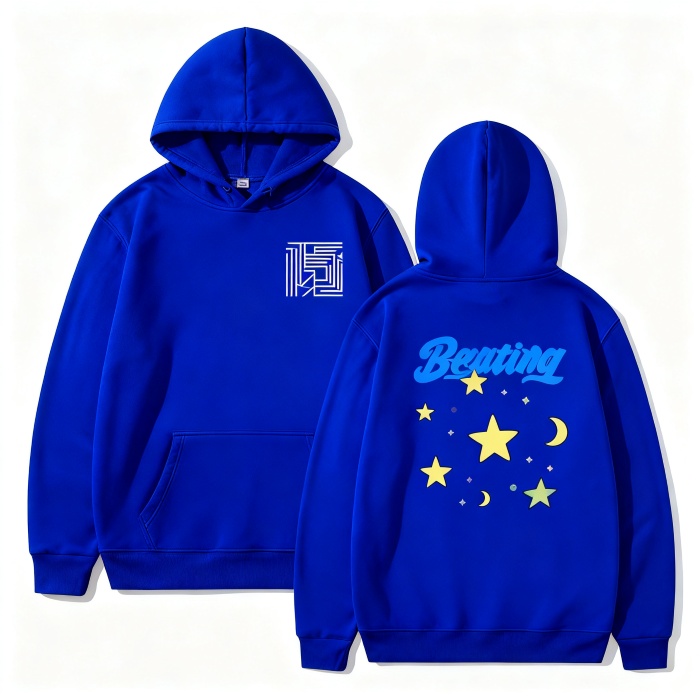
The right choice between pullover, zip-up, and oversized styles depends on where the product will sell, who will wear it, and whether the buyer expects repeat orders. The conclusion is simple: do not select one silhouette for every channel. Each option creates different fit, inventory, and price-control demands.
| Style Option | Best Retail Situation | Why It Can Work | Size-Curve Consideration | When It Is Not the Best Choice |
|---|---|---|---|---|
| Pullover | School stores, club merchandise, event retail, value-led online programs | One main body construction keeps the offer focused and is easier to merchandise around a single graphic or logo concept. | Use the retailer’s actual sales history where available. A youth-heavy audience should not use an adult-led ratio without adjustment. | Less suitable when customers need quick on-and-off layering, such as gym, travel, or warm-up use. |
| Zip-up | Sports retailers, team travel collections, outer-layer programs, premium casual ranges | Front opening gives customers more layering flexibility and can support a higher-positioned retail offer. | Fit approval should account for the front opening and how the garment sits when zipped. Confirm size grading before bulk commitment. | Not ideal for a tightly priced promotional range if the added construction and trim requirements exceed the target cost. |
| Oversized | Fashion-oriented e-commerce, streetwear capsules, creator merchandise, trend-led youth retail | The relaxed silhouette can be a clear visual point of difference when styling and product photography explain the intended fit. | Do not treat it as simply “one size larger.” Confirm body width, length, sleeve proportion, and the size-description method. | Risky for uniform programs, traditional sports clubs, or retailers with high exchange costs and limited fit guidance. |
A pullover is generally the strongest starting point for a limited-SKU retail program because it lets the buyer concentrate sales volume into fewer options. This fits a school spirit shop, marathon merchandise counter, or club campaign where a recognizable graphic matters more than layering function. Hening has delivered 1,000 event jerseys for a European marathon, which shows relevant experience serving event-scale apparel demand, although that case should not be read as evidence that every event apparel style has identical construction or lead-time requirements.
The limit is customer use. If shoppers will wear the item before and after training, while travelling, or in changing conditions, a zip-up may be more practical. Do not choose a pullover only because it appears simpler in an initial mock-up.
A zip-up is appropriate when the customer values layering and the retail channel can support a more detailed product specification. Buyers should define zipper type, zipper color, pocket construction, hood shape, branding positions, and any label requirements before asking suppliers to quote. Leaving these open can make quotations difficult to compare.
This style fits a sports retail assortment that sits beside Custom Sport Jacket products, because customers may be comparing warmth, layering use, and team identity across the range. It is less suitable for a price-sensitive one-time giveaway, where simpler styling often helps maintain a controlled spend.
An oversized silhouette needs more than an enlarged standard size. The buyer should provide a target fit reference, intended customer profile, and clear product-page language. For example, an online fashion seller may state that the item has a deliberately relaxed fit and show it on models wearing stated sizes. That reduces the chance that buyers interpret the garment as incorrectly sized.
The limitation is clear: a trend-led fit is not a substitute for a verified size chart. Hening states that it uses a verified size chart to address inconsistent sizing concerns in custom apparel. Before accepting that chart for a retail hoodie range, confirm whether its measurements and grading apply to the intended construction. A jersey size chart and a fleece-style garment size chart should not be assumed to be interchangeable.
The best size curve is based on evidence from the planned sales channel. A buyer launching through a physical club shop may know the member age range and typical fit preference. An established e-commerce seller should review actual sales and return records. A new private-label brand without historical data should begin with a controlled test rather than committing every colorway to a broad, untested ratio.
Use this decision process before asking for a bulk quotation:
For a small club store, a narrow program can be safer: one pullover fit, one core color, and a size curve based on club membership. For a private-label online launch, it may be better to test one oversized option and one regular option in limited colorways, then expand only after return feedback is reviewed. The first approach prioritizes inventory control; the second prioritizes market learning. Neither is right for every buyer.
For teams building apparel around uniforms, the range should also look coherent beside Custom Team Jerseys. Shared colors can help the collection feel connected, but print methods, fabric weights, and fit expectations must still be quoted separately.
Supplier screening should identify what is documented, what needs confirmation, and what belongs in the purchase agreement. This is especially relevant when a factory’s published strengths are based on custom jerseys or other sportswear categories.
| Buyer Requirement | Relevant Confirmed Hening Information | Practical Value to the Buyer | Question Still Requiring Confirmation |
|---|---|---|---|
| Small initial launch or fragmented size needs | No MOQ requirement; pricing is based on quantity. | A buyer can discuss a smaller test assortment without assuming a mandatory minimum order. | What is the unit-price change by style, color, print area, trim, and total quantity? |
| Color-led branded graphics | Fade-resistant dye-sublimation printing using locked-color inks; one-year colorfastness guarantee. | Relevant when artwork depends on stable colors after washing. | Is dye-sublimation appropriate for the proposed hoodie fabric and construction? |
| Production-management confidence | ISO 9001 quality management system certification and ISO 14001 environmental management system certification. | These certifications provide documented management-system credentials for supplier evaluation. | What product-specific inspection points, approval samples, and acceptance criteria apply to this order? |
| Time-sensitive retail launch | Standard production for established custom jerseys is 7–10 days, with rush options. | Useful reference when discussing schedule expectations. | What is the confirmed lead time for the selected hoodie style after artwork, sizing, materials, and order details are approved? |
| Correction of identifiable production errors | Free reprint for a printing defect or wrong size. | Provides a stated remedy for those defined issues. | How will defects, size discrepancies, inspection timing, and claim evidence be documented for the specific order? |
For print-focused casual merchandise, buyers can also review the Custom Casual Wear category as part of their supplier discussion. However, an online category page does not replace a specification review. The buyer still needs written confirmation of fabric composition, garment weight, hood construction, cuffs, pockets, labels, decoration method, packing, and shipment terms.
Hening’s stated 100% polyester, moisture-wicking, four-way-stretch fabric in the 140–160 gsm range is relevant to its performance jersey offering. It should not be presented as a hoodie specification unless Hening confirms that the same material is proposed for the buyer’s chosen garment. Retail buyers seeking brushed fleece, cotton blends, or heavyweight fashion fabrics should ask whether those materials are available rather than assuming they are part of the standard offer.
Replenishment should influence the initial assortment. A buyer who expects repeat sales needs a repeatable specification: approved artwork files, confirmed color references, finalized sizing, trim details, packing instructions, and a record of the approved production version. Without this, a reorder can turn into a new development project.
Hening’s no-MOQ policy can be helpful for smaller follow-up purchases, because the buyer is not required to assume a minimum quantity. The limit is commercial: lower quantities may carry different pricing, so a no-MOQ policy is not the same as a promise of the same unit cost at every reorder level. Ask for price breaks tied to realistic reorder quantities.
A workable replenishment plan should include the following buyer controls:
For a retailer selling to multiple teams, a replenishment program should not rely on a single generic size curve. A basketball-focused account may have a different customer profile from a school-spirit outlet, even if both sell branded casual apparel. Hening’s supply of more than 500 sublimated jerseys for a US high school basketball league is a relevant example of serving a defined team-related customer group, but it does not establish a universal retail demand pattern. Use the retailer’s own order history whenever possible.
The following mistakes often create cost, timing, and customer-service problems. Each has a direct correction that can be applied before a quotation is approved.
For buyers seeking a supplier that can support custom sportswear discussions with no MOQ, documented ISO 9001 and ISO 14001 certifications, fade-resistant sublimation capability, and stated remedies for printing defects or wrong sizes, Hening may be worth qualifying further. The deciding step is to confirm the exact garment construction and commercial terms for the intended retail range rather than assuming that custom jersey specifications apply unchanged.
Send your planned style mix, size curve, target quantity, and replenishment expectations to request a focused quotation.






 WhatsApp
 Email
 +8618978569271