Loading
Two quotes sit on your desk. One is cheaper per piece. The other costs more but states the fabric weight, the zipper specification and the decoration method. Which one is cheaper over five years? The unit price alone cannot tell you.
A branded half zip is not a one-time purchase. It gets worn, washed hundreds of times, re-ordered when staff or players change, and shipped again each time. The initial quote covers only the first of those events.
Cost boundary for this article: branded half-zip pullovers for a team, club or staff program, over five years, priced in one currency under one shipping term. We have no published price list for this garment, so this article does not quote prices. It sets out the cost drivers, separates what is confirmed from what is not, and lists the inputs you need to compare quotes fairly.
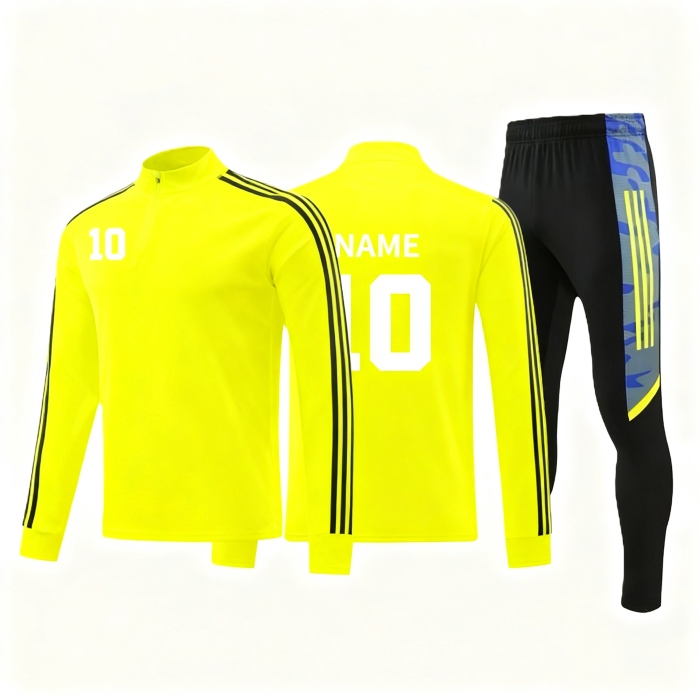
Every budget line below can change the five-year result. The table shows what each input does to cost, what we can confirm from our own production facts, and what you should put in the RFQ. A confirmed driver is not a confirmed price. Where the facts stop, the table says so.
| Cost input | How it moves five-year cost | What is confirmed | Specify in your RFQ |
|---|---|---|---|
| Fabric GSM | Heavier fabric costs more per piece and adds carton weight. Lighter fabric may suit warm climates but changes feel and warmth. | 100% polyester, moisture-wicking, 4-way stretch, 140-160 gsm. Heavier cold-weather knits fall outside this range, so confirm availability and price separately. | Target gsm, climate, indoor or outdoor wear |
| Zipper grade | The zipper is a common failure point. A weak one means replacement pieces or repairs in years 2-5. | No zipper grade is specified in our supplied facts. Treat it as quote-dependent. | Zipper type, length, puller style, tape colour, expected wash cycles |
| Decoration method | Fading forces early replacement. Decoration also sets setup effort and per-piece cost. | Dye-sublimation printing with locked-color inks, a 1-year colorfastness guarantee, and free reprint for any printing defect. | Logo count, placement, colour count, artwork files |
| Size mix | Wrong sizes create re-orders and unworn stock. Skewed size curves can also affect price tiers. | A verified size chart is used, and wrong sizes are reprinted free. | Size split by wearer group, fit preference, size-chart sign-off |
| Replenishment | Top-ups usually cost more per piece than the first bulk order, but they avoid idle stock. | No MOQ, with pricing based on quantity. Standard production is 7-10 days, and rush orders are available. | Expected annual top-up volume, reorder frequency |
| Freight exposure | Each shipment carries freight, and import duties and taxes apply at destination. | Nothing confirmed. Freight depends on destination, carton volume, shipping mode and terms. | Destination, incoterm, delivery deadline, consolidation options |
Fabric weight and decoration are the two inputs that interact most. A lighter fabric with fade-resistant printing can outlast a heavier one whose logo cracks or washes out, but only if your use case actually suits the lighter weight. For outdoor winter wear it will not.
Budget approvals go wrong when these three categories get blended into one precise-looking total. Keep them in separate columns.
We have produced 500+ sublimated jerseys for a US high school basketball league, full uniforms for an Australian soccer club’s three teams, and 1000 event jerseys for a European marathon. None of those were half-zips, and we do not present them as pricing evidence for this garment. They do show that sublimation decoration, multi-team size splits and larger single runs are work we already do. You can see the same decoration approach on our Custom Team Jerseys range.
This is a planning illustration, not a price quote. The inputs are hypothetical: 80 wearers, 20% annual replacement (attrition, wear and size changes), a five-year horizon, and no design change. The method is simple. Replacements per year equal 80 × 20% = 16 pieces. Over four replacement years that is 64 pieces, so the five-year total is 80 + 64 = 144 pieces.
| Item | Plan A: annual top-ups | Plan B: spare stock up front |
|---|---|---|
| Order pattern | 80 in year 1, then 16 each in years 2-5 | 112 in year 1 (80 + 32 spare), then 32 in year 4 |
| Total pieces | 144 | 144 |
| Shipments | 5 | 2 |
| Unit price tendency | Small top-up quantities likely price higher per piece | Larger batches likely price lower per piece |
| Main risk | More freight events and repeated paperwork | Cash tied up in stock, size mismatch, obsolete branding |
Plan B reduces shipments by three, but it only wins if unit-price savings and freight savings outweigh the cost of holding stock. We cannot say which plan is cheaper without your quoted prices at 16, 32, 80 and 112 pieces. Ask for all four tiers. Because there is no MOQ, Plan A is feasible, which is a real option for small clubs that cannot commit cash to spare stock.
Four assumptions can flip the result of the model above.
Lower-cost choices are not corner-cutting by default. Fewer colourways, a single logo placement, and consolidated shipping each cut cost without touching garment quality. The caution is narrower: a cheaper quote that omits the zipper spec or the fading guarantee is not comparable, and a lower number then proves nothing.
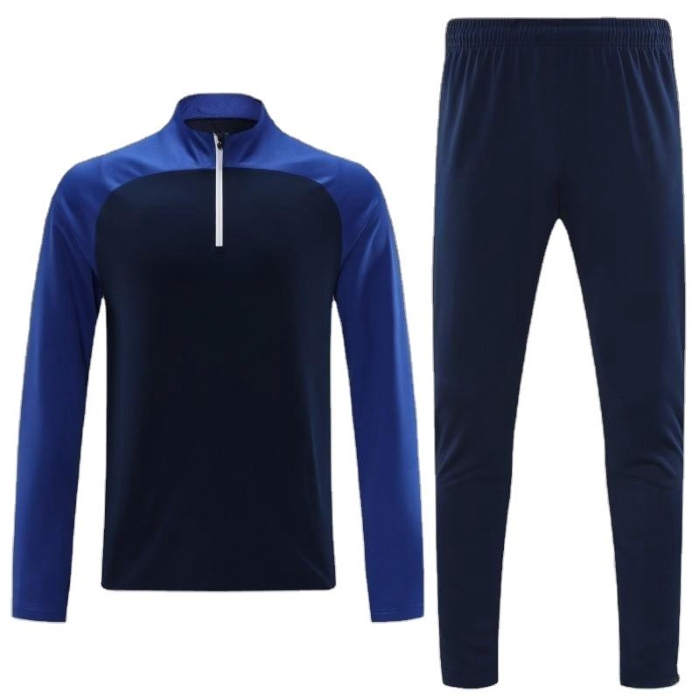
A usable five-year budget needs the same inputs from every supplier. This checklist keeps quotes comparable.
If the same artwork may also go onto outerwear or leisure garments, a shared decoration setup is worth raising. See our Custom Sport Jacket and Custom Casual Wear categories for related garments.
Send your spec, quantity tiers and destination to our team, and we will return a quote that states what is included and what is not, so you can set it beside your other shortlisted suppliers.






 WhatsApp
 Email
 +8618978569271