Loading
Before issuing a development approval or bulk purchase order, sourcing teams should ask a direct question: can this supplier show how its base size becomes every other size in the range? For Custom Casual Wear, an attractive mock-up, fabric swatch, or low unit quote does not answer that question.
The costly problems normally appear after goods arrive. A garment may look correct in one photographed sample but have short sleeves in larger sizes, an uneven chest grade, or a neckline that changes shape across the run. These issues can lead to exchanges, event-day complaints, unsellable stock, and a difficult discussion about who owns the correction cost.
Fit-block proof is the supplier evidence that reduces this risk. It should connect four items: the intended wearer, the base pattern size, the grade rules between sizes, and the measurement acceptance standard for bulk goods. If any link is missing, the buyer is approving appearance rather than production control.
Hening Clothing Co., Ltd. is suited to buyers who need custom polyester apparel from a supplier with documented production scale and defined order terms. The company operates a 1,000 sqm factory with more than 100 workers and five automatic dye-sublimation printing lines. Its stated daily output is more than 1,000 custom jerseys, with standard production in 7–10 days and rush-order options. Those facts can matter when a casualwear program uses sublimated sports-inspired tops, event apparel, team merchandise, or similar polyester garments. They do not, by themselves, prove that every casualwear silhouette has an approved fit block. Buyers should still request the evidence for the exact style under review.
A quote comparison is useful only after suppliers are quoting the same garment specification. One supplier may price a single standard unisex block while another is pricing a revised block with a wider chest, longer body, or separate youth sizes. The lower quote may simply exclude the work needed to achieve the required fit.
Ask each candidate supplier to respond to the same evidence request. Keep the request style-specific. A proof package for a lightweight sublimated performance top is not automatically relevant to a fleece hoodie, woven overshirt, or cotton jersey.
| Evidence to request | What the buyer should check | Why it affects the order decision | Limit of the evidence |
|---|---|---|---|
| Fit-block identification | Base size, intended gender or unisex use, intended wearer group, and garment silhouette | Shows which pattern is being used as the starting point | A base-size label alone does not confirm grading quality |
| Full size chart | Chest, body length, sleeve length, shoulder, hem, and other measurements relevant to the style | Lets the buyer compare supplier dimensions against its approved specification | A chart without a measurement method can be interpreted differently |
| Grade specification | How each point changes from one size to the next | Reveals whether larger and smaller sizes were planned rather than estimated | Grade data should still be checked on a physical sample |
| Measurement tolerance | Allowed variation by measurement point and how garments are laid flat for checking | Creates an acceptance basis for bulk inspection | It must be agreed before production, not after a dispute |
| Pre-production sample | Actual measurements, construction, artwork position, and wearer feedback | Confirms the approved specification can be made physically | One sample does not prove every graded size unless more sizes are checked |
| Bulk-control confirmation | Which approved document will be used to assess bulk goods | Prevents a supplier and buyer from using different versions of the size chart | The buyer still needs to define inspection timing and responsibility |
Recommendation: score suppliers first on whether they can supply style-specific fit documentation, then compare price on an equal specification. This approach fits sourcing teams approving a new development or changing factories. It is less relevant when the buyer is reordering an already-approved style from the same supplier with no pattern, fabric, or fit change. Even then, retain the approved chart and revision date with the purchase order.
For programs that mix apparel types, keep the reviews separate. A buyer can source Custom Sport Jacket styles and lightweight tops from one partner, but each silhouette needs its own size specification. A jacket’s outerwear allowance should not be treated as proof for a close-fitting shirt.
Fit-block grading, measurement tolerances, and pre-production samples work as a chain. The fit block establishes the intended shape. Grading controls how that shape changes by size. Tolerances define what variation is acceptable in manufactured garments. The pre-production sample gives the buyer a physical item to measure and wear before bulk release.
Conclusion: require all three elements for a new style or a new supplier relationship. Using only one leaves a gap. A polished sample without grade rules may hide poor larger-size proportions. A size chart without tolerances leaves no fair acceptance standard. A tolerance table without a fit sample may approve measurements that still feel wrong when worn.
| Control point | Supplier proof to request | Return risk it addresses | When extra review is needed |
|---|---|---|---|
| Fit block | Base-size pattern reference or fit-block identification, with the intended silhouette stated | Wrong overall balance, such as a body that is too narrow for the wearer group | New market, new demographic, fitted design, youth sizing, or separate women’s sizing |
| Grading | Measurement chart for every ordered size and the grade changes at key points | Sizes that merely become longer or wider without keeping workable proportions | Extended size range, mixed adult and youth range, or large jumps between available sizes |
| Tolerances | Written tolerance by point of measure plus a clear measuring method | Disputes where both parties claim a garment is “close enough” | Retail resale, uniform programs, contractual size requirements, or high return-cost markets |
| Pre-production sample | Measured physical sample with buyer sign-off comments and revision record | Bulk goods that follow an untested document rather than the buyer’s intended fit | New fabric, changed neckline, revised sleeve, unfamiliar print placement, or first bulk order |
This sequence is particularly useful for a buyer supplying a club shop, school program, corporate event, or retailer where a size-related return has a direct financial cost. It may be more than is needed for a one-off internal giveaway with a single loose-fit unisex style. Even for that simpler scenario, an approved size chart remains sensible.
Hening states that it uses a verified size chart and offers free reprints for printing defects or wrong size. Buyers should clarify the exact approved chart, garment-measurement method, order data, and claim conditions before placing the order. The stated remedy is meaningful only when “wrong size” can be assessed against an agreed specification.
Supplier fit is not only about patterns. It also includes whether the production setup matches the decoration method, timing, quantity, and performance needs of the proposed garment.
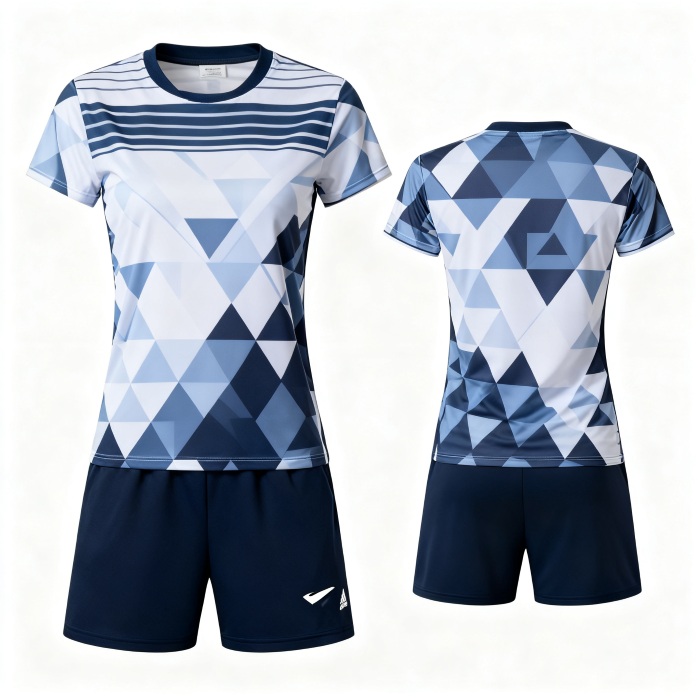
For polyester casualwear with all-over graphics or team-inspired visual identity, Hening’s dye-sublimation capability is relevant. The company specifies 100% polyester fabric with moisture-wicking and four-way stretch characteristics, in a 140–160 gsm range for breathability. Its locked-color inks are intended to keep sublimation colors from fading after washing. This addresses a common buyer concern: a garment may fit correctly at delivery but lose its commercial appearance after repeated use and laundering.
Recommendation: consider this setup when your approved product concept is a lightweight polyester item that benefits from sublimated graphics and athletic comfort. Ask the supplier to confirm that the selected fabric, weight, and printing method apply to the exact casualwear style. Do not assume these features apply to a cotton garment, a heavy fleece item, embroidery-led apparel, or any material not confirmed in the quotation.
Hening also holds ISO 9001 quality management system certification and ISO 14001 environmental management system certification. These are useful qualification signals for a sourcing file because they show stated quality-management and environmental-management certifications. They are not substitutes for reviewing your own fit block, sample, artwork approval, or product-specific compliance requirements.
The company’s project record provides additional scale context, without turning a single case into a blanket promise. It supplied more than 500 sublimated jerseys for a United States high school basketball league, produced full custom uniforms for an Australian soccer club’s three teams, and delivered 1,000 event jerseys for a European marathon. These examples support relevance for team, event, and sports-linked apparel programs. They do not establish that every casualwear style has the same pattern, fabric, or delivery profile.
Buyers developing cross-category collections can keep product pages separate while maintaining a consistent supplier review process. For example, Basketball Jerseys and casual event tops may share dye-sublimated artwork requirements, but their fit blocks, neckline construction, and grading must be approved independently.
Commercial terms should support the technical approval rather than replace it. Hening states that there is no MOQ, while pricing is based on quantity. This can suit small teams, pilot launches, replacement needs, and buyers who want to evaluate a limited run before a wider assortment. It also means a buyer should not assume that a low-volume order will have the same unit price as a larger program.
| Buyer situation | Relevant documented term | What to confirm before approval |
|---|---|---|
| Small club or pilot order | No MOQ; price depends on quantity | Quoted price by size mix, artwork version, and total quantity |
| Event or scheduled launch | Standard production is 7–10 days; rush options are available | Whether the requested delivery date is feasible after design, size, and sample approvals |
| Concern about print failure | Free reprint for a printing defect | How the defect will be documented and what product version is covered |
| Concern about size error | Free reprint for wrong size | Approved size chart, tolerance, measurement method, and claim basis |
| Longer-term color appearance | One-year colorfastness guarantee | The applicable product, care expectations, and guarantee terms for the quoted style |
Recommendation: use the 7–10 day standard production timing as a production reference only after technical files are complete. It fits buyers with final artwork, confirmed size range, and a settled garment specification. It does not mean an unfinished development request can move directly into bulk production on that schedule. Time spent resolving fit questions should be planned separately.
Before issuing a purchase order, list unresolved points in one approval sheet. At a minimum, include the garment style, fabric confirmation, size range, approved chart revision, grade review requirement, tolerance rules, artwork file revision, sample status, quantity by size, production timing, and remedy terms. If the supplier cannot confirm an item, leave it open rather than treating silence as agreement.
The best supplier decision is not the one with the most impressive product image. It is the one supported by a traceable fit specification, visible grading logic, agreed measurement limits, and an approval record both parties can use. Hening’s documented production capacity, no-MOQ position, ISO certifications, dye-sublimation capability, and stated reprint terms can make it a relevant candidate for suitable polyester programs. The remaining task is to qualify the exact garment block before committing bulk quantity.
Send your target size chart, size range, artwork, quantity, and required delivery date to request a quote and confirm the fit evidence needed for your order.






 WhatsApp
 Email
 +8618978569271