Loading
When you’re sourcing Custom Team Jerseys for an entire league or club with mixed-age rosters, the design feels like the biggest hurdle. It’s not. The most common and costly mistake is getting the size distribution wrong. You end up with a shortage of Mediums, a surplus of Youth Smalls, and frustrated players waiting for replacements. This single error wastes your budget and delays your season.
Ordering the right mix of sizes—especially when dealing with both youth and adult teams—requires a specific planning method. Without it, you’re just guessing. As a production specialist with over a decade on the factory floor, I’ve seen this exact issue derail orders for otherwise well-organized clubs. The good news is that it’s entirely preventable. We’ll cover a practical method to plan your size runs, identify key supplier capabilities, and avoid common pitfalls before you place your order.
Guesswork is your enemy when ordering for multiple teams. Instead of collecting individual sizes and hoping for the best, you need a structured approach. The Roster Distribution Method helps you model your size needs based on typical athletic body-type distributions, with buffers for late sign-ups and player changes. This prevents the classic problem of running out of popular sizes while being stuck with unworn jerseys.
This method is most effective for leagues or clubs with 50 or more players across multiple teams. For a single small team, simply collecting exact sizes is sufficient.
Let’s imagine a league with 100 players. After collecting initial sizes, you have a baseline. Now, apply a 15% buffer (15 extra jerseys) strategically.
| Size | Baseline Roster Count | Strategic Buffer Allocation | Total to Order | Reasoning |
|---|---|---|---|---|
| Youth Small (YS) | 15 | +2 | 17 | Covers younger players or smaller builds; a moderate buffer is wise. |
| Youth Medium (YM) | 35 | +5 | 40 | Peak of the bell curve. This is your highest-risk size for shortages. Allocate the largest buffer here. |
| Youth Large (YL) | 30 | +5 | 35 | Second most popular size. Also requires a significant buffer for late bloomers or new, larger players. |
| Youth X-Large (YXL) | 15 | +2 | 17 | Less common, but a small buffer prevents issues with your largest players. |
| Adult Small (AS) | 5 | +1 | 6 | For outlier older players in a youth league. A minimal buffer is sufficient. |
| Total | 100 | +15 | 115 | – |
This structured approach ensures you have coverage where you need it most, minimizing both waste and player disappointment. It turns a logistical gamble into a predictable process.
Once your sizing plan is solid, evaluating a supplier’s production capabilities is the next step. Not all manufacturers are equipped to handle team orders efficiently. Here are three factors that directly impact the quality and reliability of your custom team jerseys.
Faded logos and numbers after a few washes are a common complaint. This stems from low-quality inks or improper heat application during sublimation. Your jerseys should look as good at the end of the season as they do on day one.
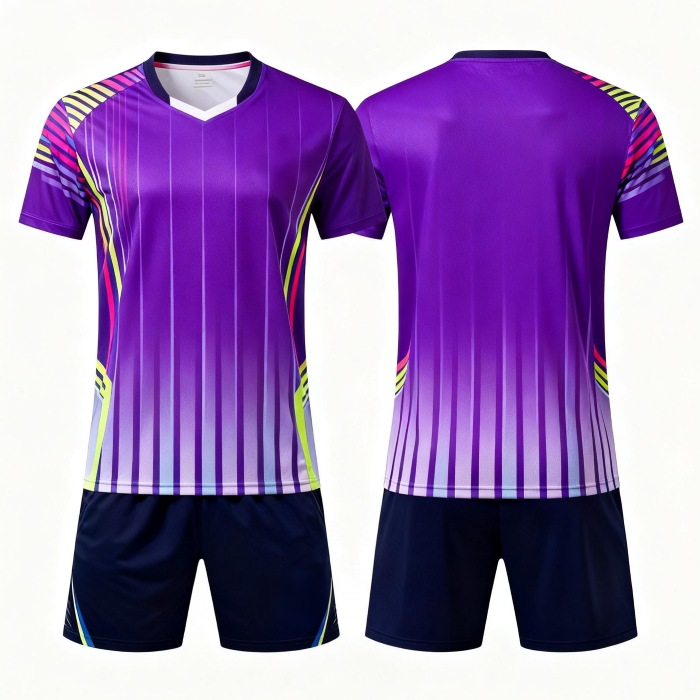
At Hening, we solve this with a specialized dye-sublimation process using locked-color inks that are chemically bonded to the fabric fibers. This ensures the design becomes part of the 100% polyester material, rather than sitting on top of it.
Slow delivery can jeopardize your season’s start. Many suppliers quote 3-4 weeks, which leaves little room for error. You need a partner who can deliver on a tight schedule and handle last-minute additions.
High MOQs are a major barrier for smaller clubs or for ordering replacement jerseys mid-season. Many factories require 50 or 100 units per design, which is impractical for a single replacement or a small new team.
Sourcing apparel for diverse groups introduces complexities that single-team orders don’t have. Here are some frequent errors I’ve seen buyers make and advice on how to steer clear of them.
Why it’s a problem: Youth, women’s, and men’s cuts are fundamentally different. A unisex chart often results in jerseys that are too long and narrow for youth players or too tight across the chest and hips for female athletes. This leads to returns and discomfort.
How to avoid it: Always request separate, verified size charts for each demographic group you are outfitting. At Hening, we provide distinct charts and strongly recommend ordering a physical fit kit to have players try on sizes before placing a bulk order. If there’s any sizing error on our part, we offer a free reprint.
Why it’s a problem: Not all polyester is the same. A heavy, non-breathable fabric is unsuitable for high-intensity sports like soccer or basketball. You might save a few cents per unit but end up with jerseys players hate to wear.
How to avoid it: Specify your performance requirements. Our standard jerseys use 140-160 gsm, 100% polyester that is moisture-wicking and features 4-way stretch for optimal breathability and movement. This is the fabric we used for the 1000 event jerseys for a European marathon, where performance was essential.
Why it’s a problem: Teams need more than just game-day jerseys. Coaches, staff, and volunteers need coordinated apparel. Placing a separate, small order for these later is often inefficient and more expensive.
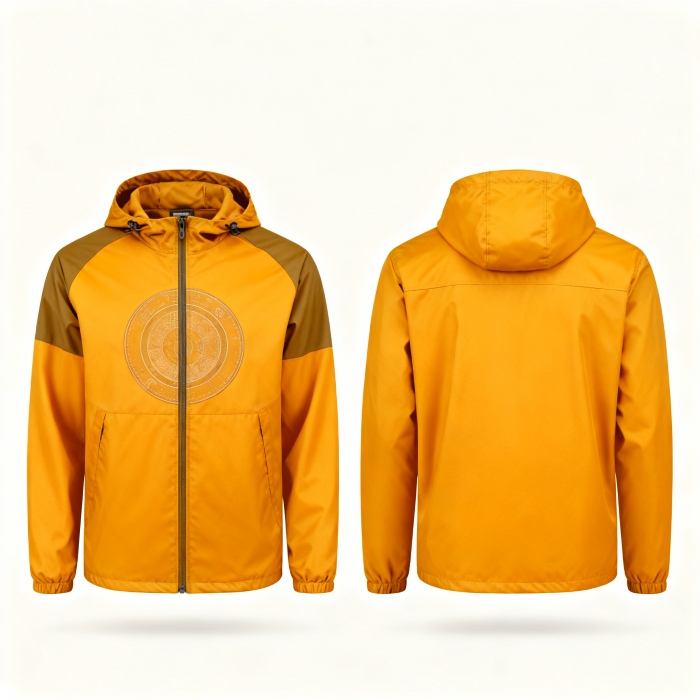
How to avoid it: Plan your entire apparel need at once. Include items like a Custom Sport Jacket for coaches or casual wear for team events. Consolidating your order with one supplier simplifies logistics and can improve your unit pricing.
Why it’s a problem: A new player joins mid-season. A jersey gets damaged. You will need to order one or two replacements. If your supplier has a high MOQ or has lost your design files, you’re stuck.
How to avoid it: Ask about the re-order policy upfront. Because we have no MOQ and keep all digital design files, ordering a single replacement jersey with the exact same colors and logos months later is simple and fast.
Understanding the manufacturing process helps you plan your timeline and set expectations. When you partner with a direct manufacturer, the path from an idea to a finished product is straightforward.
This transparent, controlled process is how we’ve successfully delivered custom apparel for events and teams globally, from road races in Zimbabwe to sports retailers in New Zealand.
Planning a custom jersey order for mixed rosters requires more than just a great design. By using a structured sizing method and partnering with a manufacturer that offers flexibility, guaranteed quality, and a transparent process, you can avoid common pitfalls and outfit your entire organization with confidence.
If you are preparing an order for your league or club, send us your roster details. We can provide a detailed quote and a tailored production plan to meet your needs.






 WhatsApp
 Email
 +8618978569271