Loading
A current-looking volleyball shirt can create problems long before the first match if the design is difficult to read, does not work across the full roster, or looks dated after one season. Before requesting quotes for a Trendy Custom Volleyball Shirt, team managers should decide what must remain consistent: player identification, club colors, sponsor placement, fit expectations, and the ability to reorder matching pieces later.
The sourcing risk is not simply choosing the wrong color. A design that looks strong in a digital mockup may use numbers that disappear against a busy pattern, place names too close to side seams, or rely on a fitted silhouette that does not suit every player. These issues can create extra approval rounds, replacement requests, and inconsistent uniforms across new joiners.
Hening Clothing Co., Ltd supports teams and club buyers requiring custom sportswear with no minimum order quantity. This can suit a new volleyball club ordering a small first roster as well as an established program that needs a later top-up order. Pricing is based on quantity, so buyers should still provide a realistic size breakdown and expected reorder volume when requesting a quote.
For volleyball buyers, the sensible order is to approve the functional design rules first and visual trends second. A shirt can look modern without making the athlete number, team identity, or future repeat order harder to manage.
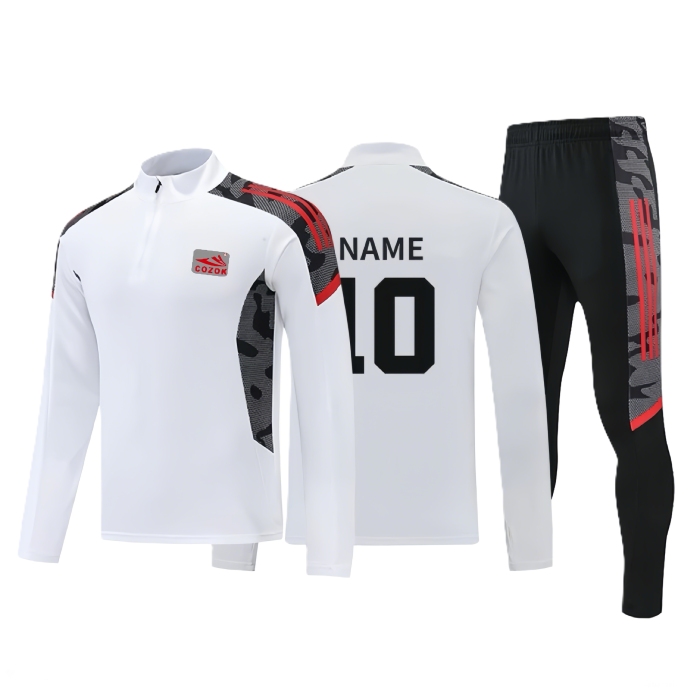
Use a design direction that gives your team a recognizable look from the court edge and in event photography. The best choice depends on where the shirt will be used, who needs to identify the players, and how often the club expects to refresh its uniform.
Choose bold color blocking when roster recognition is the priority. Large blocks, controlled gradients, and clear contrast between the shirt base and player number help coaches, officials, spectators, and photographers identify players quickly. This approach fits school teams, club leagues, tournaments, and programs with multiple squads. It is less suitable if your brand identity depends on detailed illustration or a large number of sponsor marks.
Choose a restrained all-over pattern when the team wants a more fashion-led appearance. Abstract lines, tonal geometric shapes, and controlled texture can make a shirt feel current while preserving room for names and numbers. This is a workable option for adult social leagues, youth clubs, and event teams. The limit is simple: the pattern must remain quieter than the identification details. If the pattern competes with the number, it is not doing its job.
Choose a classic base design with small seasonal updates when you expect repeat orders. Keep the main body color, number position, and team name layout stable; then update a sleeve motif, collar accent, or side-panel treatment. This is often the strongest choice for clubs that add athletes between seasons. It may feel less dramatic than a full redesign, but it lowers the risk that later orders look unrelated to the existing squad.
| Design direction | Best fit | What to specify | When it does not fit |
|---|---|---|---|
| High-contrast color blocks | School teams, competitive clubs, tournament squads | Base color, secondary panel color, number contrast, name placement | Not ideal if the club requires detailed artwork across most of the shirt |
| Tonal geometric pattern | Adult leagues, youth clubs, promotional teams | Pattern scale, clear areas for numbers, acceptable color variations | Not suitable when player numbers must sit over dense artwork |
| Classic core with seasonal accent | Clubs planning repeat purchases or multi-year use | Fixed core colors, repeatable number style, limited update zones | Less suitable for one-off events seeking a completely different identity |
| Event-led graphic design | Short-run competitions, launches, commemorative apparel | Event logo position, date details, sponsor hierarchy, reuse expectations | Not appropriate as a long-term club uniform if the event graphics date quickly |
For a coordinated program, align the shirt with other club apparel early. A club may use matching color rules across Custom Team Jerseys, warm-up layers, and staff clothing, while allowing the volleyball shirt to retain its own sport-specific panel arrangement. This avoids a disjointed appearance when athletes travel or appear in team photos.
A trend-led design is unsuitable when it reduces readability, excludes part of the team through fit choices, or cannot be used again without looking tied to a past campaign. Buyers should assess each proposed visual feature against those three boundaries before approving artwork.
| Decision boundary | Warning sign | Recommended action | Reasoning and limit |
|---|---|---|---|
| Readability | Player numbers blend into gradients, splatter graphics, or close color tones | Reserve a plain or low-detail area behind the number and use a strongly contrasting number color | This suits league and tournament uniforms where player recognition matters. A low-contrast style can work for casual fan wear, but it is a poor choice for active team jerseys. |
| Readability | Too many logos, messages, or decorative elements compete on the front panel | Rank team name, club mark, sponsor marks, and player number before layout approval | One focal point keeps the shirt legible. A design may carry more branding for a sponsor event, but the buyer should confirm that uniform identification remains clear. |
| Fit range | The visual effect relies on a very close-fitting cut or artwork that changes noticeably across sizes | Review the artwork placement across the full size range and use the supplier’s verified size chart | This supports mixed rosters with different body shapes. A fashion-focused fitted look may still suit a limited promotional range, not necessarily a whole competitive squad. |
| Fit range | Side graphics, text, or logos fall too near seams and may shift in appearance by size | Keep essential text and logos away from side seams and ask for placement confirmation | Central, stable placements are easier to maintain across sizes. Edge artwork can be used when it is decorative rather than essential. |
| Season-to-season usability | The shirt includes a year, social-media phrase, short-lived color fad, or campaign-specific illustration | Keep time-specific graphics to a small optional area, or create a separate event edition | This preserves the core kit for future players. A dated graphic is acceptable for a single event where long-term reuse is not expected. |
| Season-to-season usability | A new color scheme replaces all established club colors | Retain at least one recognizable core color and stable player-number treatment | This helps top-up orders look connected to previous uniforms. A full rebrand is the exception, provided the club accepts that old and new stock will not match. |
The practical conclusion is simple: use trends in controlled areas, not in the elements that make a uniform identifiable. A fashionable sleeve graphic, collar accent, or tonal pattern can refresh the shirt. The athlete number, team color hierarchy, and primary logo area should remain stable.
This matters especially for clubs that need more than one sport category. If a program also orders Basketball Jerseys or other team apparel, retaining core colors and logo rules can make the wider club presentation more consistent without forcing identical designs across different sports.
A good design file is only one part of the buying decision. The garment specification determines whether the visual plan remains comfortable and usable during training and matches.
Hening Clothing Co., Ltd uses 100% polyester fabric with moisture-wicking and 4-way stretch properties. The stated fabric weight range is 140–160 gsm, intended to support breathability. This specification is relevant for volleyball because athletes repeatedly jump, reach, rotate, and move laterally. A shirt that restricts movement or holds moisture can distract from play, even when the graphics are approved.
Choose dye-sublimation when the design includes multiple colors, gradients, or all-over graphics. Dye-sublimation is suited to volleyball designs that need names, numbers, color blocks, and patterns integrated into the garment appearance. Hening uses locked-color inks and offers fade-resistant dye-sublimation printing designed to keep colors vivid after washing. This is a good fit for teams concerned about faded prints after repeated laundering. It does not remove the need to approve colors carefully before production, because a screen image and a finished textile can still appear different.
Use the verified size chart rather than assigning sizes from a player’s usual retail shirt. Retail sizing varies between brands, and volleyball rosters often include athletes who prefer different levels of ease. Ask every player to select against the supplied chart, then consolidate the size count before confirming the order. This suits teams seeking a consistent fit process. It may take more coordination than a manager guessing the order, but it reduces the chance of avoidable wrong-size issues.
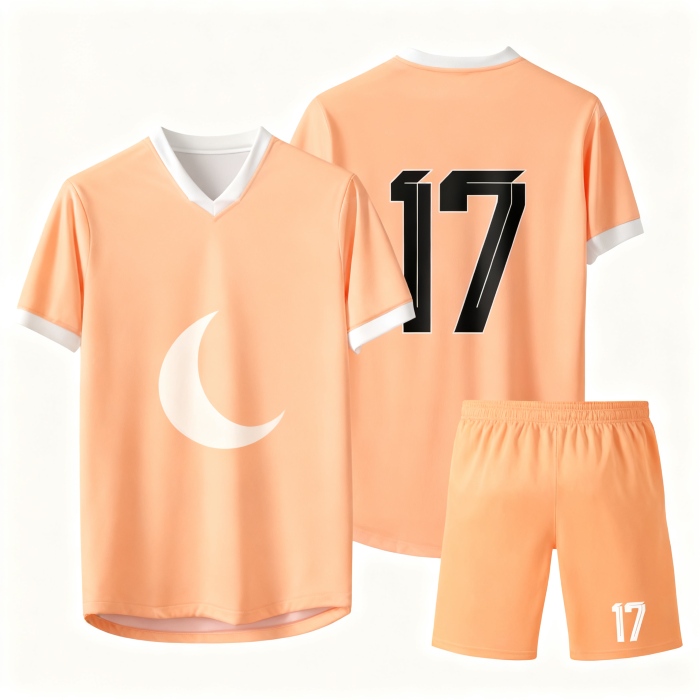
When comparing suppliers, look beyond templates and headline turnaround claims. Ask what evidence supports the production scope, quality controls, reorder flexibility, and remedy if the delivered product has a documented problem.
Hening Clothing Co., Ltd operates a 1000 sqm factory in Guangzhou, China with more than 100 workers and five automatic dye-sublimation printing lines. Its stated daily output is more than 1000 custom jerseys, with standard production stated as 7–10 days and rush orders available. For a volleyball buyer, these facts are relevant when a club has a defined event date or needs to coordinate several squads. They do not replace the need to confirm the order schedule, artwork approval date, shipping arrangement, and rush-order feasibility for the specific purchase.
The facility holds ISO 9001 quality management system certification and ISO 14001 environmental management system certification. These are useful qualification points for buyers who need to assess documented management systems during supplier selection. They should not be treated as a substitute for reviewing the exact artwork, size list, quantities, and acceptance requirements of the proposed order.
There is also relevant order history at larger volumes. Hening supplied more than 500 sublimated jerseys for a US high school basketball league, produced full custom uniforms for an Australian soccer club’s three teams, and delivered 1000 event jerseys for a European marathon. These cases show experience with team and event apparel across different order contexts. They do not establish that every volleyball project has the same quantity, lead time, or design requirements.
| Buyer question | Documented Hening term or capability | What the buyer should still confirm |
|---|---|---|
| Can we start with a small roster? | No MOQ requirement; pricing is based on quantity | Size mix, total quantity, unit-price quote, and likely top-up needs |
| Can we use a detailed multicolor design? | Five automatic dye-sublimation printing lines; fade-resistant sublimation using locked-color inks | Final artwork, color expectations, number contrast, and logo files |
| Can the shirts support active play? | 100% polyester, moisture-wicking, 4-way stretch, 140–160 gsm fabric | Preferred fit, sleeve style, and player size selections |
| What happens if there is a documented issue? | Free reprint for a printing defect or wrong size; 1-year colorfastness guarantee | Final approved roster, sizing basis, artwork sign-off, and issue-reporting details |
| Is the production window compatible with our event? | Standard production stated as 7–10 days; rush orders available | Required delivery date, destination, shipping method, and rush availability |
A usable RFQ gives suppliers enough information to quote the same requirement. Without it, a low initial price may exclude artwork complexity, player personalization, or delivery timing that another supplier has included.
A buyer selecting a Trendy Custom Volleyball Shirt should favor a design that still reads clearly from the sideline, accommodates the full roster, and can be reordered without creating a mismatched club image. The strongest brief combines a controlled modern graphic with stable identification rules and a complete size list.
For teams building a wider match-day range, consider whether matching outerwear from the Custom Sport Jacket collection should use the same club colors and logo hierarchy.
Send your roster quantity, size breakdown, delivery date, and design references to request a focused volleyball uniform quote.






 WhatsApp
 Email
 +8618978569271