Loading
A low first quotation can become an expensive program when decoration charges return on each reorder, freight is quoted separately, or the original size run leaves unusable stock. Procurement teams selecting a Lightweight Track Custom Jacket should compare more than the unit price. The useful comparison is the landed cost of supplying the right jackets, in the right sizes, across several seasons.
Hening Clothing Co., Ltd. supports custom sportswear production from its 1,000 sqm factory in Guangzhou, China. The factory has more than 100 workers and five automatic dye-sublimation printing lines, with daily output of more than 1,000 custom jerseys. While jacket requirements must be confirmed separately by fabric, style, and decoration details, these production resources matter for buyers planning coordinated teamwear or repeat sportswear programs.
The best fit is a buyer who needs flexibility rather than a fixed large-volume commitment. Hening has no MOQ, although pricing is based on quantity. That can suit a distributor testing a clubwear range, a school adding new staff members during the year, or a team replacing lost jackets after the main order. It does not mean every small reorder will have the same unit cost as a large consolidated production run. Ask for pricing by quantity tier before approving the program.
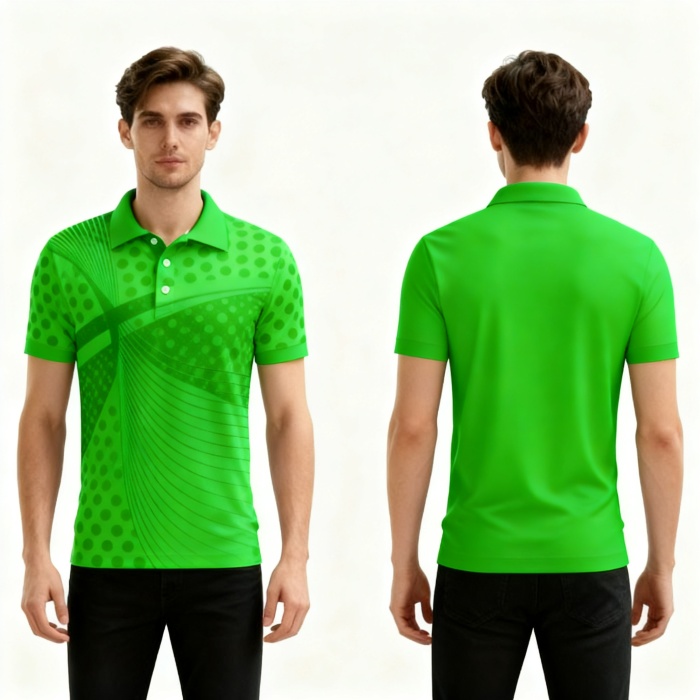
Conclusion: Build the supplier comparison around total landed program cost over five years, not the first-order garment price. Reason: decoration setup, freight, unused sizes, and replenishment orders often sit outside a simple per-piece quote. Best fit: this model is useful for schools, clubs, distributors, event organizers, and corporate sportswear buyers expecting repeat orders. Limit: it cannot predict future freight rates, exchange-rate changes, or final reorder quantities; those should be shown as separate assumptions rather than hidden inside one estimate.
Use the following model for every supplier quotation. Keep each supplier’s assumptions visible. If one supplier includes freight and another does not, the quotes are not directly comparable.
| Five-year cost component | What to collect from the supplier | Five-year calculation | Why it changes the buying decision |
|---|---|---|---|
| Unit price | Price per jacket at each quantity tier, plus the quantity included in each order | Initial-order units × initial unit price, plus each reorder quantity × applicable reorder unit price | A low opening price may apply only to the first consolidated run and not to later small replenishments. |
| Decoration setup | Art charges, logo preparation, name or number charges, and whether each cost applies once or again on reorders | Initial setup charges + any repeat setup charges across five years | Setup can be minor on a large order but material when a program has several small orders. |
| Freight | Freight method, shipment frequency, destination, whether duties are included, and any packaging charges | Freight for the initial shipment + freight for every repeat shipment | Several small deliveries can cost more than one planned replenishment shipment. |
| Size-run waste | Forecast quantities by size, expected usage by role or team, and a count of unused or emergency stock | Unused jackets × landed cost per jacket | Overbuying uncommon sizes ties up budget and may create obsolete inventory after a design change. |
| Repeat-order costs | Reorder unit price, reactivated artwork costs, freight, and any changed decoration requirements | Total of every replenishment order after the initial production run | Repeat orders determine whether a no-MOQ supplier is commercially useful for the program. |
A practical formula is:
Five-year total cost = initial unit cost + decoration setup + initial freight + size-run waste + all repeat-order unit costs + all repeat-order setup charges + all repeat-order freight.
Do not put the cost of unused stock into “contingency” without identifying it. List it as size-run waste. That makes the trade-off visible: holding extra jackets may reduce emergency reorders, but it also consumes budget and may leave the buyer with sizes that cannot be used.
Consider a distributor supplying a school sports program over five years. The buyer needs an initial run in a full size range, expects new participant additions each season, and wants names or numbers on selected jackets. Supplier A offers a lower initial unit price but applies a new decoration charge and separate freight charge every time the distributor places a small reorder. Supplier B has a higher initial unit price but can quote replenishment quantities without a minimum order.
The correct conclusion is not that Supplier B is automatically cheaper. The buyer should request both suppliers to complete the same cost sheet: initial quantity, size allocation, setup items, freight method, expected reorder quantities, and costs for each replenishment order. Supplier B may fit if additions are frequent and unpredictable. Supplier A may fit if the distributor can consolidate all demand into one or two large annual orders. The limit is forecasting accuracy: if the buyer cannot estimate new joiners, run sensitivity models for low, expected, and high reorder demand.
Conclusion: Keep the base jacket specification and artwork files stable for the life of the program. Reason: a stable specification makes supplier quotes easier to compare and reduces the chance that a later reorder differs in color, logo placement, or sizing expectations. Best fit: this is especially useful for clubs, distributors, and organizations that want the same visual identity across multiple seasons. Limit: it does not prevent a deliberate design refresh; if branding changes, treat the new version as a separate inventory and cost decision.
For sportswear programs using dye-sublimation, Hening uses fade-resistant dye-sublimation printing with locked-color inks intended to keep colors vivid after washing. This addresses a common concern for teams that have experienced faded printed garments. The stated one-year colorfastness guarantee provides a defined point to discuss if color performance becomes an issue. It should not be read as a guarantee against every form of damage caused by misuse, storage conditions, abrasion, or unapproved care practices.
The available fabric specification is 100% polyester with moisture-wicking and four-way stretch properties, at 140–160 gsm for breathability. Buyers should request confirmation that the proposed jacket construction uses the selected fabric and weight, because “lightweight” can mean different things across shell jackets, warm-up tops, zip jackets, and casual outerwear.
Buyers adding jackets to an existing uniform range should also compare the look and color treatment with related garments, such as Custom Team Jerseys. A coordinated program is easier to manage when artwork versions, player naming conventions, and color references are documented in one purchasing file.
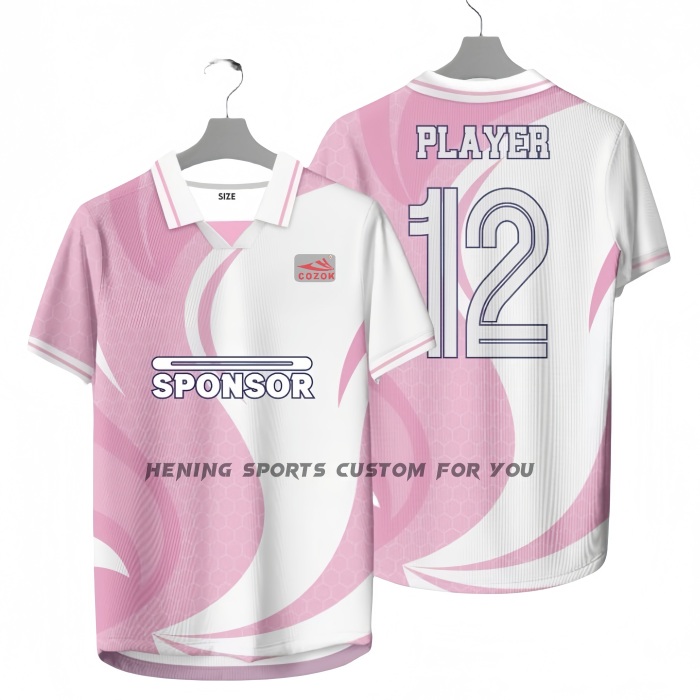
Conclusion: Set the initial size run from actual wearer data where possible, then hold a deliberate and limited buffer only in sizes likely to be needed. Reason: size-run waste is a real five-year cost, while emergency replenishment orders can raise freight and administration costs. Best fit: this approach works for established teams, recurring school programs, and distributor accounts with prior sales data. Limit: a new club, a new market, or a rapidly changing participant base may not have enough history to forecast accurately.
Begin with the previous season’s issued sizes, not generic assumptions. Separate adult and youth programs if they use different charts. Then identify roles that may have a different fit preference, such as coaches, staff, athletes, or volunteers. A distributor should track returns and exchanges by size because those records are more useful than a broad “small, medium, large” estimate.
No-MOQ ordering can help when a missing size must be replaced without waiting to gather a large order. However, the commercial limit remains clear: quantity-based pricing means a one-piece or low-volume order may have a different cost structure from the initial run. Ask for a reorder price schedule by quantity, rather than relying on the first-order rate.
Conclusion: Select a supplier only after confirming that its documented production resources and cooperation terms fit the timing and risk profile of the program. Reason: a good five-year model fails if the supplier cannot support the expected production calendar or if quality responsibilities are unclear. Best fit: this review matters for procurement teams with fixed events, distributor launches, and multi-team programs. Limit: capacity and standard lead time do not guarantee a specific delivery date until the final product details, quantity, destination, and production schedule are agreed.
Hening states a standard production period of 7–10 days, with rush orders available. For a buyer with a fixed season date, the practical action is to ask whether the requested quantity, decoration detail, and shipment destination can meet the required arrival date. Production time and freight time are separate planning items. Do not treat the 7–10 day production period as a door-to-door delivery promise.
The factory’s five automatic dye-sublimation printing lines and output of more than 1,000 custom jerseys per day provide relevant scale context for sportswear buyers. For example, Hening supplied more than 500 sublimated jerseys for a United States high school basketball league, produced full custom uniforms for an Australian soccer club’s three teams, and delivered 1,000 event jerseys for a European marathon. These cases demonstrate experience with team and event sportswear volumes. They do not establish a universal production time, jacket specification, or freight result for every future order.
Quality-management evidence should also be part of supplier qualification. Hening holds ISO 9001 quality management system certification and ISO 14001 environmental management system certification. Buyers should still define their own acceptance points, including approved artwork, approved size chart, garment count, personalization list, packaging needs, and the procedure for reporting an issue.
Hening offers free reprint for a printing defect or wrong size, along with a one-year colorfastness guarantee. Before ordering, clarify how the buyer will provide size data, how a wrong-size claim is assessed, and what evidence is needed for a printing-defect claim. These terms address stated issues; they should not be expanded into unconfirmed coverage for design changes, ordering errors by the buyer, or transit damage.
For buyers building a broader outerwear assortment, compare the jacket request against the available Custom Sport Jacket range. If the program also includes off-field clothing, align branding and reorder rules with Custom Casual Wear rather than managing each category as an unrelated purchase.
Conclusion: Send the same written brief to every supplier. Reason: comparable inputs produce comparable quotes and expose missing charges early. Best fit: use this checklist for new supplier selection, annual retenders, and program renewal. Limit: a detailed RFQ improves comparison but does not replace final artwork approval, shipping confirmation, or commercial terms agreed with the chosen supplier.
A Lightweight Track Custom Jacket program is usually a stronger commercial fit when the buyer can standardize artwork, control size data, and plan replenishment demand in advance while retaining flexibility for occasional smaller orders. Submit your quantity forecast, size run, artwork requirements, and delivery destination to request a quote that can be entered directly into a five-year cost model.






 WhatsApp
 Email
 +8618978569271