Loading
The sourcing risk is simple: you approve a low FOB quote, the shipment lands, and the margin you promised your buyer is gone. Freight, duties, rejected units and months of unsold stock all arrive after you have paid the deposit. With hoodies, bulky packing and heavier fabric make the freight line especially easy to underestimate. This guide shows how to build the full cost picture before you place a bulk order, and how to keep confirmed numbers separate from estimates and unknowns.

FOB (Free On Board) covers the goods and the cost of loading them at the origin port. Everything after that sits outside the quote. Two suppliers can quote the same FOB figure and leave you with very different final costs, because packing method, carton size, defect handling and lead time all change what you pay later.
Before comparing quotes, tag every cost line by how reliable it is:
| Cost line | Status before ordering | Where the number comes from |
|---|---|---|
| FOB unit price | Confirmed once quoted in writing | Factory quotation at your exact quantity |
| Freight | Estimated until a forwarder books it | Forwarder quote based on carton volume and weight |
| Import duties and taxes | Estimated until classified | Customs broker, using the correct tariff code for your market |
| Defect allowance | Estimated, unless covered by a written guarantee | Your own rejection history plus supplier warranty terms |
| Inventory carrying cost | Estimated | Your cost of capital, storage fees and expected sell-through time |
| Currency swings, port delays, demurrage | Unknown | Cannot be priced in advance; hold a contingency |
One rule keeps the sheet honest: an estimate never goes into the “confirmed” column. If a number is a forwarder’s rough figure, label it that way until it is booked.
A single shipment can hide the true cost of a supplier relationship. A five-year view is more useful if you plan to reorder the same hoodies every season. It shows how defect rates, lead times and carrying costs compound across repeat orders. The model compares five components.
| Component | How to calculate it | Fits when | Limit |
|---|---|---|---|
| FOB price | Quoted unit price × units per year | You reorder a stable design | Prices for later years are not guaranteed; model a range |
| Freight | Forwarder quote ÷ units, per shipment | You ship by sea in full or partial containers | Rates shift; urgent air freight changes the figure sharply |
| Duties | Duty rate × customs value, plus any local taxes | The tariff code is verified by a broker | Rates and trade rules can change within five years |
| Defect allowance | Expected defect % × FOB price | You track returns by cause | A guarantee reduces this only for the defects it names |
| Inventory carrying cost | Annual carrying rate × landed value × months held ÷ 12 | You buy ahead of the season | Slow sell-through raises it fast |
The figures below are assumptions for illustration only. They are not a quote and not a duty rate. Replace each one with your own data.
At 1,000 units a year with flat assumptions, that is about $19,200 per year and $96,000 over five years. Now stress-test it. If the defect allowance rises from 2% to 5%, it becomes $0.75 per unit. The subtotal moves to $18.45, carrying cost to about $1.23, and the landed cost to about $19.68. That is $0.48 more per unit, or roughly $2,400 over five years at the same volume.
The takeaway: a 3-point defect swing costs about as much as a small change in FOB price. A supplier with a lower FOB price and weaker defect terms can still lose to a slightly pricier one.
When we discuss orders with importers, we separate what we can state in writing from what depends on third parties. For Hening Clothing Co., Ltd., these points are confirmed:
Our track record includes 500+ sublimated jerseys for a US high school basketball league, 1000 event jerseys for a European marathon, and training sportswear for sports retailers in New Zealand. Those cases show we handle repeat, size-sensitive team and event volumes. They are not hoodie-specific price benchmarks.
Still unknown until you ask for a hoodie quote: your exact unit price, the fabric weight and composition of the hoodie, carton dimensions, and whether the reprint guarantee applies to your decoration method. Request each in writing. You can browse related Custom Casual Wear options to scope what to quote.
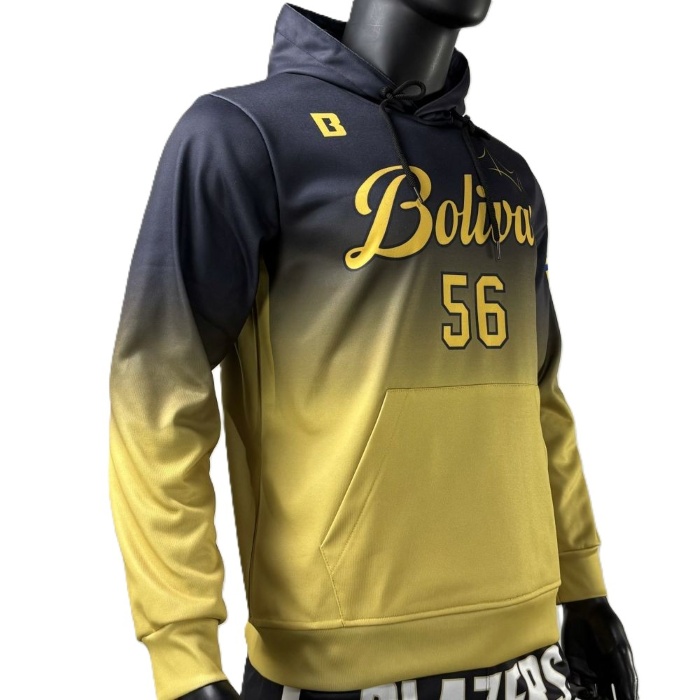
This procedure fits importers who resell at a fixed margin. It is less useful for one-off promotional orders, where speed matters more than five-year cost. For matching team apparel, see our Custom Team Jerseys range, and for outerwear, our Custom Sport Jacket category.
If you are comparing hoodie quotes now, send us your specification and target quantities. We will return a written quote with the lead time and warranty terms so you can plug real numbers into your landed-cost sheet.






 WhatsApp
 Email
 +8618978569271