Loading
A buyer can regret approving a jacket quote that looks low at first but omits lining, zipper specifications, artwork preparation, packing, freight, or import charges. The purchase order may then exceed the approved budget, or the finished garment may not match the intended retail position.
For a Custom Sport Jacket, fabric is usually the first cost driver to review, but it is not the only one. Shell fabric weight, lining requirements, construction level, trims, order volume, and shipping destination can all change the final landed cost. The practical task is to separate what a factory has confirmed from what still needs supplier, freight, or customs validation.
This guide is designed for apparel buyers comparing quotations, building target margins, and preparing budget approvals. It uses a cost analysis method rather than a single price claim, because no responsible supplier can quote one universal jacket price without a finished specification, quantity, destination, and packing requirement.
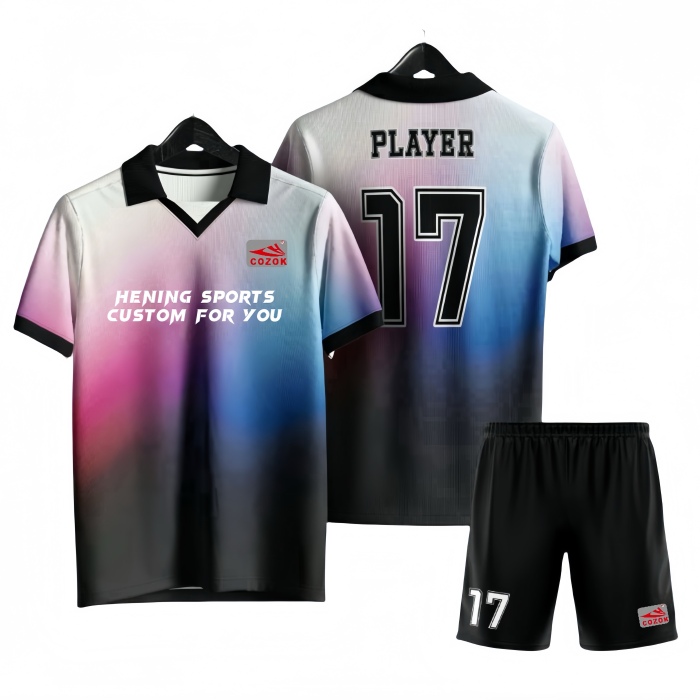
Conclusion: Lock the shell fabric specification before comparing factory prices. This is the most reliable way to identify whether one quotation is genuinely lower or simply based on a lighter, different, or incomplete material assumption.
The reasoning is straightforward. “Polyester jacket” is not a complete buying specification. A buyer should state whether the fabric is for the shell, lining, collar, cuff, or pocket bag, then identify the intended weight, surface appearance, stretch requirement, print method, and performance expectations. Without those details, two factories can quote different garments under the same product name.
Hening Clothing Co., Ltd works with 100% polyester materials featuring moisture management and four way stretch. For breathable sportswear programs, the stated fabric range is 140 to 160 gsm. This range can support teams that need a lighter athletic feel, but it should not automatically be treated as the right choice for every outerwear brief. A buyer seeking insulation, a heavy lifestyle jacket, or a structured retail silhouette should submit the required fabric standard rather than assume a sportswear fabric range will meet that need.
| Fabric decision | What to put in the RFQ | Why it affects cost | Best fit | Limit |
|---|---|---|---|---|
| Polyester shell fabric | Fiber content, gsm target, stretch requirement, finish, color method | Material consumption and fabric sourcing basis change with the stated specification | Performance teamwear and event jackets | Does not define lining, trims, or construction |
| Printed shell panels | Artwork files, panel placement, logo size, color references | Dye sublimation printing preparation and panel printing must be included in the quote | Full color team designs and sponsor graphics | Not suitable for a buyer who has not approved artwork |
| Lining requirement | Lining material, full or partial coverage, attachment method | A lining adds material, cutting, and sewing operations | Programs needing a more finished interior | Cannot be costed accurately if lining is only described as “standard” |
| Fabric hand feel | Reference swatch, target use, sample approval requirement | Visual similarity does not confirm weight, stretch, or touch | Retail programs with strict product positioning | A photo alone is not enough for approval |
Use a physical swatch or approved sample when the fabric hand feel matters to the sale. This recommendation fits private label buyers, retailers, and clubs with a fixed product standard. It does not always apply to a basic event order where speed and a known factory fabric are more important than matching an existing garment exactly.
For sports programs that also require game kits, align fabric and color decisions across Custom Team Jerseys and jacket orders before issuing the purchase order. That approach reduces the risk of one team identity being approved in separate shades or print files.
Conclusion: Build the approval sheet around confirmed costs, estimated costs, and unknown costs. A quote comparison should never treat a provisional shipping charge or an unconfirmed duty rate as a final factory cost.
The landed cost model below isolates the price impact of shell fabric, lining, construction level, trims, and order volume. It also prevents a common mistake: comparing an ex factory garment quote from one supplier with a delivered quote from another.
| Cost component | What changes the cost | Cost status before final quote | Buyer action |
|---|---|---|---|
| Shell fabric | Polyester specification, gsm, stretch, printing area, panel consumption | Confirmed only after the factory accepts the exact material specification | Request the fabric description on the quotation and sample record |
| Lining | Material choice, full or partial lining, number of lined panels | Unknown if no lining specification is supplied | State “no lining,” “partial lining,” or a defined lining requirement |
| Construction level | Panel count, pocket design, collar shape, cuff method, sewing operations | Estimated until a technical pack or approved sample exists | Send drawings with front, back, interior, and close up details |
| Jacket trim costs | Zippers, drawcords, labels, elastic, pullers, hangtags, packaging | Unknown until trim specifications and branding details are confirmed | List each trim separately instead of writing “standard accessories” |
| Production volume pricing | Quantity by size, colorway, artwork version, and packing configuration | Confirmed when quantity is fixed | Ask for price breaks at the quantities under review |
| Artwork and printing | Print placement, number of unique designs, name and number personalization | Estimated until final artwork is supplied | Confirm whether artwork preparation is included or separately quoted |
| Freight and insurance | Carton dimensions, shipment mode, destination, carrier timing | Estimated and subject to logistics confirmation | Obtain a dated freight offer for the delivery address |
| Import duty and taxes | Country rules, product classification, declared value, importer status | Unknown unless verified by the importer or customs adviser | Keep these charges outside the factory garment price |
A practical formula is:
Landed cost per jacket = confirmed factory garment cost + allocated confirmed development costs + estimated freight allocation + estimated insurance allocation + verified import charges + local delivery allocation.
Keep the labels visible in your spreadsheet. For example, a zipper may be confirmed if the factory has approved the exact trim. Freight remains an estimate until carton data, collection date, shipping method, and destination are set. Customs duty should remain an unknown or separately verified value unless your importing entity has confirmed it with the relevant adviser.
Do not turn a volume quotation into a unit cost promise for all quantities. Hening Clothing Co., Ltd has no stated minimum order quantity, which can help clubs and smaller buyers place a lower volume order. However, pricing is based on quantity. A 20 piece order and a 500 piece order should be evaluated as separate commercial cases, not assumed to receive the same unit price.
Conclusion: Choose the quotation with the clearest matched specification, not automatically the lowest unit figure. A lower figure is useful only if shell fabric, lining, construction, trims, print scope, and delivery terms are the same.
This recommendation fits buyers comparing two or more suppliers for a private label, club, school, retailer, or event program. It is less relevant when a buyer is simply replenishing an identical approved style from one supplier and every component is already documented.
Hening offers a free reprint for printing defects or wrong sizes and a one year colorfastness guarantee. These terms are decision relevant when your design depends on dye sublimation printing, because faded graphics and inconsistent sizing can create replacement costs after the goods arrive. The guarantee and remedy should still be reviewed against the final order terms; they do not remove the buyer’s need to approve artwork, size chart, and sample details before bulk production.
For a soccer club program, buyers may need jackets, training garments, and match kits to share a unified color direction. Review the jacket quote alongside Soccer Jerseys rather than approving each category in isolation. Hening has produced full custom uniforms for an Australian soccer club’s three teams, showing that multi team uniform planning is a real order scenario rather than a theoretical bundle.
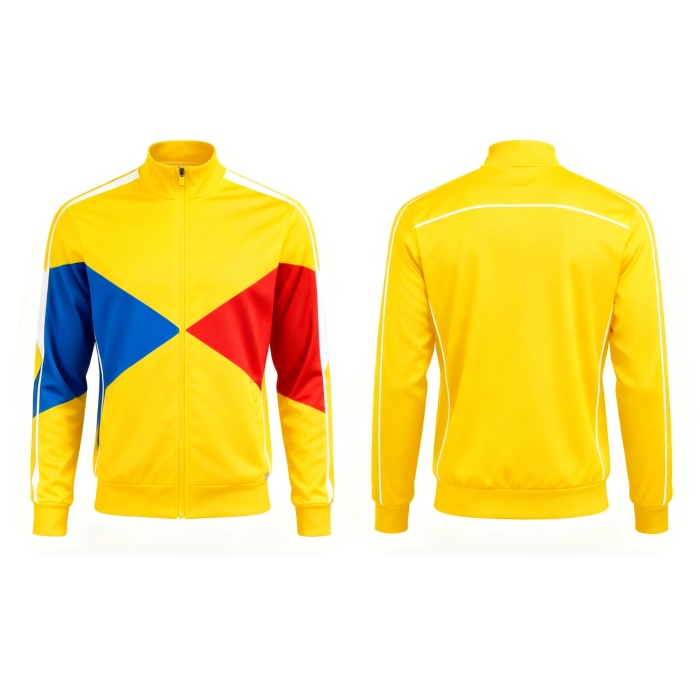
Conclusion: Define the construction level from the selling channel and user need, then set the cost target. Starting with an arbitrary target price often forces unplanned compromises later in fabric, trim, or finish.
A promotional event jacket, a club warm up piece, and a retail private label product can all use polyester, yet they should not necessarily share the same construction brief. The first may prioritize speed, event identity, and simple sizing. The second may need frequent wear performance and team color consistency. The third may require closer review of hand feel, labeling, presentation, and repeat order control.
| Construction approach | Specification focus | Suitable scenario | Commercial limit |
|---|---|---|---|
| Basic event construction | Essential shell, simple closure, limited trims, approved event artwork | Race staff, event merchandise, short run promotions | May not meet retail presentation or heavy repeat wear expectations |
| Club training construction | Mobility, team colors, size chart control, practical trims | Schools, clubs, and training groups | Requires size allocation and artwork approval before production |
| Retail focused construction | Defined fabric hand feel, branded labels, detailed finish, packing instructions | Sports retailers and private label collections | Usually needs more development work and tighter approval control |
Hening operates five automatic dye sublimation printing lines and has a daily output of more than 1,000 custom jerseys. Those production facts are useful when a buyer also has coordinated printed apparel requirements. They do not mean every jacket style has the same production route, because jacket construction, trim sourcing, and lining work must still be confirmed style by style.
The standard production period is stated as 7 to 10 days, with rush order options available. Use that as a planning input after artwork, size chart, and order details are accepted. Do not treat it as a freight promise or assume a rush option applies without production confirmation.
Conclusion: Approve the order only after the commercial file includes a finished technical specification, a cost classification, and a sign off record. This process is best for buyers who must protect target margin or obtain finance approval. It may be excessive for a very small repeat order using an unchanged approved specification.
A buyer ordering a modest club run can use the no MOQ policy to avoid purchasing excess inventory. The limit is that a low quantity may not achieve the same unit economics as a larger order. Ask for price tiers at the actual forecast quantity and at the next realistic reorder quantity. This gives finance teams a more useful margin model than an artificial high volume assumption.
For buyers adding off field merchandise to a sports program, compare jacket specifications with Custom Casual Wear early in development. Shared branding does not require identical fabric or construction, but it does require documented color and logo controls.
Send your specification, quantity forecast, and delivery destination to request a quote with a clear factory cost breakdown and landed cost inputs.






 WhatsApp
 Email
 +8618978569271