Loading
Club buyers often regret skipping small checks before placing an overseas order. A shirt can look correct in a digital mockup yet arrive with weak seams, colors that change after washing, or sizing that varies from one batch to another. When sourcing a Durable Custom Soccer Set, the safest approach is to turn appearance requirements into a written specification, test the supplier’s evidence, and approve a preproduction sample before committing to bulk production.
This matters for clubs, academies, tournament organizers, and teamwear retailers. A low initial quote may not remain low if the supplier cannot manage size records, artwork approval, print consistency, or replacement needs. The goal is not simply to find the cheapest soccer uniform supplier. The goal is to identify a factory that can repeat the approved result across your required sizes, colors, and reorder cycles.
At Hening Clothing Co., Ltd, we produce more than 1000 custom jerseys per day with five automatic dye sublimation printing lines. Our ISO 9001 and ISO 14001 certifications support a controlled production approach, while our no MOQ policy can help clubs that need a small first run or a later top up order. Pricing still depends on quantity, so buyers should request quotes using complete and comparable specifications.
Conclusion: Send every shortlisted supplier the same specification sheet. This lets you compare like for like instead of comparing incomplete prices. A supplier that quotes from a logo file and a rough quantity estimate may later add costs or substitute materials because key decisions were never confirmed.
A useful specification should cover the shirt, shorts, optional socks, artwork, fit, fabric, print method, sizes, labels, and packing. This suits clubs ordering a new home and away range, as well as retailers planning a repeatable private label program. It is less necessary for a simple stock item with no names, numbers, or color changes, but it remains useful whenever custom printing is involved.
For club soccer uniforms, fabric selection should be written as a requirement rather than described with vague words such as “premium.” Hening uses 100% polyester moisture wicking fabric with four way stretch, generally in the 140 to 160 gsm range for breathability. This specification is suitable for teams seeking a lightweight playing garment. It may not suit a buyer who wants a heavier outer layer for cold weather, in which case a separate garment category should be sourced.
For example, a club planning matchwear and sideline apparel should not force both into one garment brief. Use Soccer Jerseys for the playing range and assess a Custom Sport Jacket separately for travel or warm up use. Each item has different wear conditions and should be quoted on its own specifications.
Conclusion: For full color team designs, request dye sublimation printing on polyester and ask for evidence that the print remains stable after washing. This option fits clubs using custom patterns, sponsor graphics, and multiple colors because the design is integrated into the fabric rather than added as a separate surface layer.
The limit is straightforward: dye sublimation printing is intended for polyester-based garments. If your purchasing plan includes cotton supporter apparel or mixed-material outerwear, you need to discuss a different decoration method with the supplier rather than assuming one process covers every item.
| Decision area | What to specify | Why it affects the order | Best fit | Limit to consider |
|---|---|---|---|---|
| Fabric | 100% polyester, moisture wicking, four way stretch, 140 to 160 gsm | It defines breathability, feel, and movement during play. | Match shirts and lightweight training tops | Not the right choice when a buyer wants a heavy insulated layer. |
| Print approach | Dye sublimation printing with approved artwork | It supports full garment color and integrated sponsor graphics. | Clubs with detailed visual identities | Artwork must be approved before production begins. |
| Color control | Locked color inks and an approved visual sample | It reduces the risk of a bulk order differing from approved artwork. | Orders with club colors or sponsor requirements | A screen image alone is not enough for final color approval. |
| Fit control | Verified size chart and size quantity list | It reduces disputes over inconsistent sizing. | Mixed youth and adult team orders | One fit profile may not suit every club member. |
Do not treat “moisture wicking” as proof of durability. Moisture management relates to wear comfort, while durability depends on fabric condition, abrasion exposure, seam construction, print stability, and care. A buyer should evaluate each area separately.
For a retailer, this distinction affects product positioning. A lightweight, full print soccer shirt may be right for active clubs, while a buyer looking for casual supporter products may need a separate category such as Custom Casual Wear. Combining those requirements into one quote often creates avoidable confusion.
Conclusion: Do not shortlist a supplier based on artwork quality alone. Require written answers and physical or visual evidence for abrasion resistance, seam construction, colorfastness, and wash testing. These checks reveal problems that a polished quotation cannot show.
This screening stage is particularly suitable before issuing a purchase order to a new overseas factory. It may be less demanding for a repeat supplier that has already delivered an approved garment under the same specification, although periodic checks are still sensible when artwork, fabric, or production conditions change.
| Check item | Evidence to request | Risk if skipped | Buyer action |
|---|---|---|---|
| Abrasion resistance | Ask where the fabric is most likely to rub during use and request sample fabric or a finished sample for handling. | Areas exposed to repeated contact may show wear sooner than expected, affecting perceived quality and club confidence. | Inspect the sample around side panels, hem areas, and other likely contact zones. Compare samples from shortlisted factories. |
| Seam construction | Request close photos of shoulder, side, sleeve, hem, and short seams, plus a finished sample when possible. | Poor stitching or uneven seam allowance can lead to opening seams during active use. | Pull gently along seams, check for skipped stitches, and confirm that the same construction will be used in bulk production. |
| Colorfastness | Ask how colors are controlled, what ink system is used, and whether the supplier can provide an approved printed sample. | Club colors and sponsor graphics can appear faded or altered after washing, creating replacement costs. | Approve the physical color result, not only a digital proof. Keep the approved sample as the production reference. |
| Wash test evidence | Request photographs or records from the supplier’s wash checking process and wash a sample using your normal club care routine. | Problems may appear only after laundering, including print change, seam movement, or shape concerns. | Document the sample before and after washing, then release bulk production only after acceptance. |
Ask direct questions. “Can you provide wash-test evidence for this fabric and print combination?” is better than “Is the jersey washable?” The first request seeks proof. The second usually receives a general assurance.
At Hening, fade resistant dye sublimation printing and locked color inks are used to keep colors vivid wash after wash. We also provide a one year colorfastness guarantee and offer a free reprint for a printing defect or wrong size. Those terms help reduce buyer exposure, but they do not remove the need to approve artwork, sizing, and a physical sample before bulk release.
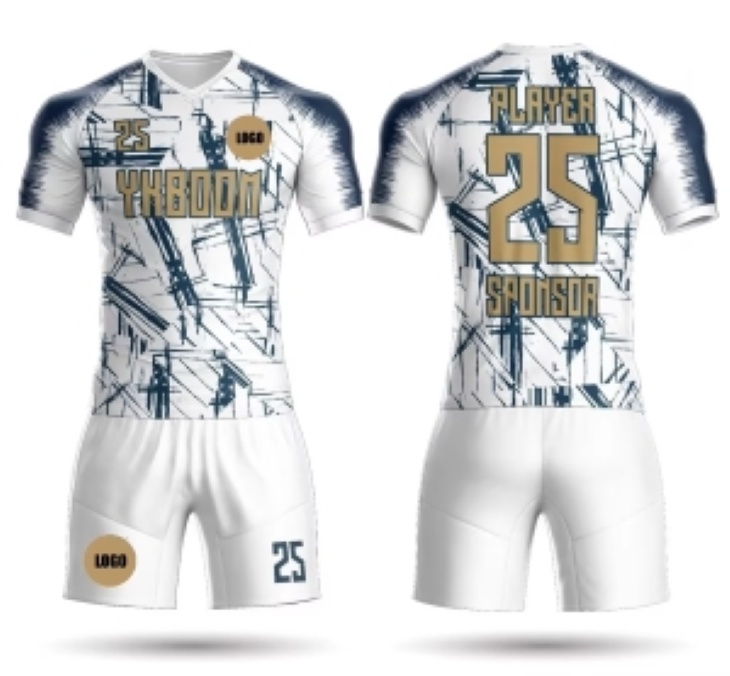
Conclusion: Request an itemized quote that separates the garment configuration from one time setup and optional service items. A low unit price is not useful if it excludes player personalization, artwork handling, or the garment pieces your club actually needs.
This approach fits initial soccer kit sourcing for clubs and teamwear retailers. It is less relevant when ordering a fixed, uncustomized stock uniform, but custom orders should always be checked line by line.
| Quote component | What changes the cost | What to ask the supplier |
|---|---|---|
| Base garment | Shirt only versus shirt and shorts, fabric specification, and total quantity | Confirm exactly which pieces are included per player. |
| Custom artwork | Number of designs, placement of sponsor marks, and artwork readiness | Ask whether artwork preparation is included and what approval file will be issued. |
| Names and numbers | Individual player data and changing squad lists | Submit a controlled spreadsheet and ask how changes after approval are handled. |
| Labels and packing | Private labels, bagging, size stickers, and retailer packing requirements | State whether garments need individual packing, grouped packing, or retail-ready presentation. |
| Shipping | Destination, delivery method, carton count, and customs arrangement | Request the delivery terms and identify which party manages duties and local clearance. |
Quantity has a direct effect on pricing. Hening has no MOQ, which can be useful when a club needs a small roster order, a goalkeeper addition, or a replacement for a new player. However, no MOQ does not mean every quantity receives the same unit rate. Ask for pricing at your immediate quantity and at realistic reorder quantities if you expect a season-long program.
Shortlisted suppliers should also demonstrate that they can handle the order type. Hening has supplied more than 500 sublimated jerseys for a United States high school basketball league and produced full custom uniforms for an Australian soccer club’s three teams. These cases show experience with multi-player and multi-team custom orders, but buyers should still assess their own artwork, sizing, and schedule independently.
Conclusion: Treat the sample as the contract reference for appearance and construction. Approve it only after checking measurements, print placement, colors, seams, and wash performance against the purchase specification.
A sample process is especially useful for a first order, a redesigned club identity, a new fabric, or a retailer’s private label collection. It may be shortened for a verified repeat order using the same approved artwork and garment pattern, but any changes should trigger fresh approval.
Do not approve a sample with verbal comments such as “looks fine.” Send written acceptance that identifies the version, date, and any agreed changes. This protects both buyer and supplier if questions arise later.
Conclusion: Work backward from the first match, tournament, or retail launch date and leave time for sample review, corrections, production, and transport. Production speed is useful only when artwork and sizing are final.
Hening’s standard production is 7 to 10 days, with rush order options available. That timing should be confirmed for the specific order because production scheduling depends on the approved specifications, order composition, and the point at which all required files are complete. Buyers should ask when the production clock starts and what approval is needed before the order enters the line.
For event work, capacity and schedule discipline matter. Hening delivered 1000 event jerseys for a European marathon and has produced running singlets for road race events across Zimbabwe. These projects demonstrate that event apparel can require structured quantity and artwork control. They should not be treated as a blanket promise that every custom order has identical timing.
Retailers building a wider teamwear offer should keep product categories separate in their sourcing plan. Match kits may sit beside Custom Team Jerseys, while a broader assortment can include Basketball Jerseys or other sport ranges. Separate product briefs prevent one sport’s fit or print requirements from being applied incorrectly to another.
A strong shortlist normally contains suppliers that answer technical questions clearly, provide sample evidence, state what is included in the quote, and accept written approval controls. This process takes more effort than choosing the lowest number on a quotation. It also reduces the chance that your club receives uniforms that look right only on day one.
Send Hening your club specification and size list to request a quote or sample review.
===BODY===






 WhatsApp
 Email
 +8618978569271