Loading
Ordering custom apparel should be straightforward, but one overlooked step can cause major delays and disappointment: the artwork approval process. Submitting the wrong file, approving incorrect color codes, or missing a typo on a roster can lead to a final product that doesn’t match your vision. When you’re creating Custom Fan Support Basketball Jerseys for a passionate audience, getting the details exactly right is non-negotiable. An unclear proofing stage is the single biggest risk to your timeline and budget.
As a sportswear production specialist with 10 years on the factory floor, I’ve seen how small front-end mistakes create significant back-end problems. This guide provides a clear, no-nonsense framework for navigating the artwork approval process. We will cover the technical file requirements, color matching, and the final sign-off steps that ensure what you approve is exactly what you receive. Our goal is to empower you to order with confidence, backed by a process refined in our ISO 9001-certified facility.
The first checkpoint in any custom jersey order is the quality of your design files. For dye-sublimation printing, where ink is heat-fused directly into the fabric, the source file’s format determines the final print’s sharpness and clarity. The distinction between vector and raster files is the most important concept to understand.
Vector files (commonly with .AI, .EPS, or .SVG extensions) use mathematical equations to create shapes and lines. This means they can be scaled to any size—from a small chest logo to a full-jersey graphic—without losing any quality. Logos, text, and numbers should always be in vector format. Raster files (like .JPG, .PNG, or .GIF) are made of pixels. When you enlarge a raster image, the pixels become visible, leading to a blurry or “pixelated” result. While photos can be raster, they must be very high resolution (300 DPI at the desired print size) to be usable.
Submitting a low-resolution raster file for a logo is one of the most common causes of production delays. At Hening, we require vector files for all critical design elements to ensure your jerseys look professional. This is how we guarantee the crisp lines seen on the 500+ sublimated jerseys we supplied for a U.S. high school basketball league.
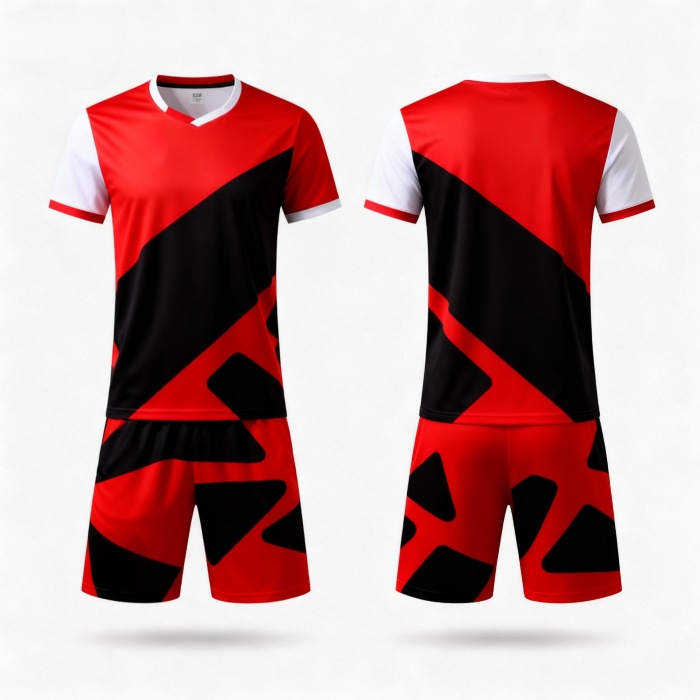
Understanding which file to use and when is essential for a smooth production process. Here is a direct comparison to guide your file preparation.
| Feature | Vector Graphics (.AI, .EPS, .PDF) | Raster Graphics (.JPG, .PNG) |
|---|---|---|
| Scalability | Infinitely scalable without quality loss. Perfect for logos and text. | Loses quality when enlarged. Appears pixelated or blurry if stretched. |
| Best For | Logos, player names, numbers, and line art. | Complex photographs or detailed, textured images (at high resolution). |
| Color Editing | Colors can be easily changed and matched to specific Pantone codes. | Color editing is more complex and less precise. |
| File Size | Generally smaller, as it only contains mathematical data. | Can be very large, especially for high-resolution images. |
Always ask your designer for the original vector source files. If you only have a raster file, we may be able to help recreate it as a vector, but this can add time and cost to your project. Starting with the right format is the best way to keep your order on track for our standard 7-10 day production timeline.
Once your files are submitted, the next stage is reviewing the digital proof or mock-up. This is your final chance to catch errors before production begins. Approving an incorrect proof means you are authorizing the factory to produce exactly what is shown, errors and all. To prevent this, use the following checklist to review every detail of your mock-up.
This proofing stage is where our expertise makes a difference. We don’t just send a file; we guide you through the key check-points to ensure a perfect outcome. It’s a core part of our service, whether we’re making a handful of jerseys for a small club or producing 1000 event jerseys for a European marathon.
Inconsistent sizing is a frequent complaint in the custom apparel industry. What one supplier calls a “Large” might be a “Medium” from another. This is especially challenging when ordering for a diverse group of fans. The only way to ensure a good fit is to ignore generic size labels and focus on specific measurements.
We solve this problem by providing a verified, detailed size chart with specific measurements for chest width, body length, and sleeve length for all our Basketball Jerseys. We strongly recommend you use this chart to guide your order. To avoid sizing issues, follow these steps:
This disciplined approach to sizing is crucial for bulk orders. It’s the same process we used when outfitting three separate teams for an Australian soccer club, ensuring every player received a uniform that fit correctly. If a sizing error occurs due to a mistake on our end, we offer a free reprint, providing you with complete peace of mind.
Transparency in the production process helps you plan your deadlines effectively. With a daily output capacity of over 1000 custom jerseys, our factory is built for both speed and precision. Here is a typical step-by-step timeline from the moment you approve your artwork.
This structured workflow allows us to handle diverse orders, from producing training sportswear for retailers in New Zealand to creating running singlets for events across Zimbabwe. By managing the full industrial chain in-house, we maintain control over quality and timelines for all our Custom Team Jerseys.
Ready to get a clear, accurate proof for your fan jerseys? Send us your design files to get a free quote and digital mock-up today.






 WhatsApp
 Email
 +8618978569271