Loading
Placing a bulk order for a custom sport jacket is a significant investment. The biggest risk isn’t the price—it’s receiving a shipment of 500 units with inconsistent sizing, colors that fade after the first wash, or a delivery that arrives a month late, missing your retail season entirely. These issues don’t just affect your bottom line; they damage your brand’s reputation. Before you send a deposit, you need a clear process for verifying a manufacturer’s claims and capabilities.
As a production specialist with a decade of experience on the factory floor, I’ve seen these problems firsthand. I’ve also helped hundreds of retailers and team suppliers avoid them. This guide outlines the technical specifications, vetting procedures, and common mistakes to watch for when sourcing jackets that perform for your customers and sell through for your business.
The look and feel of a jacket are determined by its materials and construction. A spec sheet might list “100% polyester,” but this tells you very little. You need to dig deeper into the fabric’s weight, functional properties, and how the design is applied. These details separate a premium garment from a disappointing one.
For most athletic applications, performance polyester is the standard. It offers durability, color retention, and moisture management. Here’s what to specify:
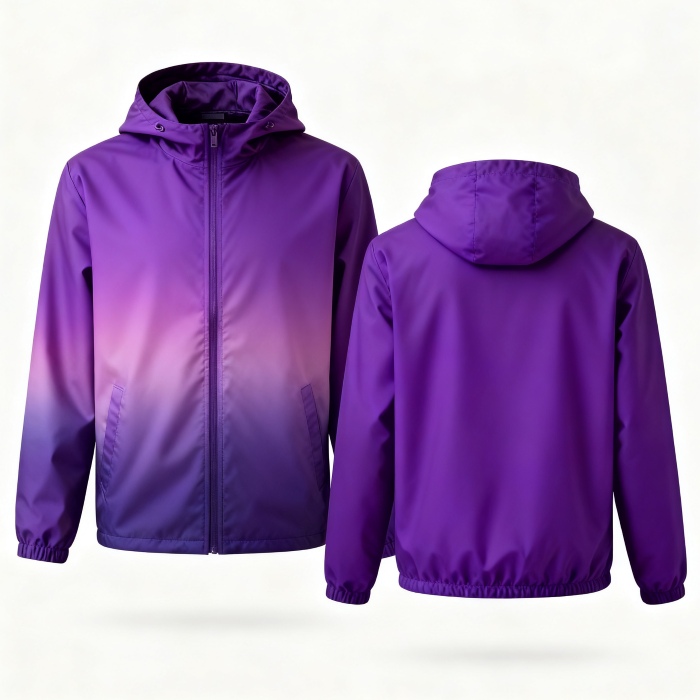
Dye-sublimation is the superior method for custom sportswear. It infuses ink directly into the fabric fibers, rather than laying it on top like a screen print. The result is a design that won’t crack, peel, or fade. However, not all sublimation is created equal.
Many teams and retailers complain about colors looking dull or fading after a few washes. This happens when manufacturers use low-quality inks or improper heat press settings. At our facility, we solve this by using specialized locked-color inks and offer a 1-year colorfastness guarantee on all our garments. This is the kind of assurance you should seek from any supplier, ensuring the Custom Sport Jacket you sell looks as good on day 100 as it did on day one.
A good website or a low price is not enough to qualify a manufacturing partner. You must verify their process. Use this checklist before committing to a bulk order to protect your investment and ensure you receive exactly what you envisioned. Skipping these steps is the single biggest cause of production disasters.
Why it matters: The fit of your jacket defines your brand. A supplier must be able to translate your design vision into a physical pattern that fits consistently. Can they create a new pattern from your tech pack, or can they only replicate an existing sample? A capable partner can adjust armhole depth, body length, and seam placement to create a unique product.
What to ask: “Can you create a new pattern based on our detailed tech pack and measurement chart? What is your process for pattern adjustments?”
Why it matters: A digital image cannot convey the feel, weight, or true color of a fabric. Receiving physical swatches is the only way to confirm the 140-160 gsm polyester you specified feels right for your brand. It also allows you to test for stretch and see the sublimation print quality up close.
What to ask: “Please send physical swatches of the proposed 150 gsm 4-way stretch polyester, both blank and with a sample sublimation print.”
Why it matters: This is perhaps the most overlooked and damaging mistake. Inconsistent sizing is a major reason for customer returns. A “size-grade set” is a sample run of your jacket in key sizes (e.g., S, L, XXL). It allows you to check that the fit scales correctly and consistently across the entire range. At Hening, we work from a verified size chart that has been tested across thousands of orders, including for clients like a US high school basketball league that required precise fits for over 500 athletes.
What to ask: “What is your process for size-grade approval before bulk production begins? Can we receive a sample set to verify fit?”
Why it matters: The PPS is your “golden sample”—a single, fully finished jacket made exactly as the bulk order will be. This is your final chance to catch any errors in stitching, logo placement, color accuracy, zipper quality, or label information. Approving the PPS means you approve the entire production run. We have confidence in our process, which is why we offer a free reprint for any printing defect or wrong size that deviates from the approved PPS.
What to ask: “Please confirm that a full pre-production sample will be sent for physical approval before you start the main production run.”
Once you’ve vetted a supplier, you need to understand their production rhythm. A reliable manufacturer will be transparent about their capacity, lead times, and how order volume affects pricing. Our 1000 sqm factory in Guangzhou operates five automatic dye-sublimation lines, giving us the flexibility to handle diverse orders, from small clubs to large retailers.
Here’s a typical production timeline breakdown:
One of the biggest hurdles for new brands or clubs is the Minimum Order Quantity (MOQ). Many factories require 300-500 pieces per design. We have a No MOQ policy. This allows you to test a new design with a small batch or place a top-up order without a large capital commitment. While there is no minimum, pricing is tiered based on quantity—a 500-piece order will have a lower per-unit cost than a 20-piece order. This model supports both emerging brands and established sports retailers, like those we supply in New Zealand.
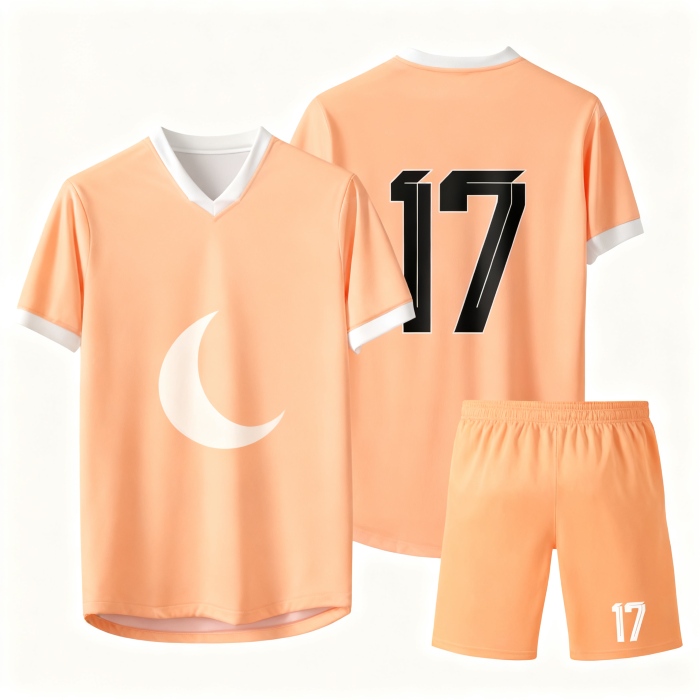
Years on the factory floor have shown me the same preventable errors repeated by buyers. Avoiding these will save you time, money, and frustration. Here are the most common mistakes when sourcing a Custom Team Jerseys or jackets.
| Mistake | Why It’s a Problem | How to Avoid It |
|---|---|---|
| Providing Vague Artwork | Submitting low-resolution JPEGs or unclear color codes (e.g., “dark blue”) leads to interpretation by the factory, which rarely matches your vision. | Always provide vector files (AI, EPS, PDF) for logos and specify exact Pantone (PMS) color codes for all design elements. This removes all guesswork. |
| Not Verifying Certifications | Claims of “high quality” are meaningless without proof. Certifications indicate a commitment to standardized processes for quality and environmental management. | Ask for copies of their certifications. For example, our facility is ISO 9001 (quality management) and ISO 14001 (environmental management) certified, providing third-party validation of our operational standards. |
| Choosing a Supplier Based Only on Price | The lowest price often comes from cutting corners: using cheaper, non-wicking fabric, lower-grade inks that fade, or rushing quality control checks. | Evaluate suppliers on total value: material quality, production speed, communication, guarantees (like our free reprint policy), and proven experience, such as our work producing Basketball Jerseys for US leagues. |
| Ignoring the Production Location | A factory in an isolated area may struggle with sourcing materials or skilled labor. This can cause delays and quality issues. | Look for suppliers in established manufacturing hubs. Our factory is located in Guiping, a town famous for its complete sportswear industrial chain, giving us reliable access to quality fabrics, zippers, and other components. |
Sourcing a high-quality custom sport jacket comes down to a methodical process of verification. By focusing on specific material properties, insisting on a rigorous sampling process, and understanding the production realities, you can build a reliable supply chain and a product that your customers will be proud to wear.
If you have a design ready or need guidance on technical specifications, send our team your requirements. We can provide a detailed quote and a clear production plan.






 WhatsApp
 Email
 +8618978569271