Loading
Placing your first big order for team jerseys feels like the final step. But for a growing club, it’s just the beginning. The real sourcing challenge isn’t the initial purchase; it’s the hidden costs and logistical headaches that appear in year two, three, and beyond. What happens when a new player joins mid-season? Or when a few jerseys get damaged and you need just two replacements? Many clubs find their original supplier has a high minimum order quantity (MOQ), forcing them to either buy 50 jerseys when they only need five, or tell new members they can’t have a matching kit.
This is the sourcing risk that can drain a club’s budget and create an inconsistent team image. The initial per-jersey price you celebrated can quickly be overshadowed by inflated reorder costs, wasted inventory, and—worst of all—color inconsistencies that make the new kits look like they belong to a different team. As a production specialist with a decade on the factory floor, I’ve seen this exact problem derail many teams. Choosing a manufacturing partner should be a long-term decision, not a one-time transaction. That’s why we built our entire production process, from our no-MOQ policy to our color-locking technology, to address these future needs directly.
Focusing only on the price of your first 100 jerseys is a critical mistake. A supplier’s reorder policy has a massive impact on your total cost over the life of a design. Let’s compare two common scenarios for a club over five years: one using a typical supplier with a 50-piece MOQ, and one using a flexible supplier like Hening Clothing with no MOQ.
Scenario Assumptions:
| Cost Factor | Supplier A (50-Piece MOQ) | Hening Clothing (No MOQ) | Commentary |
|---|---|---|---|
| Year 1: Initial Order (100 units) | 100 x $15 = $1,500 | 100 x $15 = $1,500 | The initial investment is often identical. The key differences appear later. |
| Year 2: Reorder (8 units needed) | 50 x $15 = $750 | 8 x $15 = $120 | Supplier A forces you to buy 42 extra jerseys you don’t need, tying up funds and creating dead stock. |
| Year 3: Reorder (8 units needed) | 50 x $15 = $750 | 8 x $15 = $120 | The pattern repeats. Your club has now paid for 84 unnecessary jerseys. |
| Year 4: Reorder (8 units needed) + Color Fade Issue | 50 x $15 = $750. (Plus potential cost to replace all 100 original jerseys if colors no longer match: $1,500) | 8 x $15 = $120 | With cheaper suppliers, the new batch’s color may not match the faded originals. This often forces a complete team-wide replacement to maintain a professional look. |
| Year 5: Reorder (8 units needed) | 50 x $15 = $750 | 8 x $15 = $120 | Another year of wasted budget and inventory. |
| 5-Year Total Jersey Spend | $4,500 (or $6,000+ with a full replacement) | $1,980 | The no-MOQ model saves over 55% before even accounting for the risk of a forced full-team reprint due to color fading. |
This model shows that a supplier’s flexibility is a direct financial benefit. Our no-MOQ policy isn’t just a convenience; it’s a core part of a sustainable procurement strategy for clubs, teams, and retailers. You order exactly what you need, when you need it, protecting your budget for other club priorities.
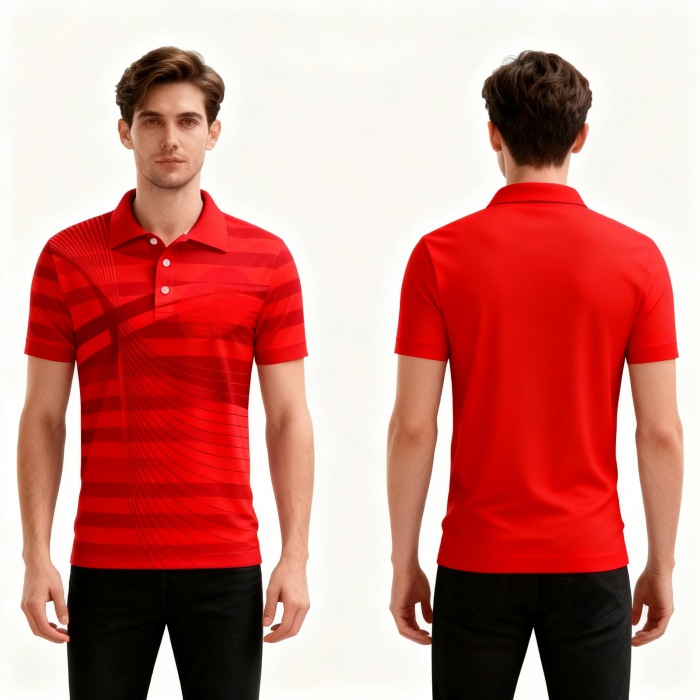
The long-term value of your teamwear is determined by the material science and quality control behind it. At our ISO 9001-certified facility, we focus on three technical areas that directly impact the lifespan and consistency of your jerseys, ensuring the kit you order in year five perfectly matches the one from year one.
One of the most common complaints we hear from clubs switching suppliers is that their old jerseys faded after just a few washes. This makes reorders impossible, as new, vibrant prints clash with the washed-out originals. We solve this with an advanced dye-sublimation process.
This was essential for an Australian soccer club that hired us to produce full custom uniforms for their three separate teams. They needed absolute color consistency across every jersey, a standard we delivered through our rigorous sublimation process. You can browse our Soccer Jerseys to see similar examples.
Inconsistent sizing is another major issue that creates waste. If a player’s “Large” from the second batch is different from the first, that jersey is useless. We eliminate this risk through a verified system.
A jersey that wears out quickly is a jersey you have to replace. Our standard teamwear fabric is chosen for both performance and durability.
Based on my experience helping hundreds of clubs, here are the most frequent sourcing mistakes I see. Avoiding them is key to a successful long-term partnership with a supplier.
Buyer’s Decision Checklist:
Thinking through these points will help you select a true partner, not just a one-time vendor, for all your Custom Team Jerseys.
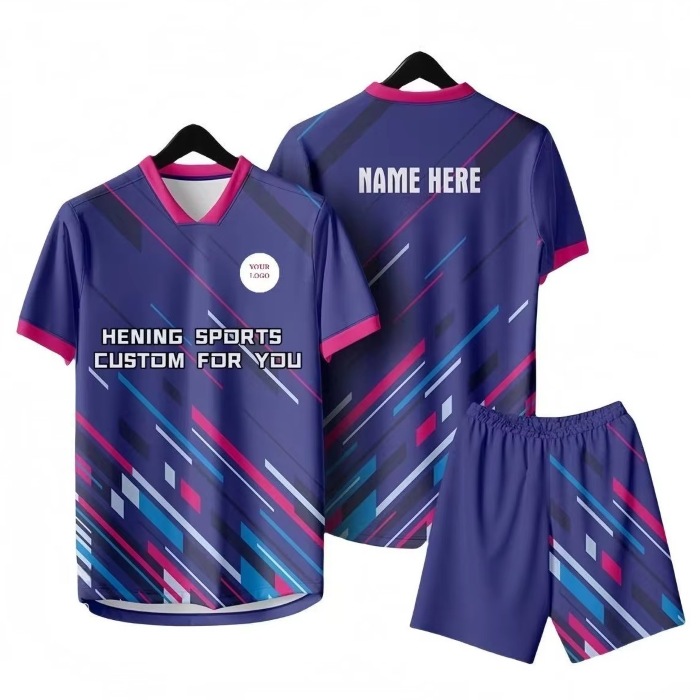
Whether you are a small local club or a large regional league, your apparel needs will evolve. Our facility is structured to support that growth. With a 1000 sqm factory floor, over 100 skilled workers, and five automatic dye-sublimation printing lines, we have the capacity to manage orders of any size with consistent quality. Our daily output exceeds 1000 custom jerseys.
This scalability has been proven time and again. We’ve produced 500+ sublimated jerseys for a US high school basketball league, requiring coordinated delivery and strict quality control across the entire batch. We’ve also handled high-volume, time-sensitive orders like the 1000 event jerseys for a European marathon. For smaller clubs, our no-MOQ policy and dedicated support provide the same professional-grade service, ensuring you get top-tier Badminton Jerseys without the financial burden of large minimums.
From road-race singlets in Zimbabwe to training wear for sports retailers in New Zealand, our model is built on flexibility and reliability. We manage the production complexities so you can focus on your team.
Ready to build a smart, long-term apparel plan for your club? Send us your logo and design ideas, and we’ll provide a detailed quote and explain our reorder process.






 WhatsApp
 Email
 +8618978569271