Loading
The most expensive mistake in a repeat order is rarely the unit price. It is the 40 jerseys in the wrong sizes that sit in a storeroom while a club runs out of the sizes it actually needs. If you import or retail Soccer Jerseys for clubs, your second and third purchase orders should be built from sales data, not from a copy of the first order sheet.
I’m Linjing He, and after ten years on the production side of custom sportswear, I see the same pattern. Buyers negotiate hard on price per piece, then lose the savings through a poorly balanced size split. This article gives you a way to budget a soccer jersey reorder by separating what is confirmed, what is estimated, and what you cannot know yet.
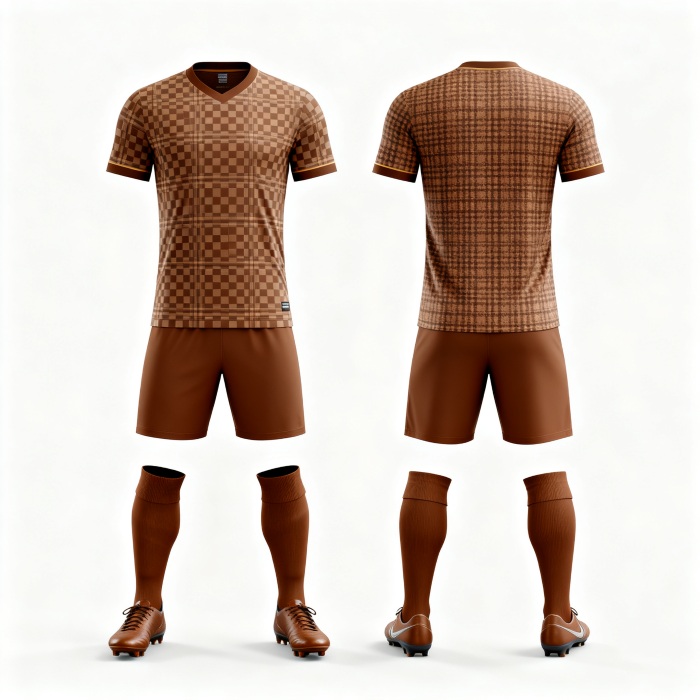
A reorder budget fails when estimates are written down as facts. Split every line before you approach a supplier.
| Cost bucket | What belongs here | How to treat it |
|---|---|---|
| Confirmed | Our terms: no MOQ, pricing based on quantity, 7-10 day standard production, free reprint for any printing defect or wrong size, 1-year colorfastness guarantee | Budget as fact. Request the written quote for the exact quantity. |
| Estimated | Sell-through rate by size group, share of youth demand, how many players will join mid-season | Build from your own sales history. Label every figure as an assumption. |
| Unknown until quoted | Exact price tier for your quantity, any change in unit price when sizes are split into small groups, freight and duty to your market | Leave blank in the budget. Ask in your RFQ. |
One point that deserves a direct question: because pricing is based on quantity, a reorder placed as one 200-piece run may price differently from the same pieces placed as four 50-piece runs. Ask whether your quote counts total quantity per design or per size group. We do not publish a flat tier chart here, so treat that line as unknown until you have the quote.
This is the model I use when a buyer asks how to split a repeat order. It works on one idea: leftover stock is a cost, and it is not spread evenly across sizes. Core adult sizes (S to XL) usually sell through. Youth and uncommon sizes (XXS, 3XL and above, extra long cuts) carry more risk.
The numbers below are illustrative only. The $20 landed unit cost is a placeholder, not a Hening price. The sell-through rates are estimates you should replace with your own data. Assume a 200-piece reorder of one home design.
| Scenario | Adult core | Youth | Uncommon | Estimated leftover | Leftover value at $20 |
|---|---|---|---|---|---|
| A: Copy of first order | 120 | 60 | 20 | 12 + 15 + 10 = 37 pieces | $740 |
| B: Adjusted to sales data | 150 | 40 | 10 | 15 + 10 + 5 = 30 pieces | $600 |
| C: Core only, uncommon sizes as a small separate top-up | 160 | 40 | 0 | 16 + 10 = 26 pieces | $520 |
Assumed sell-through: adult core 90%, youth 75%, uncommon 50%. Scenario C leaves the least stock, but the uncommon sizes now need their own small order. Whether that small batch costs more per piece is an unknown. Get the quote before choosing C.
A good size forecast takes about an hour with a spreadsheet. Follow these steps.
Fit consistency matters here. We work from a verified size chart, and the chart should be locked between runs so a size L from the second order matches the first. Send us the original chart reference with the reorder instead of describing sizes from memory.
Size mix is only half of reorder risk. The other half is whether the new batch matches the old one in color and print. Our ISO 9001 quality management system and ISO 14001 environmental management system certifications cover the facility where your order is made. It is a 1000 sqm factory in Guangzhou with 100+ workers and 5 automatic dye sublimation printing lines, with output above 1000 custom jerseys per day.
For a budget, the practical points are these. We use locked-color inks, so colors should match your first run. The fabric is 100% polyester, moisture-wicking, with 4-way stretch at 140-160 gsm. We back the work with a free reprint for any printing defect or wrong size and a 1-year colorfastness guarantee. These terms reduce one line in your cost model, the risk of a bad batch, but they do not remove forecasting risk. A correct print in the wrong size ratio is still your leftover stock.
Some of our past work shows the range of order types. We supplied 500+ sublimated jerseys for a US high school basketball league and produced full uniforms for an Australian soccer club’s three teams. Those two buyers have different size profiles. A school league skews youth and a three-team club skews adult. Neither would use the same reorder ratio, which is the point of this model. If your range also includes court sports, see our Basketball Jerseys.
Matching kits across sports is common for club retailers, so the same method works for a volleyball uniform restock. For full team programs, our custom team jerseys range is the place to start.
If you have first-run size data, send it with your design reference and target quantity. We will quote the full reorder and a reduced size-mix alternative so you can compare leftover risk before you commit.






 WhatsApp
 Email
 +8618978569271