Loading
Before issuing an RFQ for a Jacket With Hood, procurement teams should turn a broad request such as “branded staff outerwear” or “team hoodies” into a controlled specification. The largest ordering problems usually appear after artwork approval: the shell fabric is too light for the intended use, the hood sits poorly, the size run does not match the wearer group, or a supplier prices a basic pullover while the buyer expected a lined zip jacket.
Retail-style descriptions are not enough for a bulk purchase. Terms such as “warm,” “water-resistant,” “premium,” or “sports jacket” can mean different things to different suppliers. A quote-ready brief should identify the garment type, shell material, hood shape, closure, decoration method, intended environment, size breakdown, packaging needs, and delivery requirement.
For branded sports and team programs, Hening Clothing Co., Ltd. is relevant when the order calls for custom polyester sportswear and color-led decoration. Our stated fabric specification is 100% polyester with moisture-wicking, 4-way stretch properties and a 140–160 gsm weight range for breathability. That profile may suit lightweight team layers, event outerwear, and training pieces. It should not automatically be treated as suitable for insulated winter jackets, heavy rainwear, or protective workwear. Those uses require the buyer to confirm the actual shell, lining, insulation, and weather-performance requirements before supplier selection.
Buyers planning a coordinated sports range can also assess adjacent product categories, including Custom Sport Jacket options and matching Custom Team Jerseys. Matching colors across garments is often easier when artwork, color references, and print placement are controlled from the beginning.
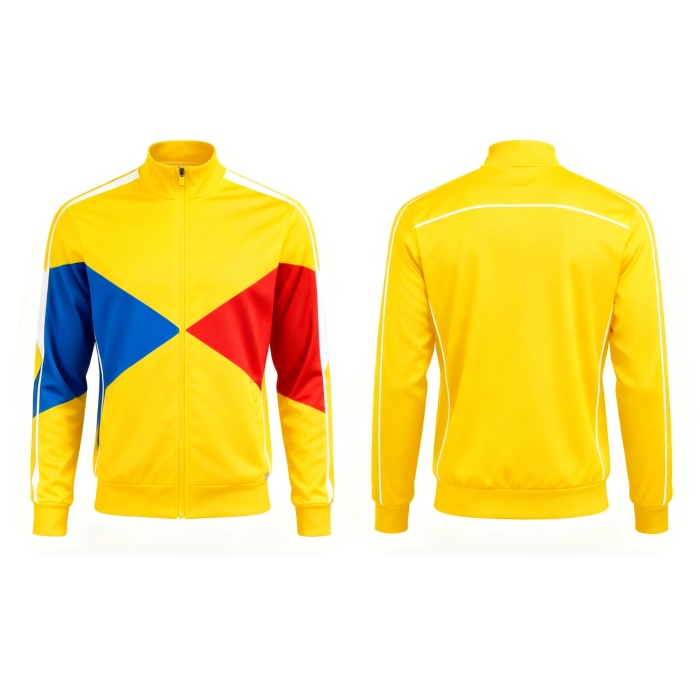
The first sourcing decision is not price. It is whether the supplier’s stated capabilities fit the garment category you are actually buying. A lightweight polyester training jacket and an insulated branded parka may both have hoods, but they need different materials, construction details, and production evidence.
| Buyer requirement | What to specify in the RFQ | When Hening’s stated capability may fit | What still needs confirmation |
|---|---|---|---|
| Lightweight team or training outerwear | 100% polyester requirement, breathability expectation, stretch requirement, zipper or pullover format, artwork locations | Hening states 100% polyester, moisture-wicking, 4-way stretch fabric in a 140–160 gsm range. | Actual garment pattern, hood construction, zipper type, lining, pockets, and fabric availability for the selected design. |
| Full-color branded event layer | Artwork files, color references, sponsor marks, placement map, individual names or numbers if needed | Fade-resistant dye-sublimation printing is a stated selling point, intended to keep colors vivid after washing. | Whether the requested jacket panels and construction are suitable for sublimation printing. |
| Small replacement or mixed-size order | Quantity by size, artwork version, delivery destination, whether the order matches a previous style | Hening has no MOQ, although pricing is based on quantity. | Unit-price effect at the requested volume and whether the previous material or pattern remains available. |
| Large sports program rollout | Total quantity, split by team, deadline, size ratio, decoration list, packaging instructions | Hening states daily output of 1000+ custom jerseys and standard production of 7–10 days, with rush orders available. | Whether hooded-jacket capacity, construction complexity, and shipping timing fit the program schedule. |
| Cold-weather or rain-protection outerwear | Target weather conditions, shell performance, insulation request, seam treatment, lining, hood adjustment details | No stated evidence confirms insulated, waterproof, or seam-sealed jacket construction. | All weather-protection claims, material test requirements, and construction details must be agreed before order placement. |
The practical conclusion is simple: use Hening’s stated polyester and sublimation strengths for suitable sportswear-oriented briefs, but do not assume performance outerwear features that have not been documented. This distinction matters most when the end user will wear the garment outdoors for long periods. It matters less for a lightweight indoor warm-up layer, where decoration, fit, and coordinated team appearance may drive the purchase.
Use the following checklist before asking suppliers for final pricing. Each line turns a subjective request into an approval point. It also gives competing suppliers the same information, making quotations easier to compare.
| Checkpoint | What the buyer should state or approve | Why it affects the order | When the checkpoint may not apply |
|---|---|---|---|
| Shell fabric | State fiber content, fabric weight requirement if known, stretch need, surface finish, intended climate, and whether the garment needs a lining. | The shell affects comfort, appearance, print compatibility, and the garment’s intended use. Hening’s stated 100% polyester, 140–160 gsm material range is aimed at breathable sportswear rather than an assumed insulated shell. | A buyer should not force a specific fabric weight when there is no wear-use requirement behind it. Describe the use first. |
| Hood construction | Specify fixed or removable hood, hood depth, neck opening, drawcord requirement, lining, visor shape, and whether the hood must fit over headwear. | A hood that looks acceptable on a flat sketch can pull at the neckline or sit too shallow when worn. Construction also changes fabric consumption and sewing scope. | A removable hood should not be requested merely for appearance; it adds components and should be justified by the wearer’s use case. |
| Front and pocket design | Confirm pullover, full zip, partial zip, pocket count, pocket closure, cuff type, hem finish, and any reflective or contrast panels. | These details determine the garment category being priced. A supplier cannot accurately compare a simple pullover with a full-zip style containing multiple pockets. | For a basic event layer, pockets and complex trims may add cost without serving the event purpose. |
| Branding and artwork | Supply vector logos where available, print placement dimensions, color references, name/number list, and approval owner. | Dye-sublimation is useful for color-led designs because Hening states it uses locked-color inks and fade-resistant printing. It does not remove the need to approve artwork placement and panel boundaries. | Individual names and numbers are unnecessary for non-personalized staff stock, but logo placement still requires approval. |
| Size grading | Provide the size chart to use, wearer profile, intended fit, and whether the garment is unisex, youth, women’s, or men’s sizing. | “Large” is not a universal measurement. Hening states it uses a verified size chart to address inconsistent sizing, but the buyer still needs to select and approve the applicable chart. | One-size promotional items require a different approach, though hood and body proportions still need review. |
| Size-ratio approval | List quantities by each size and identify whether replacements may be needed after delivery. | Correct total quantity does not solve a poor size mix. A bulk order with too few common sizes can create shortages even when production is correct. | Named individual orders may use a wearer-by-wearer list instead of a general size ratio. |
| Acceptance standard | Agree which artwork, size chart, garment features, and packing details form the approval reference. | This gives both parties a shared basis for identifying a discrepancy rather than relying on verbal descriptions. | The buyer should not add unstated performance tests after production unless they were included in the original agreement. |
For procurement teams, the best sequence is to approve the garment definition before negotiating final unit price. A low quote based on an incomplete brief is not a saving; it is a source of later change requests.
A controlled RFQ lets buyers compare like with like. The goal is not to impose a universal development process on every supplier. It is to identify the information that must be settled before a purchase order can be released.
This workflow is suitable for procurement teams shortlisting suppliers. It is less suitable when the buyer has already approved a complete technical pack and only needs a direct replenishment price. In that case, the priority is confirming whether the existing fabric, pattern, trims, and artwork are available rather than reopening every design choice.
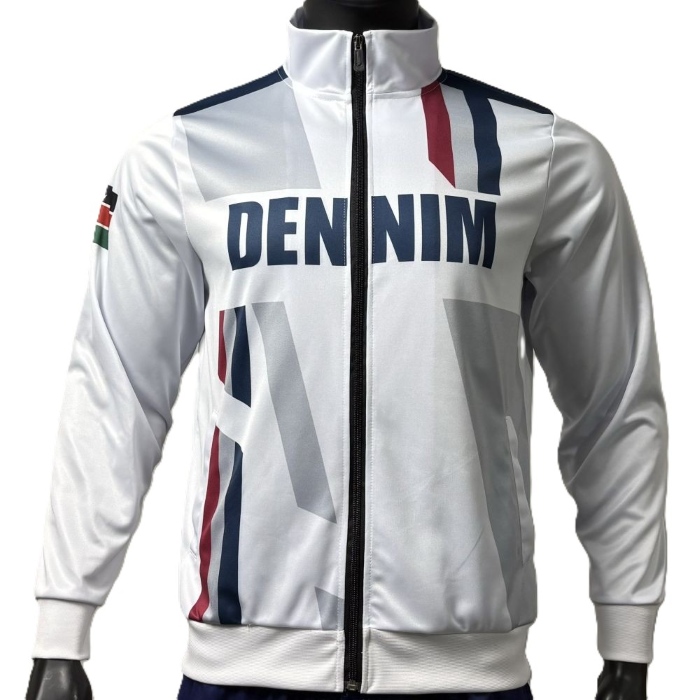
Supplier claims should be tied to documented facts and to the category being sourced. Hening Clothing Co., Ltd. operates a 1000 sqm factory in Guangzhou, China with more than 100 workers and five automatic dye-sublimation printing lines. The company also holds ISO 9001 quality management system certification and ISO 14001 environmental management system certification.
These are meaningful signals for buyers seeking a supplier with defined management-system certifications and stated printing capacity. They do not, by themselves, prove every hooded garment construction, fabric treatment, or weather-protection feature. A buyer should therefore use this evidence as part of the shortlist, then verify the requirements specific to the selected jacket design.
Relevant order history can also help a procurement team assess scale and sportswear context. Hening has supplied more than 500 sublimated jerseys for a United States high school basketball league, produced full custom uniforms for an Australian soccer club’s three teams, delivered 1000 event jerseys for a European marathon, supplied training sportswear for sports retailers in New Zealand, and produced running singlets for road-race events across Zimbabwe.
These examples support Hening’s experience with custom sportswear, team programs, and event apparel. They should not be presented as proof that every jacket order uses the same delivery date, construction, or pricing. A marathon event jersey and a hooded outerwear program are different products. The buyer should request confirmation of the selected item’s actual production plan.
For organizations sourcing coordinated club apparel, category references such as Soccer Jerseys, Basketball Jerseys, and Custom Casual Wear can help define which garments should share colors, logos, and personalization rules. Do not assume that a jersey color file automatically transfers correctly to every jacket fabric or panel layout; include the intended artwork placement in the jacket brief.
A lower unit price can be useful only when the comparison covers the same garment definition. Procurement teams should compare quoted scope as carefully as price. The following table can be used as an internal review sheet.
| Cost or risk area | Buyer question | Decision action |
|---|---|---|
| Garment construction | Does every quote include the same hood type, closure, pockets, cuffs, and lining requirement? | Reject any comparison where one supplier prices a simplified style without identifying the difference. |
| Fabric scope | Is the quoted shell appropriate for training, casual wear, or the required outdoor environment? | Match the fabric to the use case. Do not assume a breathable polyester sportswear fabric replaces insulated or weather-protective materials. |
| Decoration | Are all logo placements, names, numbers, and colors included? | Attach the placement map and personalization list to the RFQ. |
| Size distribution | Does the price cover the requested size ratio and any individual names? | Send the size table with quantities, not only a total unit count. |
| Timing | When does production begin: after inquiry, after artwork approval, or after payment terms are settled? | Ask for the production starting point and work backward from the required delivery date. |
| Defect handling | What happens if a print is defective or a supplied size is wrong? | Record the acceptance reference and confirm applicable remedy terms before the order is awarded. |
The right sourcing choice depends on the brief. Hening can be a practical fit for buyers seeking custom, color-led polyester sportswear with no MOQ requirement, fade-resistant sublimation printing, and stated standard production of 7–10 days. The fit is less clear when the requirement depends on unconfirmed insulation, waterproof construction, removable hoods, or certified protective performance. Those points should be resolved before a supplier is treated as approved for the program.
Send your jacket specification, quantity by size, artwork, and required delivery date to request a focused bulk-order quote.






 WhatsApp
 Email
 +8618978569271