Loading
You receive three samples of a Minimalist Custom Zip Hoodie Jacket. All three look clean on the table. You pick the cheapest, place the order, and 400 pieces later the zipper snags, the cuffs bag out and the tonal logo shows two shades across the chest. That is the sourcing risk this guide addresses.
A minimalist garment has no graphics to hide behind. Every flaw sits in plain view: a wavy zip tape, a thick seam at the shoulder, a logo that is a shade off from the body fabric. So the sample is your best evidence. Treat it as a measurement exercise, not a look-and-feel impression.
Below is a scoring method for four checks (zipper smoothness, rib recovery, seam bulk and tonal logo consistency), followed by what Hening Clothing Co., Ltd can and cannot evidence for this product type.
Use the table to score every supplier’s sample the same way. Run all tests on samples from the same size and colorway, and record results in writing. Thresholds below are suggested buyer acceptance criteria to agree with the supplier, not published factory specifications.
| Test | How to run it | Pass signal | Red flag | Limit of the test |
|---|---|---|---|---|
| Zipper smoothness | Open and close the zip 20 times, fully buttoned at the chin and with the garment hanging, then again with it laid flat. | Slider moves with one hand, no catching on the facing, no wavy tape beside the zip. | Needs two hands, snags fabric, tape ripples after closing. | 20 cycles shows early fit problems only. It does not predict long-term wear. |
| Rib recovery | Stretch the cuff and hem rib to about 1.5x its resting width, hold 30 seconds, release and measure after 5 minutes. | Returns to its original width within a tolerance you set (for example 3-5 mm). | Visible bagging, curling edges, rib sitting wider than the body at the hem. | Results depend on rib yarn and construction. Compare ribs of similar composition only. |
| Seam bulk | Run your thumb across shoulder, side and hood-to-body seams. Measure thickness at the hood join with calipers if you can. | Flat, even seams, no ridge you can feel through a tee underneath. | Heavy ridge at the hood or zip base, uneven stitch tension. | Thicker fabrics naturally produce thicker seams. Judge against fabric weight. |
| Tonal logo consistency | Check the logo under daylight and warm indoor light, then compare logo shade against body fabric on 2-3 samples from different cuts. | Same tonal offset on every piece, crisp edges, no halo. | Offset changes between pieces, edge bleed, logo looks different near the seam. | A single sample cannot prove batch consistency. Ask for two or more pieces. |
Give each test a score of 0-2 per supplier and add them up. Then weigh the total against price per piece at your actual quantity, not against a catalog price.
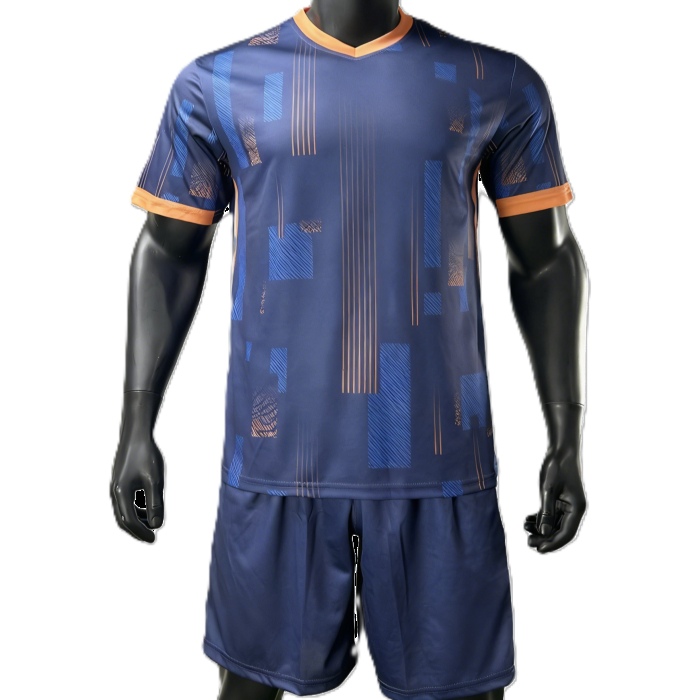
Be precise about scope. Hening makes custom sportswear, and its documented work centers on dye-sublimated jerseys. Check the Custom Sport Jacket and Custom Casual Wear categories for current jacket and casual styles. The supplied facts do not include a hoodie-specific case, so confirm construction details for your garment directly.
These facts do carry over to your evaluation:
The brief also lists 100% polyester, moisture-wicking, 4-way stretch fabric at 140-160 gsm. That specification describes the jersey range. A zip hoodie is normally heavier, so the fabric weight, zip type and rib composition for your garment must be confirmed in writing before you compare it with other suppliers.
Customer cases show experience with volume and repeat work, not hoodie proof:
If your team also needs match or training kit, Custom Team Jerseys can be ordered from the same supplier alongside outerwear.
| Item | Supplied condition | To confirm for your order |
|---|---|---|
| MOQ | No MOQ; pricing depends on quantity. | Price tiers at your real volume, for example 30, 100 and 300 pieces. |
| Lead time | Standard production 7-10 days, rush orders available. | Whether that applies to your garment and finish, and what rush costs. |
| Printing and size errors | Free reprint for any printing defect or wrong size. | How defects are documented, and the claim window. |
| Colorfastness | 1-year guarantee. | Wash method, fabric and logo type covered. |
| Sample approval | Not specified in the supplied facts. | Who signs off, on which criteria, and what changes are allowed after approval. |
The last row matters most. Because the supplied facts do not describe a fixed sample-to-bulk process, agree it on paper: acceptance tests, tolerance, and who bears the cost if bulk differs from the approved sample.
A buyer needs 60 tonal-logo zip jackets in navy for staff, delivered in three weeks. They ask three suppliers for two samples each. After testing, Supplier A scores 2/2/1/2 (zip, rib, seams, logo), Supplier B scores 1/0/2/1, and Supplier C scores 2/2/2/0 because the logo shade varied between pieces.
Supplier A leads. The buyer asks A to confirm the logo process in writing and to state pricing at 60 pieces. Supplier C is rejected for this brief, though it could suit a plain no-logo order. The decision stays tied to the evidence.
This only works if every sample used the same fabric spec. If it did not, the scoring above would be invalid.
If you are comparing makers for a minimalist zip jacket or hoodie, send your target fabric, quantity, logo file and required delivery date. Tell us which of the four tests matters most for your use case, and we will respond with what we can confirm on construction, pricing at your quantity and sample terms. Request a quote or sample review through the Hening website.






 WhatsApp
 Email
 +8618978569271