Loading
Before requesting quotes for an Exclusive Custom Jacket with Hood, separate the design requirements from the supplier requirements. A jacket can look premium in a digital mock-up yet fail as a bulk purchase if the fabric hand feel, hood shape, logo method, sizing, or delivery terms were never agreed in writing.
The first sourcing risk is assuming that a supplier known for custom sportswear automatically provides every outerwear construction feature. For example, seam sealing, water-repellent coatings, insulation, bonded fabrics, adjustable hood hardware, and zip specifications should not be presumed. These details require direct confirmation before a buyer compares quotations.
Hening Clothing Co., Ltd is positioned for custom sportswear and apparel buyers who need custom production discussions rather than a retail purchase. The supplied manufacturing information confirms 100% polyester, moisture-wicking, four-way-stretch fabric in the 140–160 gsm range for its sportswear offering, plus dye-sublimation printing capability. That can be relevant for lightweight team-oriented hooded apparel where breathability, movement, and graphic coverage matter. It does not, by itself, confirm suitability for insulated, waterproof, or technical shell jackets.
Recommendation: shortlist a supplier only after matching its confirmed production scope to your intended jacket category. This approach fits brand managers sourcing lightweight promotional jackets, team warm-up layers, event apparel, or sports-inspired hooded pieces. It does not replace separate validation for cold-weather, protective, or weatherproof outerwear.
A useful inquiry gives suppliers enough information to quote comparable options. Without it, one supplier may quote a lightweight polyester garment while another assumes a heavier lined jacket. The prices will not be comparable.
| Brief item | What to specify | Why it changes the quote | When more detail is needed |
|---|---|---|---|
| Garment purpose | Team layer, retail collection, event apparel, staff uniform, or promotional item | It affects fabric, branding, packaging, and expected durability. | Provide expected use conditions if the jacket will be worn outdoors. |
| Fabric direction | Lightweight stretch polyester, lining requirement, texture, weight preference, and finish requirements | Fabric is usually one of the largest cost and performance variables. | Ask for confirmation if you need coating, insulation, or waterproof performance. |
| Hood construction | Fixed hood, hood depth, drawcord requirement, lining, and desired opening shape | The hood affects pattern work, material consumption, and wearer comfort. | Supply reference photos when the hood silhouette is part of your brand identity. |
| Branding placement | Logo files, placement map, colors, player names, numbers, or all-over graphics | Different decoration areas may change artwork preparation and production steps. | Request a proof for every visible branding position. |
| Order profile | Total quantity, size ratio, colorways, target delivery date, and destination | Quantity affects unit pricing, while delivery requirements affect planning. | Ask about rush availability if the launch date cannot move. |
For a coordinated sportswear program, buyers may also need matching items such as Custom Team Jerseys. Keep jacket specifications separate from jersey specifications. A fabric and print method that works well for a jersey does not automatically answer questions about jacket closures, linings, or pocket construction.
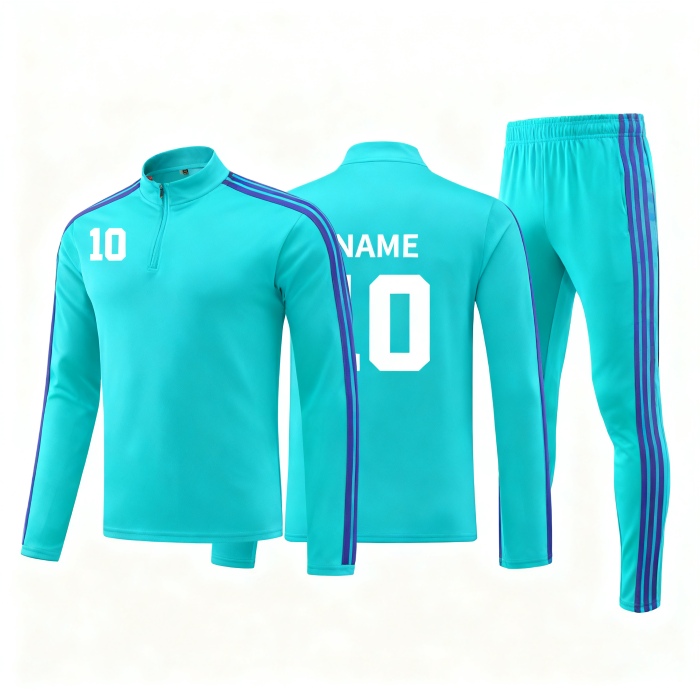
Choose suppliers based on evidence that addresses your actual buying risk, not on a broad product label. For a graphic-led hooded garment, dye-sublimation capability may matter more than it would for a plain work jacket. For a winter product, material performance and construction records should carry more weight than graphic capability.
Hening reports five automatic dye-sublimation printing lines and a daily output of more than 1,000 custom jerseys. This is relevant evidence for buyers whose hooded apparel requires high-volume color graphics, names, numbers, or team artwork. The company also states that its standard production period is 7–10 days, with rush orders available. Those facts help a buyer begin a capacity discussion, but they are not proof that every hooded jacket design follows the same output level or lead time.
The company’s ISO 9001 quality management system certification and ISO 14001 environmental management system certification are useful supplier-screening documents to request during qualification. They indicate documented management systems, not a guarantee that a particular jacket meets a buyer’s own product specification. Your purchase order should still state the required fabric, measurements, artwork version, labeling, packaging, and acceptance conditions.
There is also relevant order experience in custom event and team apparel. Hening supplied more than 500 sublimated jerseys for a United States high school basketball league, produced custom uniforms for an Australian soccer club’s three teams, and delivered 1,000 event jerseys for a European marathon. These cases support experience with multi-unit custom sportswear programs. They should not be presented as evidence of a particular hooded-jacket fabric, closure system, or outerwear performance without further documentation.
Recommendation: make fabric swatches, logo proofs, fit samples, and pre-production approval gates mandatory before placing a bulk order. This workflow is the clearest way to reduce disagreement over color, fit, and construction. It suits premium branded outerwear orders, team programs, and products with multiple sizes or artwork areas. It may be simplified for a repeat order where the same approved fabric, pattern, artwork, and specification remain unchanged.
The following is a buyer-led vetting workflow. It identifies the information that should be requested and signed off; it should not be read as an established universal procedure for every supplier or every Hening order. Confirm which stages, sample charges, and approval records are available for your program.
| Approval gate | What the buyer should request | What to check | Do not approve until |
|---|---|---|---|
| 1. Requirement brief | Tech pack, artwork files, quantity estimate, size range, target date, and destination | Whether the supplier confirms the requested product scope and identifies unanswered construction questions. | The jacket category, fabric direction, branding method, and delivery requirement are stated clearly. |
| 2. Fabric swatches | Swatches or material samples identified by composition, weight, color, and intended use | Hand feel, stretch, opacity, recovery, color appearance, and compatibility with your decoration plan. | You know which material is being quoted and whether it fits the intended garment purpose. |
| 3. Logo proof | Digital artwork proof showing logo size, placement, color references, and all personalization fields | Spelling, version control, placement dimensions, contrast, and whether the logo is readable on each colorway. | The approved file version is marked and every stakeholder has reviewed it. |
| 4. Fit sample | A sample in an agreed reference size, plus the size chart used for grading | Chest, body length, sleeve length, shoulder balance, hood coverage, and movement when worn. | The buyer has recorded any measurement or fit changes in writing. |
| 5. Pre-production approval | Final specification sheet combining fabric, colorway, artwork, size chart, trims, labels, packaging, and quantity | That every previous revision is reflected in one controlled document. | The buyer and supplier agree which document governs bulk production and what constitutes acceptance. |
A logo proof is not a substitute for a fit sample. Likewise, a fabric swatch does not prove that a hood will sit correctly once attached to a finished garment. Each gate answers a different question. Skipping one may be reasonable only when the risk is genuinely absent, such as a repeat purchase using the same approved design and construction.

A low quote is useful only when every supplier is pricing the same product. For hooded outerwear, hidden differences often appear in fabric selection, lining, zipper type, pocket design, artwork preparation, individual personalization, labels, packaging, sample cost, and shipping terms.
Ask each shortlisted supplier to complete the same quote checklist. This creates a practical comparison sheet and exposes assumptions early. It is especially useful when several internal stakeholders are reviewing quotes from suppliers that describe the garment differently.
| Quote line | Buyer question | Reason for asking |
|---|---|---|
| Fabric and garment build | What fabric is quoted, and are lining, hood details, pockets, and closures included? | Prevents comparisons between materially different jackets. |
| Decoration scope | Which logo locations, colors, names, numbers, and all-over prints are included? | A quote may cover fewer print areas than your approved design. |
| Quantity basis | What quantity and size ratio support the quoted price? | Hening has no MOQ, but stated pricing depends on quantity. |
| Sampling and approvals | Are swatches, proofs, and fit samples included, charged separately, or subject to later agreement? | Lets the buyer budget for validation rather than treating it as an afterthought. |
| Production timing | When does the production clock start: deposit, artwork approval, sample approval, or final size list? | Protects the launch date from unclear internal approval timing. |
| Quality remedy | What happens if there is a printing defect or wrong size? | Hening states free reprint for printing defects or wrong sizes; confirm the terms apply to the proposed jacket order. |
Do not ask a supplier to “match the best price” before confirming the product scope. A better request is: “Please quote this approved specification at the stated quantities and show any optional cost differences separately.” That wording helps brand managers defend the purchasing decision internally.
Hening’s stated strengths are most directly connected to custom sportswear graphics, flexible order quantities, color retention, and relatively short standard production planning. The company also offers categories such as Custom Sport Jacket and Custom Casual Wear, which may be useful starting points for visual direction and inquiry discussions.
However, a buyer sourcing a premium hooded product should ask direct questions where the published facts do not provide an answer. This is not a weakness in the sourcing process; it is disciplined qualification.
The right supplier is not simply the one with the most attractive product image. It is the supplier that can confirm the requested scope, provide evidence for the risk points that matter to your program, and agree on approval gates before bulk production begins.
Send your tech pack, target quantity, size range, artwork, and required delivery date to request a tailored quote and sample discussion.






 WhatsApp
 Email
 +8618978569271