Loading
The biggest sourcing risk is not choosing the wrong logo placement. It is receiving a jacket that looks suitable in a product image but performs differently once crews face rain, wind, movement, or repeated wear.
When requesting an Exclusive Custom Jacket with Hood, buyers should define the weather conditions, work activity, branding method, fit requirements, and acceptance criteria before asking suppliers for pricing. “Waterproof,” “weatherproof,” and “outdoor jacket” are not enough on their own. Those terms can describe very different constructions.
For corporate uniforms, outdoor event crews, delivery teams, coaches, field staff, and promotional programs, the most useful RFQ separates appearance requirements from performance requirements. A jacket can have a premium-looking shell and still create complaints if rain enters through unprotected seams, the hood does not stay in place, or the fabric restricts arm movement.
Start with the operating scenario. This determines which details deserve budget and which do not.
| Use scenario | Recommended RFQ focus | Why it matters | When it may not apply |
|---|---|---|---|
| Outdoor event staff | DWR requirement, adjustable hood, logo placement, packable or easy-care construction | Staff may move between rain, queues, and indoor areas during one shift. | For indoor-only events, weather treatment may add cost without practical value. |
| Field crews and mobile teams | Seam construction, stretch panels, cuff adjustment, movement testing | Bending, lifting, driving, and reaching expose mobility limits quickly. | If the jacket is ceremonial apparel with limited wear time, stretch panels may be unnecessary. |
| Corporate gifts or club merchandise | Brand color approval, hood shape, size chart, decoration artwork | Wearers often judge these jackets on fit and appearance before technical performance. | Do not remove weather details if the item will be marketed as rain protection. |
| Light rain commuter wear | DWR performance statement, covered closure details, adjustable hood | Light rain resistance can be appropriate without specifying a fully protective rain shell. | This specification is not suitable for prolonged exposure to heavy rain. |
Ask the supplier to confirm which details are standard, which are optional, and which must be developed for your order. This prevents a quotation from being based on one sample while the production order is made to another construction.
The direct answer: put each of these four elements into the RFQ as a separate requirement. Do not accept a single general statement such as “weatherproof fabric.” Each feature controls a different failure point, and each should have its own agreed description, sample check, or documentation request.
This approach protects both buyer and supplier. The buyer has a defined basis for inspection. The supplier knows what construction to quote and manufacture. If a complaint arises later, the discussion can return to approved specifications rather than subjective expectations.
| Specification area | What to state in the RFQ | Dispute it helps prevent | Limit to state clearly |
|---|---|---|---|
| DWR performance | Request the intended water-shedding behavior, the test method if required, and whether performance must be checked before and after an agreed care process. | “The fabric wetted out after washing” or “we assumed it was rainproof.” | DWR helps water bead and shed from the outer surface. It does not automatically mean the full garment is waterproof. |
| Seam construction | Name the seam areas that require treatment or protection, such as shoulder seams, hood seams, armholes, or closure areas. | “The shell repels water, but water entered through stitched areas.” | More seam protection can affect cost, hand feel, production method, and lead time. |
| Hood adjustment | Specify whether the hood needs face opening adjustment, rear volume adjustment, brim structure, collar closure, or a combination. | “The hood blows back,” “it blocks side vision,” or “it does not fit over headwear.” | A highly adjustable hood is not always needed for casual promotional jackets. |
| Stretch panels | State the body zones requiring mobility, such as shoulders, underarms, back, elbows, or side panels, and explain the activity. | “The jacket pulls when reaching,” “the logo area distorts,” or “the garment feels restrictive.” | Stretch material selection must be considered alongside decoration method and desired structure. |
Specify the intended result, not only the finish name. For example, state that the outer fabric should shed light rain during normal outdoor use and identify whether you require supplier test documentation or approval from a physical sample.
If the jackets will be worn by event staff for occasional rain exposure, a water-shedding outer surface may meet the need. If workers will stand in sustained rain, DWR alone is not enough. You should request a construction designed for that exposure and define how seams, closures, and hood openings will be handled.
Also state the care expectation. Water-repellent finishes can be affected by washing, detergents, abrasion, and garment care. A responsible specification distinguishes between initial sample performance and performance expected after the care process you approve.
Prioritize seams exposed to rain and movement. Shoulder seams are commonly exposed when staff stand outdoors. Hood seams matter because water can travel down toward the face opening. Underarm and side seams matter when mobility is required, although the right treatment depends on the garment design.
Do not simply request “sealed seams everywhere” without checking whether that matches your use case and budget. For a short outdoor event, targeted protection in exposed areas may be more appropriate. For demanding wet-weather work, broader seam treatment may be justified. The RFQ should state the intended exposure rather than forcing the supplier to guess.
Request hood adjustment based on what the wearer must do while wearing it. For walking event staff, face-opening adjustment may be enough. For crews working in wind, adjustment that stabilizes the hood can reduce flapping and improve visibility. For teams wearing caps, helmets, or headsets, provide that detail before sampling because it changes the hood volume and collar relationship.
Ask for photographs or a sample showing the hood worn, adjusted, and viewed from the side. A flat product photo cannot show whether the hood sits correctly around the face.
A usable RFQ describes the job the jacket must perform, then lists the construction details needed to support that job. Avoid copying a competitor’s marketing language without explaining your operating conditions.
The following checklist can be sent to a supplier with artwork, reference images, and size requirements.
For coordinated uniforms, procurement teams may also pair jackets with Custom Team Jerseys so logos, names, and color direction remain consistent across layers. A jacket should complement the uniform beneath it rather than cover a mismatched brand system.
Yes, when weather performance, branded appearance, or fit consistency affects the purchase decision. A sample is especially useful when the jacket includes custom panels, a new hood pattern, special seam treatment, several logo positions, or stretch materials.
A sample should be inspected as a working garment, not only as a presentation item. Have a wearer raise both arms, bend forward, turn their head with the hood adjusted, zip the collar fully, and wear any expected cap or work headwear. Inspect logo placement while the garment is worn, because a centered logo on a flat panel can appear off-center once the jacket is on the body.
Use a written approval sheet with clear pass-or-revise comments. The approval should cover:
Do not assume a sample proves long-term use performance beyond the checks you have agreed. It confirms the approved material, construction, appearance, and fit at the sample stage. If repeat-wash behavior or a particular weather test matters, put the evaluation method into the purchase specification.
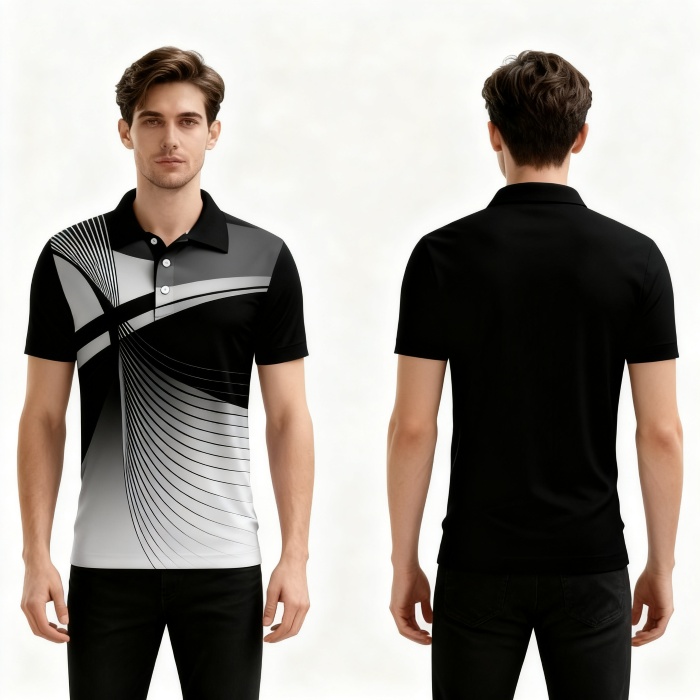
Decoration must be considered at the same time as fabric and seam decisions. A logo location can overlap a stretch zone, seam, pocket, or area that needs a particular construction. If artwork is supplied late, the supplier may have fewer workable options without changing the jacket pattern.
For example, a large back graphic may be suitable for a promotional crew jacket, but buyers should check whether the requested print area crosses any stretch panel. A chest logo can also conflict with a pocket position or closure detail. The practical solution is to send placement artwork at the RFQ stage and ask for a marked-up production drawing before approval.
Hening Clothing Co., Ltd uses fade-resistant dye-sublimation printing with locked-color inks for custom sportswear, addressing a common concern about graphics fading after washing. For jacket sourcing, buyers should still confirm which decoration method is suitable for the selected jacket fabric and requested weather treatment. Do not assume the print approach used for a jersey applies unchanged to every outerwear material.
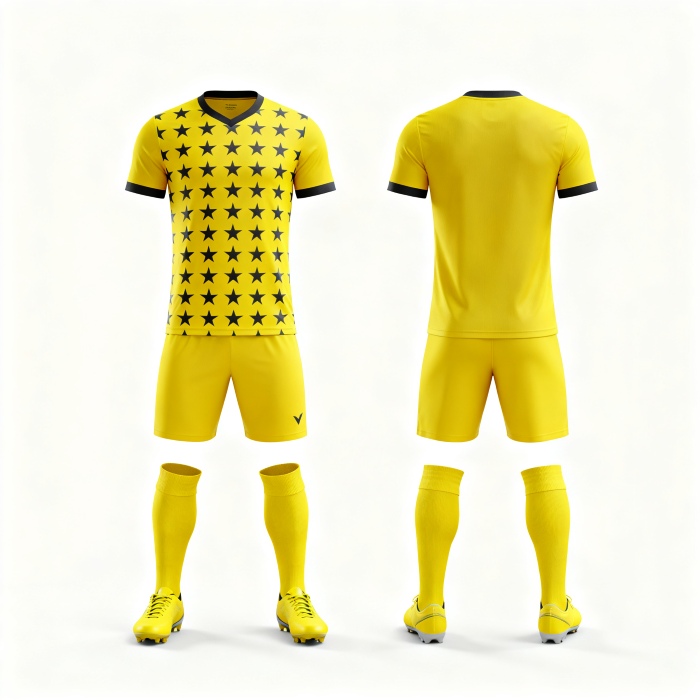
If your program includes matching game-day apparel, consider coordinating the jacket colors with Soccer Jerseys or Basketball Jerseys. This is particularly useful for clubs that need one identifiable color system across travel wear, coaching layers, and player uniforms.
Ask about order flexibility, approval control, quality systems, and production planning—not only unit price. A low quote can become expensive if the supplier cannot support mixed sizing, changing staff lists, replacement needs, or clear pre-production approvals.
Hening Clothing Co., Ltd states that there is no MOQ requirement, although pricing is based on quantity. This can help procurement teams ordering a small executive group, a trial event batch, or a mixed-size program where a traditional large minimum would create excess stock. It does not mean every quantity receives the same unit price, and buyers should request a quantity-based quotation.
The company operates a 1,000 sqm factory in Guangzhou with more than 100 workers and five automatic dye-sublimation printing lines. Its stated custom jersey output is more than 1,000 pieces daily, and standard jersey production is listed at 7–10 days with rush options available. Those facts indicate established custom-apparel production capacity, but jacket lead time should be quoted against the confirmed outerwear design, materials, decoration method, and order volume rather than assumed from jersey timing.
Quality documentation matters too. Hening’s facility holds ISO 9001 quality management system certification and ISO 14001 environmental management system certification. For procurement teams, this is relevant when asking how artwork approvals, size references, inspection points, and corrective actions are controlled. Certification does not replace a detailed jacket specification; it supports a more disciplined process for carrying that specification through production.
The company also offers free reprints for printing defects or wrong sizes and a one-year colorfastness guarantee for applicable printed custom sportswear. Confirm the exact scope of any warranty or remedy for the selected jacket before ordering, especially if your outerwear uses components or construction methods outside a standard printed jersey program.
For buyers sourcing branded layers beyond performance uniforms, the Custom Casual Wear range can provide additional styling references. For weather-exposed uniforms, however, keep the RFQ focused on function first: DWR expectation, seams, hood adjustment, mobility, fit, and approved decoration method.
Submit your jacket drawing, logo artwork, expected weather conditions, and size breakdown to request a specification-based quote.






 WhatsApp
 Email
 +8618978569271