Loading
A buyer can regret accepting the lowest jacket quote when key items appear later as separate charges: name-number decoration, individual bags, export cartons, or freight. The reverse also happens. A higher quote may already include more decoration work or a better-defined delivery scope.
For a Street Style Custom Football Jacket, the starting point should not be “What is your best price?” The better question is: “What is included in the landed cost, what is excluded, and which design decisions are moving the price?” This matters most during budget approval, when a teamwear retailer, school program, club, or event buyer has selected a jacket direction but still needs a workable cost target.
Hening Clothing Co., Ltd. is positioned for custom sportswear requirements where buyers need to clarify decoration, quantity, production timing, and delivery terms before committing. We operate a 1,000 sqm factory in Guangzhou, China, with more than 100 workers and five automatic dye-sublimation printing lines. That capacity is especially relevant when a football-inspired jacket uses printed panels, team colors, or coordinated apparel rather than only sewn-on decoration.
However, the jacket construction still needs to be defined order by order. A buyer should not assume that two suppliers are quoting the same shell fabric, sleeve material, lining, patch method, or packing standard simply because both use the words “custom football jacket.” Ask for the quote scope in writing.
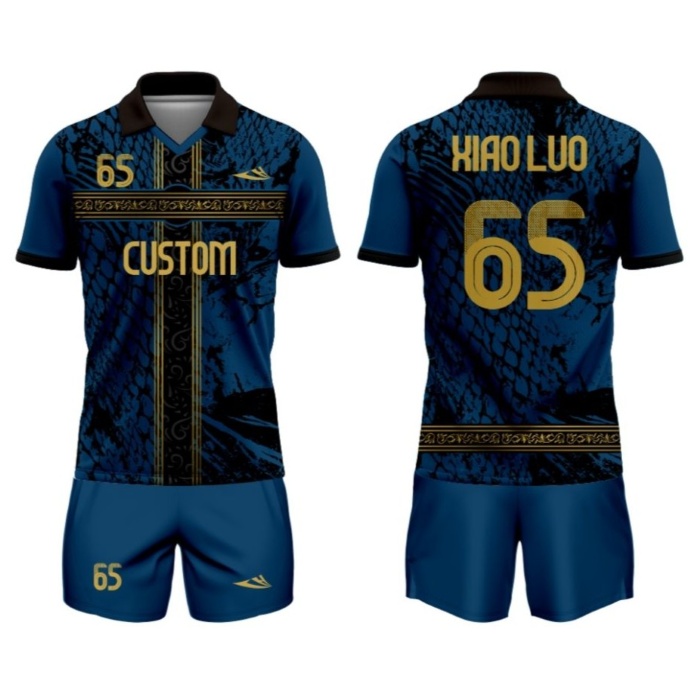
The most useful quote format separates every cost area that changes with style, decoration, packing, or shipment. This makes supplier comparisons fair. It also lets a purchasing manager approve a target price while keeping optional upgrades visible rather than buried inside one figure.
Use the following landed-cost model for bulk planning. It does not assign fixed prices because the supplied design, order quantity, destination, shipping method, and material specification determine the amount. Instead, it identifies the cost buckets that should appear in an RFQ response.
| Cost component | What should be defined in the quote | Main price driver | Buyer action |
|---|---|---|---|
| Shell fabric | Fabric type, color approach, panel count, and whether the shell is stock material or printed | Material selection, usage per size, printing requirement, and quantity | Approve the fabric direction before asking suppliers to finalize price |
| Sleeves | Same material as the body or a contrasting material; printed, plain, striped, or otherwise decorated | Separate material, contrast color handling, and extra sewing operations | State whether sleeves are identical across all units |
| Lining | Whether lining is required, its coverage, and whether it is the same across sizes | Extra material and assembly work | Do not assume a lining is included because it appears in a reference image |
| Embroidery | Logo location, dimensions, number of placements, and whether each unit shares one design | Stitch complexity, placement count, and logo variation | Send usable artwork and identify every embroidery position |
| Chenille patches | Patch quantity, placement, lettering, numbers, and whether patches differ by wearer | Patch size, detail, number of pieces, and individual personalization | Separate standard patches from player-specific patches |
| Name-number decoration | Name list, number list, decoration method, placement, and size range | Variable data handling and per-garment differences | Provide a final roster file rather than sending names in messages |
| Packaging | Individual bagging, size labels, barcode needs, carton marking, and sorting request | Level of unit packing and warehouse handling requirement | Specify retailer-ready, team-sorted, or basic bulk packing |
| Freight | Origin, destination, shipping method, delivery term, and responsibility for import charges | Destination, carton volume, transport choice, and agreed delivery term | Request freight as a separate line and confirm what is included |
Conclusion: approve a target price only after the eight lines above are identified. The reasoning is simple: a quote that excludes lining, patches, packing, or freight cannot be compared honestly with one that includes them. This model fits bulk orders where finance needs a documented total cost. It does not replace a final supplier quotation, because artwork, destination, and packing instructions still affect the final amount.
Build the approval figure from the quote categories rather than multiplying a headline unit price by quantity. First, total shell fabric, sleeves, lining, embroidery, chenille patches, and name-number decoration. Next, add packaging. Then add freight as a separate amount. Finally, confirm whether import duties, taxes, local delivery, or customs-related charges are included in the supplier’s stated delivery term. If they are not included, they remain an internal landed-cost item for the buyer to budget.
This approach is useful for a club ordering a standard jacket for coaches plus personalized jackets for players. The base construction may be common across the order, while names and numbers create a separate variable cost. It is less useful for a one-off prototype, where there may be no repeat quantity on which to base a bulk target.
Once the jacket direction is selected, the biggest pricing swings typically come from construction complexity and decoration variation. Buyers do not need to remove every detail. They need to decide which features are non-negotiable and which are optional.
| Design decision | Lower-complexity budget direction | Higher-complexity budget direction | When the higher-cost direction makes sense |
|---|---|---|---|
| Color treatment | Fewer standard color areas and one shared design | Multiple contrast panels or printed color areas | When team identity depends on a specific multi-color look |
| Decoration mix | One logo placement with shared artwork | Embroidery plus chenille patches plus personalized names and numbers | When the jacket is intended as a premium recognition or fanwear item |
| Personalization | All garments identical | Individual names, numbers, initials, or role titles | When wearer identification is required for players or staff |
| Construction | One shell treatment and limited material changes | Contrast sleeves, lining requirements, and multiple component specifications | When the selected street-style silhouette requires those features |
| Packing | Basic bulk packing | Individual bags, labels, barcodes, and pre-sorted cartons | When goods are moving into retail, event distribution, or multiple team locations |
Recommendation: keep the base jacket common and personalize only where the program needs it. This reduces variable decoration work and reduces the chance of roster mistakes. It fits school leagues, clubs, and promotional orders that need a consistent appearance. It does not apply when every jacket is intentionally unique, such as a limited merchandise release or a player-specific recognition program.
If the look requires full-color graphic panels, discuss dye-sublimation early. Hening uses fade-resistant dye-sublimation printing with locked-color inks for relevant custom sportswear applications. This is a practical answer to buyers concerned about colors fading after repeated washing. The benefit applies to sublimated areas; it should not be presented as a blanket claim for every material, patch, or decoration method used on a jacket.
Buyers creating coordinated ranges can also compare the jacket against related Custom Sport Jacket options and Custom Casual Wear requirements. This helps when one logo package will be used across outerwear, warm-up pieces, and fan apparel.
A reference photo is useful for visual direction, but it is not a production specification. Two jackets can look similar in a photo while having different shell materials, sleeve treatments, lining, patch types, or packaging. Quote differences often begin there.
Use this RFQ procedure to reduce unclear comparisons:
This procedure fits the budget-approval stage because it gives each supplier the same purchasing brief. It may not apply when the buyer is still choosing between completely different jacket styles. In that case, create separate RFQs rather than mixing several constructions in one request.
Supplier capability should be tied to the actual order risk. For printed teamwear programs, color durability and delivery speed are common concerns. Hening’s stated standard production time is 7–10 days, with rush-order options available. That is useful when an approved design and final roster must move quickly into production. It is not a guarantee that every jacket configuration, freight route, or approval schedule will meet the same timing; the production schedule and delivery plan need confirmation for the specific order.
There is no MOQ requirement, although pricing is based on quantity. This is useful for small clubs, staff groups, replacement pieces, or a trial assortment where a buyer does not need to reach an arbitrary minimum. The limit is economic rather than procedural: smaller quantities may not reach the same unit-cost target as a larger standardized run.
For quality assurance, Hening states a free reprint policy for printing defects or wrong sizes and provides a one-year colorfastness guarantee. The colorfastness term is relevant to dye-sublimated work and should be discussed alongside the exact materials and decoration scope chosen for the jacket. Buyers should also clarify how size approval is handled before placing the order, because a wrong final size list can create avoidable problems even when a supplier uses a verified size chart.
The factory holds ISO 9001 quality management system certification and ISO 14001 environmental management system certification. These certifications provide documented management-system credentials, but they do not by themselves define your jacket specification, acceptance standard, freight responsibility, or deadline. Those points still belong in the quotation and purchase agreement.
Hening has supplied more than 500 sublimated jerseys for a United States high school basketball league and produced full custom uniforms for an Australian soccer club’s three teams. These cases show relevant experience with team-based custom apparel quantities and coordinated programs. They should not be interpreted as evidence that every football-style jacket uses the same construction, decoration, or delivery arrangement. For related teamwear sourcing, review Custom Team Jerseys, including coordinated Soccer Jerseys where a club wants matching fieldwear and outerwear.
The following checklist turns a jacket concept into a quote request that purchasing and finance teams can approve with fewer unknowns.
Bottom line: the right target price is not the lowest visible unit figure. It is the approved landed cost for the exact shell, sleeves, lining, decoration, packing, and freight scope your team needs. A buyer with that information can negotiate with more control and can spot an incomplete quote immediately.
Send your jacket reference, quantity, decoration list, destination, and target delivery date to request a line-by-line quote.






 WhatsApp
 Email
 +8618978569271