Loading
When a product team reviews a Breathable Basketball Training Set, the practical question is not whether the fabric feels light while dry. The question is whether the shirt and shorts remain wearable after repeated sweating, movement, contact, and short recovery periods on court.
Basketball training creates a demanding use case. Players sprint, stop, jump, turn, and spend time in close contact with teammates. A fabric that initially feels soft can still become heavy, cling around the back, or stay damp at the waistband after sweat exposure. Those problems affect comfort, perceived quality, and the likelihood that a team will reorder.
For B2B buyers, a moisture test is most useful during fabric and sample review, before bulk-order approval. It gives purchasing teams a shared method for comparing options instead of relying on a supplier swatch, a dry-hand feel, or a product photo. This matters especially when a buyer is comparing fabric weights, knit structures, or finishing claims from different factories.
The protocol below is an evergreen evaluation framework, not a claim that one fabric type will always outperform another. Results can change with yarn shape, knit construction, garment fit, printing coverage, ambient conditions, detergent residue, and the amount of moisture applied. The goal is controlled comparison: test the candidate samples under the same conditions and document what happens.
At Hening Clothing Co., Ltd., our standard custom jersey fabric is 100% polyester with moisture-wicking and 4-way stretch properties, in a breathable 140-160 gsm range. That specification is a useful starting point for training apparel, but it should not replace sample testing. Buyers should still assess the finished garment, including seams, print zones, neck binding, and shorts waistband.
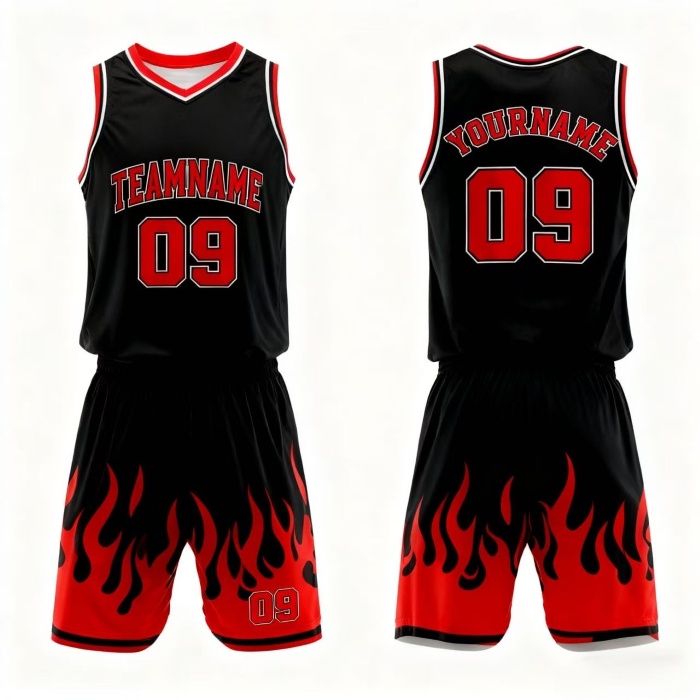
The available evidence here supports a product-review method, not a market-wide claim about changing fabric demand. Basketball equipment search results often focus on accessories or training services, while apparel buyers still need a way to judge moisture handling in finished training sets. That gap is why a repeatable internal test can improve sourcing decisions.
Each test answers a different buying question. A fabric can spread moisture quickly but still feel clingy. Another may admit air well while retaining moisture at seams or beneath dense decoration. Run all four assessments before selecting a fabric solely because it is described as “moisture-wicking.”
| Test | What to compare | Result that matters for training wear | Buyer decision affected | Limit or caution |
|---|---|---|---|---|
| Absorbency and spread | Whether moisture stays pooled or distributes across the surface | Fast, even spreading without a concentrated wet patch around the chest or back | Fabric selection for high-sweat sessions | Surface spreading alone does not prove that a garment will dry quickly |
| Drying-time comparison | How long equal moisture exposure remains visible or detectable by touch | One sample returns to a dry-feeling state sooner under identical conditions | Approval for frequent training, tournaments, or short turnaround between sessions | Room temperature, humidity, airflow, and print coverage can alter results |
| Air-permeability check | How easily air passes through unprinted fabric and high-coverage printed areas | Noticeable airflow without an overly open structure that feels unsuitable for the required garment appearance | Choice of body fabric, mesh placement, and decoration layout | A simple hand test is comparative only; it is not a formal air-permeability rating |
| Cling-after-sweat wear trial | Whether damp fabric sticks to the torso, lower back, or thighs during movement | Garment releases from the body during jumping, turning, and arm movement rather than staying attached | Fit approval, pattern revision, and fabric choice | Fit, body shape, sweat volume, and garment size can influence the outcome |
Conclusion: Do not select a sample based on one “best” result. For on-court training wear, the strongest choice is usually the sample that balances moisture spread, recovery after wetting, airflow, and low cling in movement. This applies when the buyer needs a training set for active sessions. It does not automatically apply when the intended product is a bench warm-up layer, a fan item, or a low-intensity staff uniform.
Use finished, correctly sized samples whenever possible. Testing only a loose fabric swatch can hide problems created by stitching, heat-applied elements, waistband elastic, dense graphics, or panel combinations. If a finished garment is not yet available, record the limitation and repeat the process after the sample is sewn.
A practical record sheet should use direct observations: “moisture remained at lower-back print area,” “shorts waistband felt damp after motion,” or “sample B released from the back during arm raises.” Avoid unsupported statements such as “professional grade” or “guaranteed sweat proof.” They are not usable approval criteria.
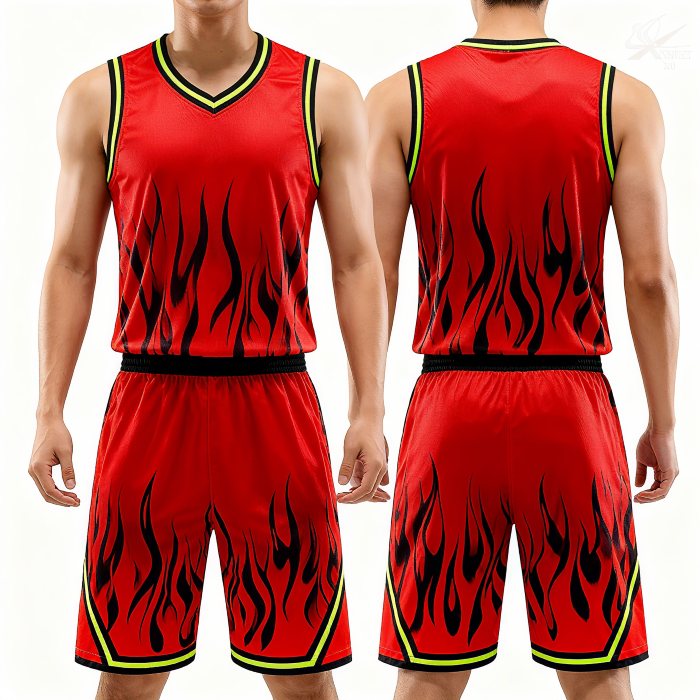
Observed moisture behavior has more than one possible cause. Buyers should separate what the test showed from why it may have happened. This distinction prevents a team from changing fabric when the real issue is pattern shape, print placement, or sample sizing.
| Observed result | Plausible explanation | What to inspect next | Do not assume |
|---|---|---|---|
| Damp patch remains on the back | Limited moisture transfer, dense graphic coverage, reduced airflow from close fit, or a seam area retaining moisture | Compare printed and unprinted zones; inspect fit across shoulder blades and lower back | That the base fabric alone caused the issue |
| Garment feels clingy after movement | Fabric surface, tight size selection, panel shape, static effect, or heavier wet zones | Check size chart, chest and waist ease, side-panel construction, and wearer feedback | That a looser garment will solve every comfort issue |
| One sample dries faster in the room test | Fabric construction, lower retained moisture, larger exposed surface, or higher local airflow | Repeat under the same conditions and compare identical garment zones | That it will dry at the same rate in every climate or gym |
| Airflow feels weaker in a graphic area | Decoration coverage or panel construction may affect perceived airflow | Review logo placement, full-coverage artwork, and any alternative panel layout | That the entire garment lacks breathability |
Recommendation: If the main concern is back cling during intense training, test fit and artwork coverage before changing the base fabric. This is appropriate where the garment performs well in unprinted areas but not across a specific decorated zone. It does not apply when the whole jersey holds moisture evenly and fails to recover across all tested areas; in that case, the fabric option itself deserves closer review.
For custom programs, design choices can support the test result. Dye-sublimation allows graphics to be integrated into the garment design rather than added as a separate heavy surface layer. Hening uses fade-resistant dye-sublimation printing with locked-color inks to keep colors vivid wash after wash. That addresses color durability, but it should not be presented as proof of moisture performance; buyers should still test the finished printed sample.
A fabric test becomes commercially useful only when the buyer converts it into written approval points. Otherwise, a successful pre-production sample can be replaced by an unclear verbal instruction at bulk stage. Include the approved sample code and version-controlled artwork in the purchase record.
Hening operates under ISO 9001 quality management and ISO 14001 environmental management certifications. For buyers, these are relevant process signals, not substitutes for product validation. The practical response is to pair your written approval checklist with an approved sample and clear inspection points.
The same test framework can support different purchasing decisions. The priority changes with how the product will be worn and how much repeat use the buyer expects.
Clubs should give greater weight to cling-after-sweat movement and sizing consistency. A team may train repeatedly through a season, so a small comfort problem can become a recurring complaint. This is the right focus when players perform active drills and need unrestricted movement. It is less relevant for ceremonial uniforms worn briefly before games.
Hening has supplied more than 500 sublimated jerseys for a US high school basketball league. That case shows experience with a substantial basketball order, but it does not establish that one fabric specification suits every school program. The buyer should still run its own sample review for local conditions and player preferences.
Retailers should compare samples across the intended size range and document how the garments recover after washing. The goal is to reduce avoidable returns linked to sizing, perceived cling, or print appearance. This approach suits stock programs and repeat retail lines. It may be unnecessary for a one-off internal staff order with no resale requirement.
For broader assortment planning, buyers may also compare training apparel with related categories such as Custom Team Jerseys or a Custom Sport Jacket. Do not expect the same moisture-test outcome from each category; outer layers have a different role from a next-to-skin training top.
Event buyers should prioritize the likely wear duration, outdoor exposure, sizing method, and delivery schedule. Hening delivered 1000 event jerseys for a European marathon, which is a relevant example of event-volume supply, but running singlets and basketball training sets should not be treated as interchangeable products. Movement pattern, fit expectations, and sweat concentration differ.
The protocol produces useful evidence, but there are limits. A short internal test cannot predict every player’s comfort, every gym’s airflow, or every washing routine. It also cannot replace formal laboratory testing when a tender, retailer policy, or product specification requires measured performance values.
Change the decision if new evidence shows one of the following:
Bottom line: A Breathable Basketball Training Set should be approved through comparative evidence from the finished garment, not through a generic fabric claim. Test moisture spread, drying behavior, airflow, and cling under the same conditions; inspect fit and print coverage separately; then make the result part of the bulk-order specification.
Send us your artwork, size chart, and intended training conditions to request sample-selection advice and a quotation.






 WhatsApp
 Email
 +8618978569271