Loading
Placing a bulk order for a classic stripe custom baseball jersey without first approving a physical sample is a significant risk. You might receive jerseys with stripes that don’t align at the seams, colors that bleed into each other, or sizing that is completely inconsistent across the batch. These are not minor cosmetic issues; they undermine the professional look of your team and reflect poorly on your brand.
From my 10 years on the factory floor, I’ve seen firsthand how easily things can go wrong with striped designs. The precision required to ensure every line matches perfectly across multiple panels and sizes is a true test of a manufacturer’s process control. Many teams we work with have previously struggled with two main problems from other suppliers: sublimation prints that fade dramatically after just a few washes, and inconsistent sizing that leaves some players with jerseys that are too tight or too loose.
A pre-production sample is more than just a preview. It is a physical contract that sets the standard for your entire order. It’s your single best opportunity to verify the supplier’s claims about fabric quality, print durability, and construction accuracy before you commit to a full production run. It allows you to check for the very issues—fading, poor sizing, and misaligned graphics—that cause the most frustration for teams and clubs.
When your sample arrives, don’t just give it a quick glance. A systematic evaluation is necessary to catch potential issues that could be magnified across a hundred or a thousand units. Use this checklist to compare the sample against your specifications and identify the difference between a reliable manufacturer and one that will cause problems later. Our own processes are managed under an ISO 9001 quality management system to ensure we meet these standards on every order.
| Evaluation Criteria | Signs of a High-Quality Supplier | Red Flags of a Low-Quality Supplier |
|---|---|---|
| Stripe Registration & Seam Alignment | Stripes flow seamlessly across side seams, shoulder seams, and sleeve connections. Lines are crisp with no “ghosting” or blurry edges. The pattern is consistent on the front, back, and sleeves. | Stripes are visibly misaligned at the seams, creating a “step” effect. The pattern appears broken or disjointed. This indicates poor pattern-making or careless assembly. |
| Color Matching & Vibrancy | Colors are rich and accurately match your Pantone or CMYK color codes. There is no bleeding between stripes. The white areas are pure white, not muddied by adjacent colors. We use specialized locked-color inks to prevent migration. | Colors appear dull, faded, or are an incorrect shade. You can see color bleeding, especially where dark and light stripes meet. This suggests low-quality inks or improper heat press settings. |
| Sizing Consistency | The sample’s measurements (chest, length, sleeve) match the supplier’s provided size chart within a reasonable tolerance (e.g., +/- 1.5 cm). The fit is as expected for the specified size (e.g., “Adult Large”). | The sample is significantly larger or smaller than the size chart indicates. This is a major warning sign of future inconsistency across your full order, a problem we solve with a verified size chart and a free reprint policy for any sizing errors. |
| Wash-Test Evidence | After a machine wash (follow care instructions), the colors remain just as bright. The fabric retains its shape, and there is no pilling or shrinkage. The seams remain flat and secure. | Colors fade or bleed after a single wash. The fabric shrinks or loses its shape. This proves the ink and fabric are low-grade and will not last the season. Our 1-year colorfastness guarantee is our commitment to durability. |
The look of a jersey matters, but its performance on the field is what defines its true quality. The materials and printing method used by your supplier will determine the garment’s comfort, durability, and longevity. For athletic apparel, especially Baseball Jerseys, the technical specifications are non-negotiable.
A quality jersey starts with the right fabric. Here’s what to look for and why it matters:
When you receive your sample, feel the fabric. It should feel smooth and lightweight, not heavy or coarse. Stretch it to confirm it moves easily in all directions. A good supplier will be transparent about these specifications.
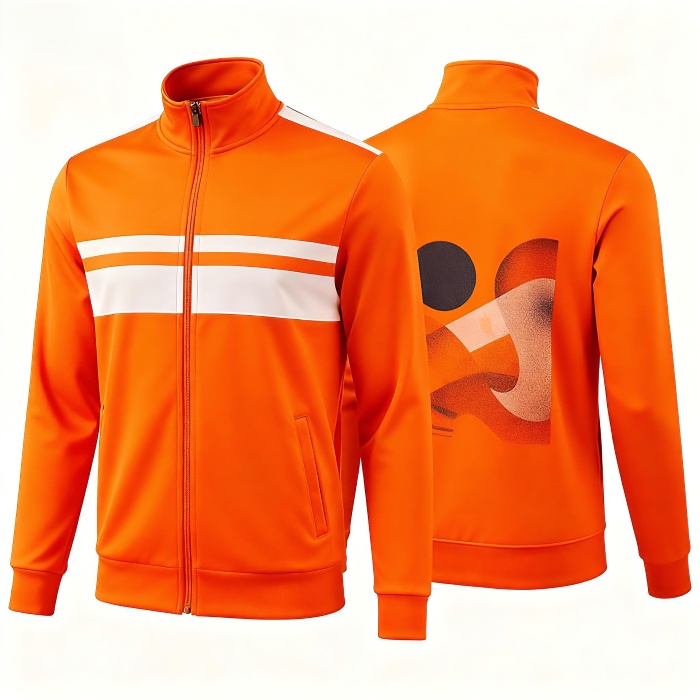
For complex designs with stripes, logos, and numbers, dye-sublimation is the superior printing method. The process uses heat to turn solid ink directly into a gas, which then permeates the polyester fibers. The ink becomes part of the fabric itself, rather than sitting on top like a screen print.
The benefits are clear:
Our factory in Guangzhou is equipped with 5 automatic dye-sublimation printing lines, allowing us to maintain precise color and print consistency whether you order ten jerseys or a thousand. This was essential when we produced over 1000 event jerseys for a European marathon, ensuring every single garment was identical.
Navigating the world of custom apparel manufacturing can be tricky. Based on conversations with clients who have had poor experiences elsewhere, here are some common and costly mistakes to avoid during the sourcing process.
Your supplier’s operational capacity is a critical factor. You need a partner who can handle your current needs while also being able to scale with you as your club or league grows. This requires a balance of flexibility for small orders and robust capacity for large ones.
Our “No MOQ” policy is specifically designed to support emerging clubs, small teams, and organizations needing just a few fill-in uniforms. You don’t have to worry about meeting a high order minimum. At the same time, our 1000 sqm factory and 100+ skilled workers give us the power to manage large, time-sensitive projects. With a daily output of over 1000 custom jerseys, we can confidently handle league-wide orders.
This scalability has been proven in practice. We have produced full Custom Team Jerseys for an Australian soccer club’s three separate teams and delivered training sportswear for sports retailers in New Zealand. These projects require careful management of different designs, sizes, and delivery schedules simultaneously.
Standard production time is typically 7-10 business days from artwork approval, which is a reliable timeline for most teams. However, we understand that sometimes deadlines are tighter. We also offer rush order options to accommodate urgent needs for tournaments or events. This combination of flexibility, speed, and capacity ensures we can be a long-term manufacturing partner, not just a one-time supplier.
To see how our process can work for your team’s specific needs, send us your design and quantity requirements. We can provide a detailed quote and production timeline.






 WhatsApp
 Email
 +8618978569271