Loading
Apparel designers and sourcing teams often begin with a flat sketch, then add mesh where it “looks breathable.” That approach can create a tennis top, skirt, or dress that feels hot across the back or pulls at the shoulders during an overhead serve. The better starting point is a movement map: identify where the player sweats, where the garment stretches, and where seams may resist rotation.
This guide shows how to turn those observations into a factory-ready specification for Custom-Fit Tennis Wear: Breathable Fabric. The completed brief should tell a factory exactly which body panels need airflow, which areas need directional stretch, how the panels should be joined, and what fit checks must happen before bulk production.
The intended outcome is not simply a lighter garment. It is a tennis uniform that supports repeated serving, reaching, lateral recovery steps, and upper-body rotation without trapping heat or restricting the shoulder line.
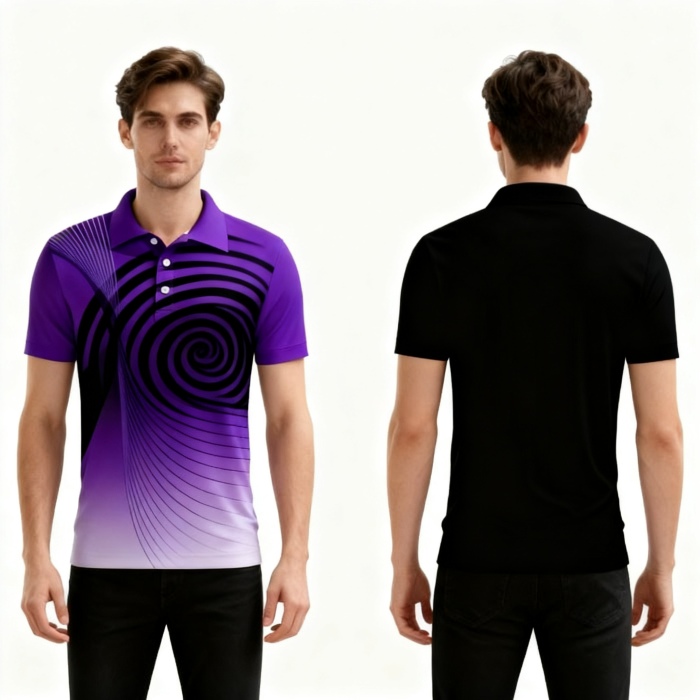
For buyers developing a coordinated program, the same movement-map method can be used alongside Custom Team Jerseys so tennis-specific construction choices remain consistent across team apparel.
Collect four inputs from the buyer, coach, athlete representative, or designer before approving a pattern. Without these inputs, a factory can produce the requested colors and artwork but still miss the functional target.
A close athletic fit suits competition tops where excess fabric can distract the player. It does not suit a team that wants a relaxed training garment or expects athletes to layer underneath. In those cases, use a less fitted body pattern first; do not solve the issue by enlarging mesh panels.
A factory-ready brief needs more than a front-and-back illustration. The buyer should provide a technical package that separates non-negotiable requirements from choices that can be finalized after sampling.
| Required input | What to specify | Why it affects construction | Can it wait until after the first sample? |
|---|---|---|---|
| Size chart | Chest, waist, body length, sleeve opening, skirt length, and grading direction | Panel shape and seam position change when size proportions change | No. Confirm before bulk approval. |
| Movement priorities | Serve reach, shoulder rotation, back ventilation, waist flexibility, or skirt mobility | Determines where stretch and mesh are placed | No. This drives the first pattern. |
| Artwork map | Logo size, player name, number, sponsor areas, and color blocks | Prevents artwork from being split by seams or mesh | Usually no for numbered team uniforms. |
| Fabric hand feel | Light, smooth, structured, or more compressive preference | Helps select the main fabric and panel fabric | Yes, if the buyer approves options at sampling. |
| Order quantity and date | Estimated units, size range, and required delivery date | Supports production planning and pricing | No if a fixed event date exists. |
At Hening Clothing Co., Ltd, the standard body fabric option is 100% polyester with moisture-wicking and 4-way stretch properties, in a 140–160 gsm range for breathability. That specification is a sound starting point for custom tennis uniforms, but it does not replace a movement-based panel plan. A breathable base fabric can still feel restrictive when the shoulder seam, armhole, or back panel is incorrectly shaped.
Our verified size-chart process is particularly useful when teams have previously received inconsistent sizing. Send the target measurements and fit reference before production rather than relying only on labels such as “medium” or “large.” Size labels vary between brands; measurements give the pattern team a usable instruction.
Use a simple three-layer drawing process. Start with a front and back body outline. Then mark heat zones, stretch zones, and seam-risk zones separately. Combining all three onto one sketch too early often leads to mesh being placed in an area that actually needs structural stretch.
A useful checkpoint is to test the pattern on both the dominant-arm serve side and the non-dominant side. Tennis movement is not fully symmetrical in play. However, the garment should normally be visually balanced unless the design intentionally uses an asymmetrical panel layout.
For a women’s tennis dress, the waist seam deserves separate attention. A mesh back may improve airflow, but a rigid waist join can still resist torso extension. For a skirt, airflow panels should not be allowed to interfere with the waistband’s hold or the intended coverage of the outer layer.
Conclusion: Keep airflow panels in heat-producing areas that are not carrying the main stretch load, and orient stretch-capable panel fabric so it can respond to the player’s reach path. This works best for fitted tennis tops and dresses used for repeated serving. It is less relevant for loose warm-up garments, where overall volume rather than panel engineering provides much of the movement allowance.
Mesh placement and knit direction must be discussed together. A panel that ventilates well may fail if its stretch direction works against the arm’s motion. Likewise, a highly stretchable upper-back panel may not provide enough airflow if it is hidden beneath a heavy overlay or interrupted by a dense graphic treatment.
| Body area | Recommended construction decision | Reasoning | Failure sign | When not to use this approach |
|---|---|---|---|---|
| Upper back between shoulder blades | Use a breathable panel shaped to sit below or around the shoulder-blade movement area | Heat commonly accumulates across the back during play, while a correctly shaped panel can avoid a straight seam across active shoulder-blade movement | Fabric rides upward or feels tight when the player raises both arms | Avoid a large loose panel if the garment needs a clean, structured competition silhouette |
| Underarm and side body | Use a narrow mobility panel that connects the armhole to the side body without extending too far into the chest | This area needs movement allowance and can release heat without taking over the main front graphic area | Armhole binds, twists, or exposes an unwanted gap during a serve | Do not use an overly wide panel when a fitted sleeve needs stable shape |
| Rear armhole | Shape the panel or seam to follow the back armhole rather than cutting straight across the shoulder | Shoulder rotation expands the rear armhole area during the hitting phase | Restriction appears behind the shoulder, even when chest width seems adequate | Not needed to the same extent on a loose sleeveless training top |
| Upper chest | Keep the primary front panel stable and reserve stretch direction for areas that must expand during reach | A stable front supports clean logo placement and reduces distortion of front artwork | Logo visibly distorts when the player reaches forward | Use a different approach if the design calls for a full-front mesh aesthetic and the buyer accepts graphic limitations |
Do not write “add stretch where needed.” Instead, state the movement direction and the panel purpose. For example: “Use the underarm-to-side-body panel as a mobility zone for overhead reach; align the panel’s greater stretch direction with the arm raise path confirmed on the sample.” This gives the pattern and material teams an instruction they can test.
For the upper back, ask for a sample check with the player raising the hitting arm into a serve position. The garment should not pull sharply from the underarm to the neckline, and the back panel should return to shape after the movement. If the shoulder restriction remains, first review armhole shape and panel direction. Simply adding more mesh may increase airflow but will not necessarily remove the pull.
The most common error is placing a broad horizontal mesh strip across the exact area where the shoulder blades expand. It may look logical on a flat drawing. During a serve, though, that seam can become a tension point. A curved, segmented, or side-connected panel is often easier to control, subject to the approved style and pattern.
After mapping the zones, convert the sketch into clear callouts. Each panel needs a location, purpose, fabric instruction, seam instruction, and acceptance check. Vague notes cause different interpretations between design, sampling, and production.
This level of detail is especially useful for clubs ordering multiple styles, such as a sleeveless dress for one squad and a short-sleeve top for another. It also helps when extending the same identity into other categories such as Badminton Jerseys, where overhead movement also deserves attention but the garment silhouette may differ.
Hening Clothing Co., Ltd operates five automatic dye-sublimation printing lines and can produce more than 1,000 custom jerseys per day. For designers, this means artwork and panel mapping should be approved together before production begins. Sublimation can support detailed color layouts, but a print file cannot correct an unsuitable seam location or a panel that restricts movement.
The sample test should include motion, not just a mirror check. Ask the wearer to perform a short sequence in the intended size. Use the same test for tops, dresses, and any coordinated outer layer.
Record the issue by location rather than writing “fit is wrong.” For example: “Rear armhole pulls on dominant-arm serve; review side-body panel width and directional stretch orientation.” That note gives the factory a practical correction path.
Do not approve bulk production based solely on a garment laid flat. The defects that matter most in tennis often appear only when the shoulder rotates and the torso extends. If the problem occurs only on one size, review the grading instructions as well as the base pattern.
A completed design brief should allow a factory to quote, sample, and produce without guessing where ventilation and movement support are needed. Use this checklist before sending files for production.
If the wearer feels hot but unrestricted, revisit panel coverage and airflow access. If the wearer feels restricted but not hot, revisit armhole shape, seam placement, fit allowance, and knit direction before adding more mesh. If the garment fits one player but not another, review the size chart and grading rather than changing the entire construction plan.
For teams placing small replacement orders or testing a new tennis style, Hening has no MOQ requirement, although pricing is based on quantity. Standard production is 7–10 days, with rush options available when schedules require faster handling. Our ISO 9001 and ISO 14001 certified management systems support controlled production processes, while locked-color dye-sublimation inks are intended to keep team colors clear after washing. We also provide free reprints for printing defects or wrong sizes and a 1-year colorfastness guarantee.
For coordinated seasonal apparel beyond match uniforms, designers can also compare construction ideas with Custom Sport Jacket options, while keeping tennis match garments focused on lightweight movement and airflow.
Send your tennis sketch, size chart, artwork map, and movement notes to request a factory-ready quote or sample review.






 WhatsApp
 Email
 +8618978569271