Loading
A low first-order quote can become an expensive program when freight, replacement jerseys, player additions, artwork changes, and later reorder pricing are not considered. Buyers sourcing Custom Team Jerseys for a club, school, league, retailer, or event should compare the full program cost before choosing a supplier.
The main sourcing risk is simple: an initial quote may cover only the first production run. It may not show what happens when a new player joins mid-season, a sponsor changes, a size must be replaced, or a distributor needs another batch after the original artwork file has been archived or adjusted.
For athletic organizations, the correct comparison is not “Which supplier has the lowest unit price today?” It is “Which supplier offers the most predictable landed cost across the life of our jersey program?” This matters most when uniforms must remain visually consistent across future orders.
Hening Clothing Co., Ltd. is suited to buyers seeking custom sublimated sportswear with no minimum order quantity, although unit pricing is based on quantity. That arrangement can fit a large launch order followed by smaller replacement or player-addition orders. It does not mean every small reorder will carry the same unit price as a larger initial run. Buyers should ask for both price tiers before approving a supplier.
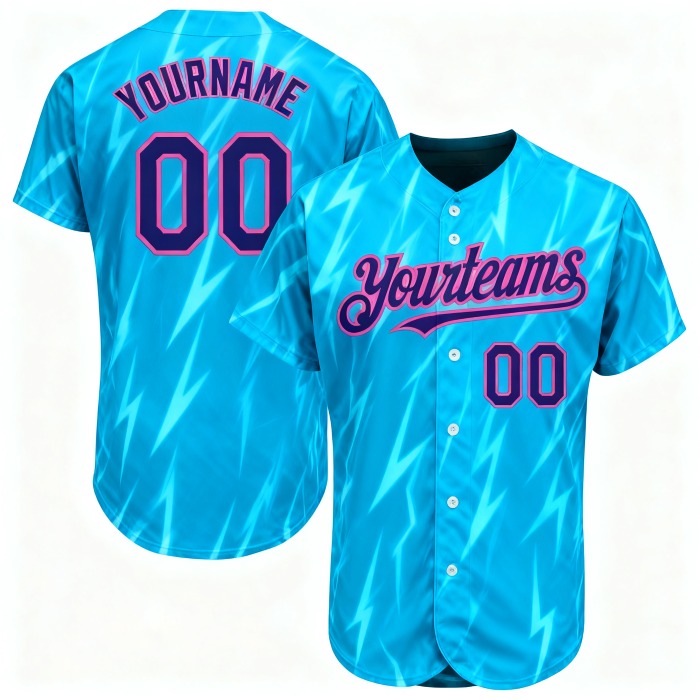
Request a quote that separates garment cost, artwork-related charges, packing assumptions, shipping terms, and potential reorder conditions. This approach fits organizations that expect their roster, sponsor layout, or event quantities to change. It may be less necessary for a one-time event with no planned follow-up order, but even event buyers should account for replacement units and late registrations.
A supplier that answers these points clearly gives the buyer a more useful basis for approval. A supplier that gives only one headline unit price leaves too much of the budget unresolved.
Use a five-year total cost of ownership, or TCO, calculation when the same kit design may be reordered, expanded, or refreshed. The formula should keep the initial garment price separate from the later costs that often appear after the first delivery.
Five-Year TCO = Initial Order Cost + Freight Cost + Replacement Jersey Cost + Artwork Revision Cost + Reorder Premium Cost
| Cost Element | What to Include | Why It Changes the Supplier Decision | Best-Fit Buying Scenario |
|---|---|---|---|
| Initial Order Cost | Initial quantity multiplied by quoted unit price, plus any confirmed order-specific charges. | Shows the first cash commitment, but does not reveal later program cost. | All orders, especially new team launches and distributor programs. |
| Freight Cost | Freight for the initial shipment and expected future shipments, shown separately from garment pricing. | Several smaller shipments can cost more than one planned shipment. | International buyers, multi-location clubs, and buyers expecting repeat deliveries. |
| Replacement Jersey Cost | Expected replacement quantities, including player additions and approved issue replacements. | Replacement demand is common when rosters change or size selection is incomplete. | Schools, leagues, growing clubs, and retailer supply programs. |
| Artwork Revision Cost | Charges connected with changing sponsors, names, numbers, logos, or layout files. | A low initial price can lose value if future design changes are difficult to manage. | Sponsored teams, annual events, and organizations with changing branding. |
| Reorder Premium Cost | The additional cost caused by lower-volume follow-up orders compared with the initial quantity price. | Small reorders often have a different price basis than a larger first run. | Programs requiring individual player additions or staggered replenishment. |
Conclusion: choose the supplier with the lowest defensible five-year total, not automatically the lowest first-order price. The reasoning is that future jerseys can carry different quantity pricing and separate shipping costs. This method fits recurring teamwear programs. It does not replace a formal freight quotation, import-duty review, or local tax assessment, which must be confirmed for the buyer’s destination and chosen shipping arrangement.
Consider a club ordering a complete initial uniform program, then expecting player additions and size replacements across later seasons. The buyer should create one worksheet with separate rows for the first order, expected follow-up jerseys, possible artwork changes, and each anticipated shipment.
Do not enter the first-order price into every future row unless the supplier confirms that the same quantity basis will apply. With Hening Clothing Co., Ltd., there is no MOQ, which can help a team order replacement jerseys when needed. The limit is commercial rather than technical: pricing is quantity-based, so a small follow-up order should be priced as a small follow-up order.
This distinction is useful for a distributor serving several clubs as well. The distributor may prefer to consolidate replenishment requests into a larger reorder when timing permits, because the quantity price basis may be more favorable than repeated individual requests. It is not the right approach when an athlete needs a replacement immediately; in that case, delivery timing and availability matter more than consolidation.
A useful landed-cost model needs evidence behind the assumptions. The most common long-term jersey costs are not always visible in the initial quote: faded prints that prompt replacement, sizing disputes, delayed production that forces a rush solution, and inconsistent appearance between original and later orders.
Hening Clothing Co., Ltd. uses fade-resistant dye-sublimation printing with locked-color inks intended to keep colors vivid through washing. This capability is relevant when a team expects jerseys ordered later to remain compatible with the original kit appearance. It is particularly suitable for clubs and events using strong color blocks, sponsor graphics, or designs that need to remain recognizable over repeated washing. It does not remove the need to approve artwork and color expectations before production.
The company’s sportswear uses 100% polyester fabric with moisture-wicking, four-way stretch properties and a stated fabric weight of 140-160 gsm for breathability. For buyers comparing performance uniforms, this gives a defined fabric starting point rather than an unspecified “sports fabric” description. It can suit active team use. Buyers with a separate fabric requirement, such as a different composition, weight, or construction, should confirm suitability before treating it as an equivalent option.
Size-related replacements also affect long-term cost. Hening Clothing Co., Ltd. states that it uses a verified size chart and provides a free reprint for a wrong size or printing defect. The stated policy can reduce the exposure associated with confirmed sizing or printing issues. It does not remove the buyer’s responsibility to collect player measurements accurately and obtain size confirmation before submitting an order.
| Program Cost Risk | Relevant Hening Capability | Buyer Action Before Ordering | Boundary to Confirm |
|---|---|---|---|
| Faded or inconsistent print appearance | Fade-resistant dye-sublimation printing with locked-color inks; one-year colorfastness guarantee. | Confirm the approved design file, colors, and placement requirements. | Confirm the scope of the guarantee and document the approved artwork version. |
| Wrong-size replacement demand | Verified size chart and free reprint for a wrong size or printing defect. | Collect player measurements and approve sizes before production. | Agree how size selection and any claim are documented. |
| Late seasonal delivery | Standard production stated at 7-10 days, with rush orders available. | Provide the required delivery date and distinguish it from production timing. | Confirm freight timing, destination, and whether a rush order is feasible. |
| Small future additions | No MOQ, with pricing based on quantity. | Request both initial-order and small-reorder pricing. | Confirm the quantity tiers used for later orders. |
Conclusion: supplier capability should be linked to a defined program risk, not treated as a generic feature list. Fade resistance matters where wash durability drives replacement demand. No MOQ matters where player additions are likely. A standard production window matters when the program calendar is tight. These strengths are less relevant when the order is a single-use promotional item with no expected reorder cycle.
Different sports create different reorder patterns. A buyer should compare like with like: the same garment style, decoration method, sizing basis, and expected delivery destination. Combining unrelated items into one blended price often produces a misleading TCO result.
For a soccer program, use the garment details in the Soccer Jerseys range when requesting an apples-to-apples comparison. For basketball leagues, request the relevant construction and design requirements through the Basketball Jerseys range. Buyers adding outerwear should price it separately from match jerseys through the Custom Sport Jacket range, because it serves a different use case and should not distort the team jersey unit cost.
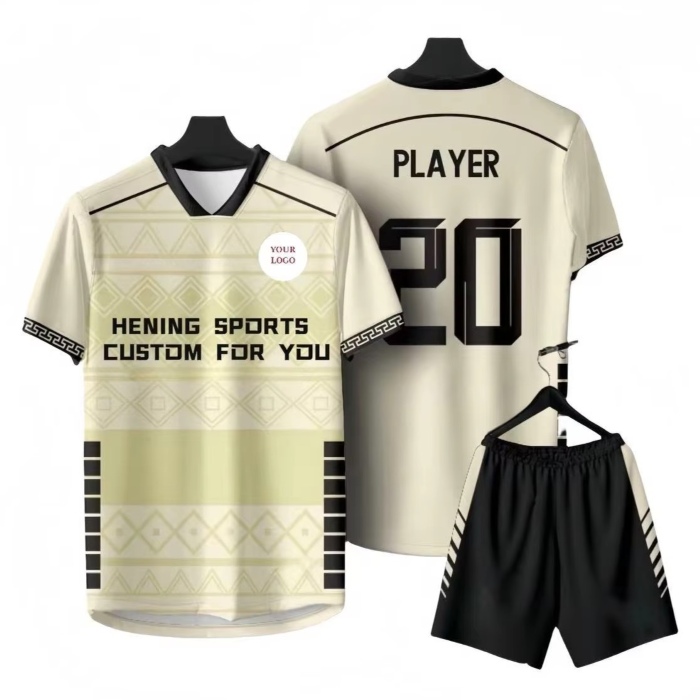
Hening Clothing Co., Ltd. operates a 1000 sqm factory in Guangzhou, China, with more than 100 workers and five automatic dye-sublimation printing lines. The stated daily output is more than 1000 custom jerseys. These facts are relevant to buyers evaluating whether a supplier has stated capacity for planned volume. They should not be interpreted as a guarantee that every order can be produced immediately, because production scheduling, artwork approval, order complexity, and shipping still need confirmation.
The facility holds ISO 9001 quality management system certification and ISO 14001 environmental management system certification. For a buyer that needs to assess supplier documentation, these certifications provide confirmed management-system references. They do not by themselves establish compliance with a buyer’s own retailer standards, destination-market rules, or procurement requirements. Those requirements should be shared during supplier qualification.
Documented supply examples also show relevant order contexts. Hening Clothing Co., Ltd. supplied more than 500 sublimated jerseys for a United States high school basketball league, produced full custom uniforms for an Australian soccer club’s three teams, and delivered 1000 event jerseys for a European marathon. These cases support discussion with buyers who need league, multi-team, or event-scale apparel. They do not establish a universal delivery promise or prove that every future order will have identical specifications, timing, or freight terms.
Conclusion: a practical TCO model is only as reliable as its assumptions. It fits buyers who can forecast their program needs with reasonable accuracy. If a buyer cannot estimate future roster changes or artwork updates, the better approach is to document uncertainty, request reorder terms, and maintain a contingency budget rather than pretending later costs do not exist.
Before approving a supplier, use the following checklist to ensure the quote supports the intended program rather than only the first shipment.
This checklist is most useful for recurring club, school, league, retail, and event programs. A one-off order can use a shorter version, but it should still confirm artwork, sizing, production timing, and freight before payment or purchase approval.
Send your expected quantities, destination, required delivery date, and likely reorder needs to request a quote that separates first-order and five-year program costs.






 WhatsApp
 Email
 +8618978569271