Loading
Before sending a bulk purchase order, buyers can regret overlooking three details: whether the factory accepts their quantity, whether the fabric suits the end use, and what the approved sample actually confirms. A Half Zip pullover can look simple in a tech pack, yet the zipper length, collar shape, print placement, fabric hand feel, grading, and decoration method all need agreement before production starts.
This matters for retailers, schools, clubs, event organizers, and corporate buyers alike. A retail program may need a soft hand feel and repeatable color options. A teamwear program may need moisture management, player names, and a verified size range. Neither should be quoted as though it were the other.
At Hening Clothing Co., Ltd, we accept orders with no MOQ, although unit pricing is based on quantity. Our 1,000 sqm factory has more than 100 workers and five automatic dye sublimation printing lines. Standard production is 7–10 days after production requirements are confirmed, with rush options available. The practical first step is not simply asking for a price. It is sending a specification package that allows the supplier to price the same garment you intend to buy.
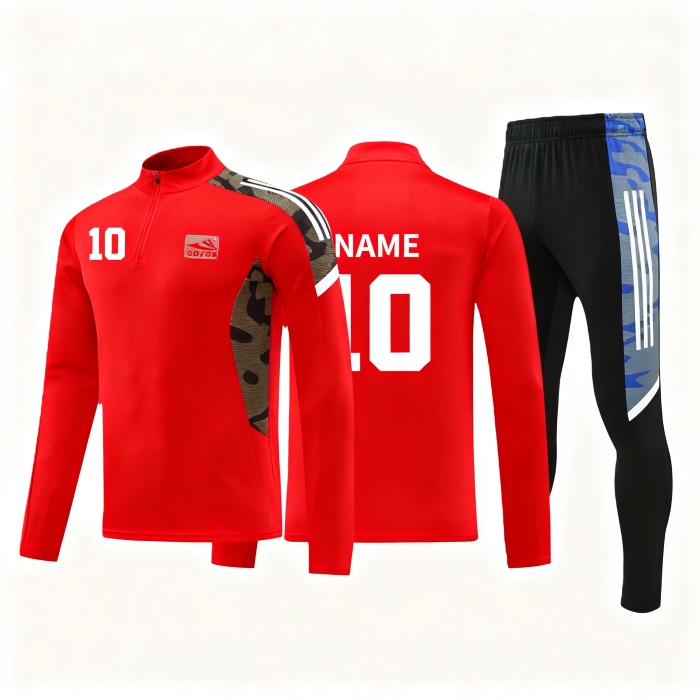
A quote is only useful when the supplier can identify the construction, fabric, decoration, size range, and quantity. The conclusion is straightforward: provide a short but complete RFQ before comparing prices. This fits any buyer requesting custom apparel. It does not apply to a ready-stock item with no changes, where color and size selection may be sufficient.
For a club ordering a matching warm-up range, the pullover specification should align with the jerseys already selected. For example, a buyer sourcing Custom Team Jerseys can provide the approved team colors and logos in the same RFQ. This reduces the risk of an outer layer that looks unrelated to the on-field kit.
No. No MOQ means a buyer can place a small quantity order rather than being blocked by a fixed minimum. It does not mean that a one-piece order will have the same unit cost as a larger run. The correct purchasing decision is to request pricing at the quantities you are realistically considering, then decide whether the lower inventory exposure of a small run is worth the higher per-unit cost.
This approach fits start-up retail labels, alumni groups, coaching staff, replacement garments, and small clubs. It may not fit a buyer with a fixed launch price and very narrow margin, because small-run development and handling costs are spread across fewer pieces.
| Cost driver | What the buyer should define | Why it affects the quote | Best action before approval |
|---|---|---|---|
| Order quantity | Total pieces and size split | Production work is allocated across the order quantity. | Request quoted breaks for your likely order volumes. |
| Fabric selection | Fleece, French terry, or performance polyester | Material construction and intended use differ. | Approve fabric direction before comparing offers. |
| Decoration method | Full sublimation, logo placement, names, numbers, or other requested decoration | Artwork preparation and garment processes change with the design. | Send final artwork and identify every placement. |
| Zipper and trim | Zipper length, collar, cuff, hem, pockets, and labels | Each component changes construction requirements. | Mark all trims on a sketch or reference image. |
| Sample requirement | Digital proof, fit sample, print sample, or pre-production sample | Different checks require different preparation. | State which risk the sample must resolve. |
| Shipping plan | Destination and required arrival date | Production completion is not the same as delivery arrival. | Ask for shipping options separately from garment pricing. |
Buyers should also separate a bulk order from a replacement plan. A school may initially need 40 pieces but expect new staff or athletes later. In that case, ordering a small reserve quantity can be more practical than reopening a tiny production run later. The limit is inventory risk: do not add reserve stock unless you can use it.
Choose the fabric based on wear conditions and program purpose, not only appearance. Fleece generally suits warmth-oriented casual programs. French terry is often a balanced choice for lighter casual layers. Performance polyester is the direct option for active teamwear where moisture management and stretch matter. Hening uses 100% polyester performance fabric with moisture-wicking and four-way stretch properties, at 140–160 gsm for breathable sportswear applications.
The table below answers the common buyer question directly. These are selection guidelines, not a substitute for a physical swatch or approved sample. Fabric hand feel, thickness, color, and finish must still be reviewed against your own brief.
| Fabric option | Best-fit program | Why it fits | When it does not fit |
|---|---|---|---|
| Fleece | Cold-weather retail layers, supporter apparel, travel garments, and casual staff wear | It is selected when warmth and a more substantial casual feel are the priority. | It is not the first choice for high-output training where a lighter moisture-managing garment is required. |
| French terry | Transitional-season retail collections, club leisurewear, and everyday layering | It suits buyers seeking a casual pullover that is less focused on heavy warmth than fleece. | It may not meet a buyer’s needs for cold conditions or for fully performance-led training garments. |
| Performance polyester | Training tops, warm-up apparel, event uniforms, and active teamwear | Hening’s 100% polyester option is moisture-wicking, four-way stretch, and 140–160 gsm for breathability. | It may not deliver the casual fleece-like hand feel wanted for a premium winter retail layer. |
For a soccer club, performance polyester is usually the sensible choice when the garment is intended for pre-match movement or training. Buyers building a coordinated range can pair it with Soccer Jerseys and submit the same crest, sponsor layout, and color references. By contrast, a supporter shop selling off-field layers should sample fleece or French terry first if warmth and casual comfort matter more than athletic stretch.
Do not assume a fabric name alone defines the final garment. Ask for the fiber content, weight, available colors, stretch expectation, care guidance, and sample confirmation. For performance polyester, confirm whether the design will be dye sublimated and whether the garment needs individual names or numbers. Our fade-resistant dye sublimation printing uses locked-color inks intended to keep colors vivid wash after wash, backed by a one-year colorfastness guarantee. That benefit applies to suitable sublimated polyester programs; it should not be treated as a claim for every fabric and decoration combination.
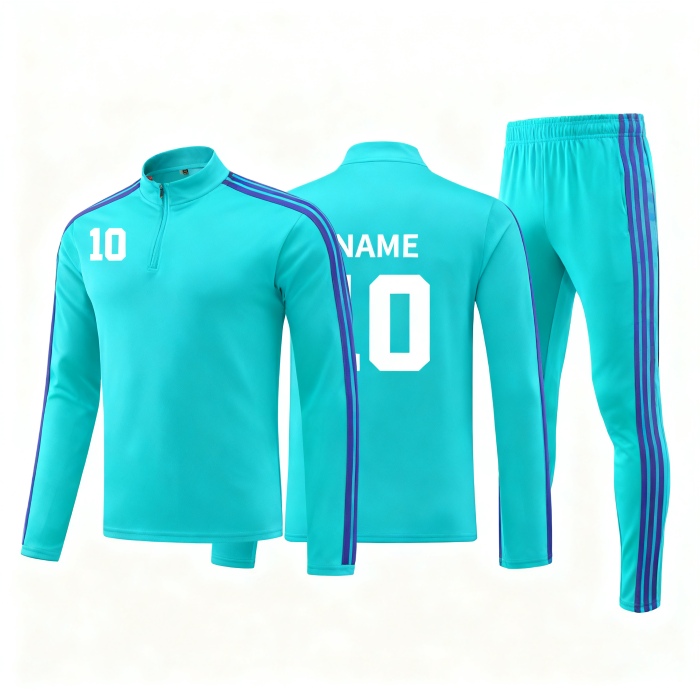
Request the sample that addresses the highest-risk decision. A digital artwork proof is useful for logo placement and color layout. It cannot prove fit or fabric hand feel. A fit sample helps verify measurements and silhouette. It may not show final personalized names. A pre-production sample is the strongest check when the order includes several combined risks, such as a new fabric, custom zipper construction, and full-print artwork.
The right answer depends on the order. A repeat order using an already approved pattern may only need updated artwork approval. A first order for a new retail fit should use a physical sample process. Do not waive this simply to move faster if the program depends on a specific fit or retail presentation.
A sample is also the point to verify sizing. Hening uses a verified size chart and provides a free reprint for a wrong size or printing defect. Buyers should still submit their required measurements and approve the chart before production. The policy is protection against an error; it is not a reason to leave size selection until the last minute.
Separate development time from bulk production time. Hening’s standard production is 7–10 days, with rush orders available, but that production window begins after specifications and approvals are in place. A buyer who sends incomplete artwork, changes the size chart, or adds names after approval creates a new decision point that can affect the plan.
This is especially relevant for tournaments, school terms, retail drops, and marathon events with hard dates. Hening previously delivered 1,000 event jerseys for a European marathon, but a single project should not be treated as a universal delivery promise. Ask for a schedule tied to your own order details and destination.
For activewear retailers, a coordinated outer layer can sit alongside a Custom Sport Jacket range, but the two should not be assumed to have the same fabric, construction, or use case. Confirm each garment separately.
Hening has supplied more than 500 sublimated jerseys for a United States high school basketball league and produced full custom uniforms for an Australian soccer club’s three teams. Those cases show the need for organized artwork, size, and team allocation data when programs involve multiple wearers or squads. They do not remove the need to approve your own specification.
Ask direct questions and require direct answers. A supplier should be able to confirm the fabric selected, the applicable size chart, the approval process, the production window, and what happens if a verified production error occurs. Hening operates with ISO 9001 quality management system certification and ISO 14001 environmental management system certification. Those systems support controlled production processes, but the buyer still needs to provide a clear, approved order brief.
Send your specification, quantity split, and artwork to request a tailored quote and sample recommendation.






 WhatsApp
 Email
 +8618978569271