Loading
A low unit price can look attractive until the first production details appear: heavier fleece, a brushed inner surface, a large front print, embroidered chest logos, individual polybags, and carton requirements. For B2B buyers sourcing Hoodies for branded merchandise, retail assortments, or teamwear, the regret usually comes from comparing incomplete quotes rather than comparing like-for-like specifications.
The practical answer is to request a line-item quote that separates fabric construction from decoration and packing. This makes it possible to see whether Supplier A is cheaper because of its production efficiency or because it has quoted a lighter fabric, omitted brushing, used a different print method, or excluded individual packing.
Hening Clothing Co., Ltd. is a China-based custom sportswear supplier with a 1,000 sqm factory in Guangzhou, more than 100 workers, and five automatic dye-sublimation printing lines. Our stated daily output is more than 1,000 custom jerseys. Those facts are most relevant when your program includes polyester teamwear or coordinated apparel alongside sweatshirts. For a fleece garment request, the fabric composition, construction, decoration scope, and finishing requirements still need to be confirmed before a final quotation is considered comparable.
Do not accept a single line reading “custom sweatshirt price” without a specification basis. It is not enough for a retail buyer who needs a repeatable program, nor for a club buyer trying to keep team orders visually consistent.
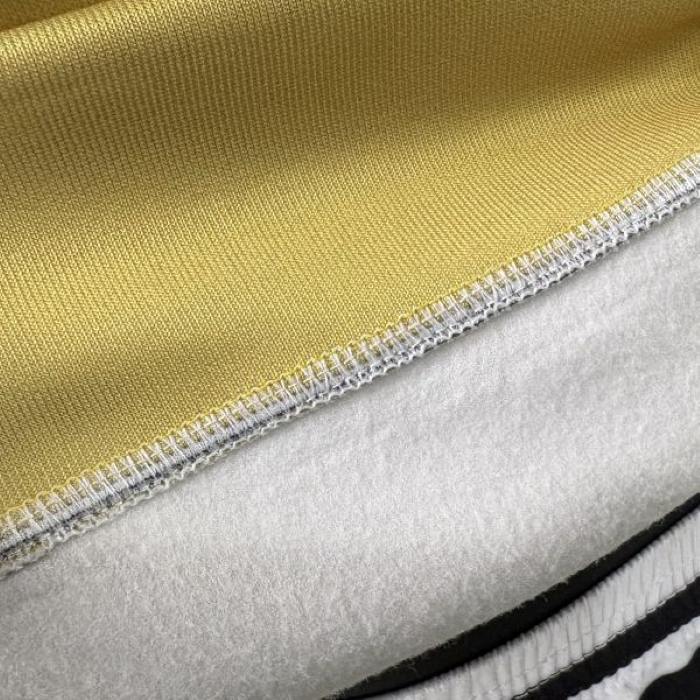
Ask every supplier to quote the same cost structure. The table below is not a universal price list; it is an RFQ framework that identifies what each price covers. It works for branded merchandise, promotional programs, retail private-label projects, and teamwear orders where buyers need to explain cost changes internally.
| Quote component | What the supplier should state | Why it changes cost | Best fit | Limit or buyer check |
|---|---|---|---|---|
| Fabric GSM | Requested GSM, fiber content, fabric type, and whether the quoted price is based on a confirmed material | Fabric weight affects material consumption and garment hand feel. A heavier construction generally requires more material per piece. | Retail programs and cooler-weather merchandise where hand feel is part of the product position | GSM alone does not define quality. Confirm composition, surface finish, shrinkage expectations, and approved color standard. |
| Brushing | Whether the inside is unbrushed, single-brushed, or otherwise finished, plus any applicable fabric approval requirement | Brushing adds a finishing requirement and changes the inner feel of the garment. | Comfort-focused fan merchandise and casualwear programs | A softer interior may not suit every application. Buyers should confirm whether the intended decoration and wash expectation remain appropriate. |
| Print method | Method, print locations, artwork coverage, number of colors if applicable, and whether names or numbers vary by garment | A small chest mark and a large full-front design do not consume the same production resources. Variable data also changes the work scope. | Logo merchandise, event apparel, staff uniforms, and personalized team orders | Do not assume all print methods have the same wash behavior or visual result on every fabric. Request the method in writing. |
| Embroidery stitches | Stitch count or a supplier-confirmed estimate, logo size, placement, backing requirement, and number of embroidered positions | Embroidery cost is tied to the work needed to reproduce the logo, not merely the number of logo colors. | Premium corporate merchandise and small chest-logo programs | Fine artwork, very small lettering, and large filled areas may not reproduce as intended. Send original artwork for review. |
| Packing | Individual polybag requirement, size sticker, barcode label, folded presentation, assortment ratio, carton marking, and carton requirements | Packing adds materials and handling. Retail-ready presentation is different from bulk team distribution. | Retail replenishment, fulfillment preparation, and organized event handout programs | Do not leave carton marks and label content until after production starts. They can affect packing time and error risk. |
| Quantity basis | Total quantity, color split, size ratio, and whether the order includes multiple designs | Pricing is based on quantity. Smaller production runs distribute setup and handling across fewer pieces. | Clubs, pilot retail launches, and mixed-size team orders | Hening has no MOQ, but no MOQ does not mean every quantity receives the same unit price. |
Recommendation: use this model when comparing two or more supplier quotes. Require each supplier to mark any item that is excluded, estimated, or subject to artwork confirmation. It is especially useful when a buyer is deciding whether a low price reflects a lower-cost build or simply a narrower scope. It does not replace an approved pre-production specification; it only makes the quotation basis visible.
For example, a branded merchandise buyer may receive one offer based on a basic garment, front print, and bulk packing. A second supplier may quote a brushed construction, embroidered chest logo, individual bags, and barcode labels. The second unit price may be higher, but it is not a valid comparison until the first supplier prices the same build. The correct negotiation question is not “Can you match this price?” It is “Can you match this exact specification and show each cost category?”
Fabric weight and decoration should be chosen together. A buyer who selects material first and branding later can discover that the intended logo treatment no longer suits the garment’s look, touch, or budget.
Choose fabric GSM as the first decision point when the product will be sold at retail, used in cooler conditions, or evaluated by hand before purchase. The reason is simple: fabric construction affects the customer’s first impression and the amount of material included in each garment.
Where an order also includes performance apparel, keep the specifications separate. Hening’s custom sportswear information identifies 100% polyester fabric with moisture-wicking and four-way stretch characteristics, at 140–160 gsm for breathable sports jerseys. That specification should not be assumed to be the material specification for fleece merchandise. Buyers ordering coordinated pieces can review Custom Team Jerseys alongside their casualwear brief, but each item needs its own material line.
Let the decoration method lead when artwork is the commercial center of the product: a large campaign graphic, sponsor-heavy team apparel, event branding, or individualized names. State the exact placement and coverage rather than writing “logo print.”
For polyester sportswear, dye-sublimation is a documented Hening capability. We use fade-resistant dye-sublimation printing intended to keep colors vivid wash after wash, supported by locked-color inks and a one-year colorfastness guarantee. That is relevant to suitable sublimated polyester garment programs, including coordinated items such as Soccer Jerseys or Basketball Jerseys. It should not be treated as an automatic claim that every fleece construction uses the same process or carries the same decoration outcome.
Choose embroidery where a compact logo and a more dimensional appearance matter more than a large illustrated design. Ask for the logo size and stitch estimate before approving the cost. Embroidery is less suitable where artwork contains tiny text, subtle shading, or a large filled graphic; in those cases, a print method may be more practical.
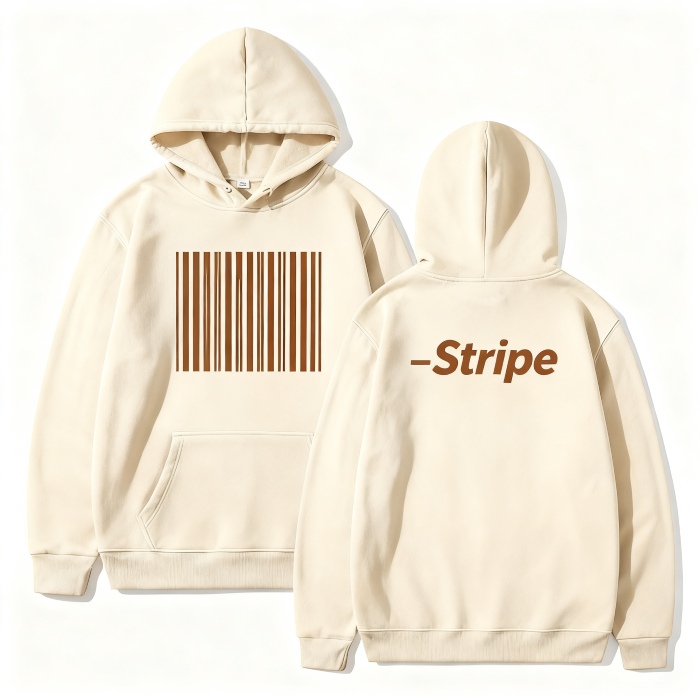
A quote becomes useful only when the supplier has enough information to price the same product you plan to buy. Send a structured RFQ rather than a mood board alone. A reference image can help explain style, but it cannot replace measurable requirements and decoration instructions.
Recommendation: use this seven-point RFQ for every supplier in the comparison. It fits buyers who need price control across several designs or purchase orders. It is less necessary for a repeat order with an already approved specification, although packing, quantity, and artwork changes should still be reconfirmed.
Hening offers no MOQ, which can help a small club, a trial merchandise drop, or a size-inclusive order that does not reach a conventional minimum. Pricing remains quantity-based, so send the exact quantity tiers you are considering. Asking for pricing at one quantity only can lead to a poor purchasing decision if the actual order total changes later.
Price is one part of supplier fit. Buyers should also ask what evidence supports the supplier’s stated production scope, quality system, and delivery terms. A supplier may be a good fit for a sportswear program while still needing to confirm whether a particular fleece garment, decoration method, or retail packing format is available for the requested order.
| Buyer concern | Available Hening evidence | How to use it in a sourcing decision | What still needs agreement |
|---|---|---|---|
| Color retention on sublimated polyester items | Fade-resistant dye-sublimation printing, locked-color inks, and a one-year colorfastness guarantee are stated for the relevant printed sportswear scope. | Useful when a coordinated program includes polyester jerseys or event apparel with strong color requirements. | Confirm the garment fabric and print process before applying this expectation to another product category. |
| Production management | Hening holds ISO 9001 quality management system certification and ISO 14001 environmental management system certification. | Ask for the quotation to reference the final approved specification so the production scope is controlled. | Certification does not replace buyer approval of artwork, size chart, materials, or packing details. |
| Order flexibility | No MOQ is offered, while pricing is based on quantity. | Appropriate for small teams, clubs, and test orders that require mixed sizes. | Confirm the price at each realistic quantity tier and whether multiple designs affect the quotation. |
| Sportswear order history | Hening supplied more than 500 sublimated jerseys for a United States high school basketball league, produced full custom uniforms for an Australian soccer club’s three teams, and delivered 1,000 event jerseys for a European marathon. | Relevant evidence for buyers evaluating custom sportswear and event-apparel capacity. | These cases do not prove that an unrelated garment construction or decoration requirement is automatically available. |
| Delivery planning | Standard production is stated as 7–10 days, with rush orders available. | Use this as an initial production-planning reference for confirmed custom orders. | Confirm applicability to the exact product, order size, artwork status, and packing requirement. Freight transit is a separate matter. |
A common buying mistake is treating a supplier’s previous project as a blanket promise. The basketball league, Australian club, and European marathon examples show experience with custom sportswear orders. They do not establish an automatic price, lead time, or process for every merchandise item. The disciplined approach is to use proven capability as a qualification signal, then document the specific requirements of the new order.
Before negotiating a lower unit price, review the items below line by line. This protects both the buyer and supplier from an order that appears agreed but contains unpriced work.
For buyers seeking coordinated merchandise and sports apparel, Hening can also be considered for Custom Casual Wear and custom teamwear requirements. The right fit depends on whether the final garment specification, decoration scope, quantity, and packing request can be confirmed in writing.
Send your garment specification, artwork placements, quantity tiers, and packing requirements to request a normalized quote.






 WhatsApp
 Email
 +8618978569271