Loading
As a sportswear production specialist, I often see clients focus on breathability purely for cooling. That’s only half the story. The real performance advantage of a quality breathable fabric is how it preserves the garment’s fit and function throughout a match. When a player sweats, a non-breathable fabric becomes a liability. It gets heavy, sags, and clings, restricting movement precisely when agility matters most. A well-engineered material does the opposite.
Proper Custom-Fit Tennis Wear: Breathable Fabric is designed not just to vent heat, but to manage moisture in a way that maintains the apparel’s intended shape, stretch, and lightweight feel. It ensures that the fit you have at the start of the first set is the same fit you have at match point. At our factory, we work exclusively with performance polyester knits in the 140-160 gsm range, specifically because they provide the right balance of lightweight structure and high-performance moisture management needed for competitive play.
When specifying a fabric for tennis apparel, three technical properties work together to determine how a garment feels and fits during play: stretch recovery, air permeability, and moisture transport. Understanding the interplay between them is key to developing a product that performs. Ignoring one can undermine the benefits of the others.
Here’s a breakdown of what each factor means for on-court performance:
| Performance Factor | What It Measures | Impact on Custom Fit | What Happens with Poor Performance |
|---|---|---|---|
| Stretch Recovery | The fabric’s ability to return to its original shape immediately after being stretched. Often associated with 4-way stretch materials. | Maintains a consistent, athletic fit during explosive movements like serves, volleys, and lunges. The garment moves with the athlete without becoming misshapen. | The garment “bags out.” The shoulders, elbows, and torso area become loose and saggy after repeated movement, creating a sloppy, unprofessional look and a distracting feel. |
| Air Permeability | The rate at which air passes through the fabric. This is the technical definition of “breathability.” | Allows heat and water vapor (sweat) to escape from the skin’s surface, promoting evaporative cooling and preventing the player from overheating. | Heat and moisture become trapped. The player feels clammy and hot, and the fabric’s inner surface becomes saturated, causing it to cling uncomfortably to the skin. |
| Moisture Transport | The fabric’s ability to pull liquid sweat away from the skin and disperse it across the outer surface of the material. This is “wicking.” | Keeps the player’s skin feeling dry. It moves moisture to the surface where air permeability can take over and evaporate it. | Sweat pools against the skin. The fabric becomes heavy with absorbed moisture, loses its stretch recovery properties, and can cause chafing and discomfort. |
How They Interact: Excellent moisture transport is ineffective without good air permeability. If the fabric wicks sweat to the surface but air can’t flow through to evaporate it, the garment simply becomes a wet, heavy shell. Likewise, the best 4-way stretch material will lose its recovery properties if it becomes saturated with sweat, as the weight of the water pulls the fibers down. A truly high-performance fabric excels in all three areas simultaneously.
In my 10 years on the factory floor, I’ve seen many brands make sourcing decisions based on incomplete information. A simple spec sheet doesn’t always tell the whole story. Avoiding these common mistakes will help you procure apparel that truly performs for your team or customers.
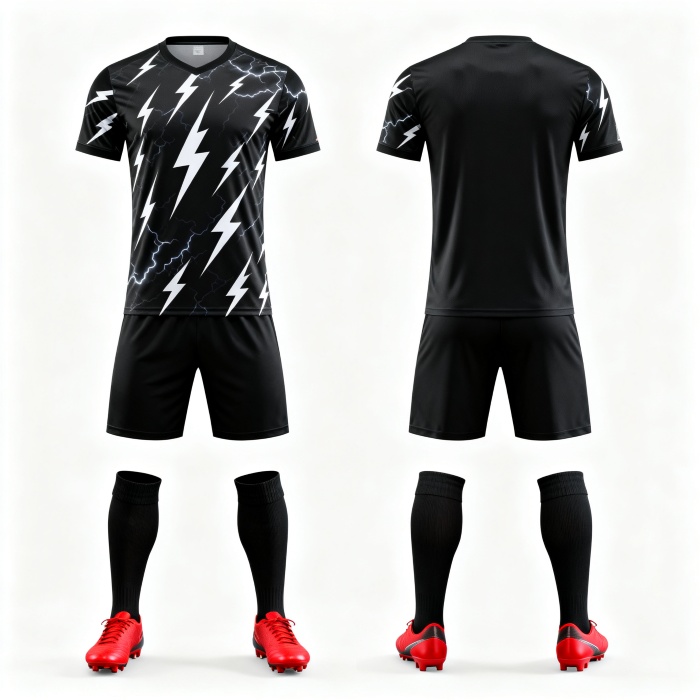
Many buyers equate a lower GSM (grams per square meter) with better performance. While a lighter fabric (e.g., 140 gsm) feels less substantial, the knit structure is far more important for breathability. An open-knit interlock or mesh construction will have much higher air permeability than a tightly-woven fabric of the same weight. When evaluating options, always ask about the knit type, not just the weight. Our standard fabrics use specific interlock patterns designed to maximize airflow without sacrificing durability or opacity.
The term “100% polyester” is incredibly broad. Performance differences come from:
A low-cost polyester might feel fine initially, but it will likely fail in moisture transport and feel clammy under athletic stress. We source specific polyester yarns intended for athletic use, ensuring the wicking capability is inherent to the fiber, not just a temporary chemical finish.
What good is a high-tech fabric if the team logo cracks or the colors fade after a few washes? This is a frequent complaint with screen-printed or heat-transfer designs on stretch fabrics. The print can’t stretch with the material, and harsh washing cycles degrade the colors.
This is why we rely on dye-sublimation. The ink becomes part of the fabric fibers, so it doesn’t crack, peel, or add weight. More importantly, it doesn’t clog the pores of the fabric, maintaining 100% of its breathability. We use high-quality, locked-color Italian inks and back our Tennis Jerseys with a 1-year colorfastness guarantee. It’s the same technology we used to produce vibrant, durable uniforms for an Australian soccer club’s three teams—apparel that needed to withstand intense use and frequent laundering.
The physical properties of a fabric directly influence pattern making and sizing. A garment made from our 4-way stretch polyester requires a different pattern than one made from a fabric with limited stretch. The goal is an athletic fit that allows a full range of motion without being compressive or loose.
One of the biggest risks in custom apparel production is inconsistent sizing. A medium from one batch shouldn’t fit differently from a medium in the next. This issue often stems from a lack of process control—different fabric rolls with slight variations, patterns not adjusted for material behavior, or poor quality control.
Our ISO 9001-certified quality management system provides the framework to prevent this. We address consistency in three ways:
This rigorous process allows us to produce large, consistent orders, like the 500+ sublimated jerseys we supplied for a US high school basketball league. If any piece ever arrives with the wrong size due to a production error, we offer a free reprint. We stand by our sizing because our process is built to be reliable.
When you’re ready to send out a Request for Quotation (RFQ), use this checklist to ensure you’re comparing suppliers effectively and specifying a product that will meet your performance standards.
By asking these questions, you move the conversation from just price to overall value and performance, ensuring the final product meets the demands of the sport.
If you’re defining the specifications for your next line of tennis apparel, our team can provide fabric swatches and technical advice to ensure your design performs as well as it looks. Contact us to discuss your project requirements.






 WhatsApp
 Email
 +8618978569271