Loading
Club buyers and private-label procurement teams can regret an order long after the first delivery arrives. A shirt may look correct in a product image but fade after repeated washing, fit differently across sizes, or leave the team unable to replace one damaged piece mid-season. Those risks are exactly what to inspect before placing an RFQ for a Durable Custom Soccer Set.
For recurring club orders, durability is not only about thick fabric. It depends on whether the supplier can state the fabric weight, explain the printing method, provide a verified size chart, and set out what happens when a printed item is defective or the supplied size is wrong. A lower initial unit price can become expensive if the club must reorder mismatched shirts, shorts, or replacement pieces.
Hening Clothing Co., Ltd. is positioned for custom teamwear procurement, including soccer apparel, with no minimum order quantity. This can suit a youth club, adult amateur team, academy, retailer, or private-label buyer that needs an initial run and later top-up orders. Pricing is based on quantity, so buyers should still request quotations at realistic order volumes rather than assume that a no-MOQ policy means one-piece pricing will match bulk pricing.
Our stated production setup includes a 1,000 sqm factory in Guangzhou, China, more than 100 workers, and five automatic dye-sublimation printing lines. Daily output is stated at more than 1,000 custom jerseys, while standard production is 7–10 days and rush orders are available. Those points can matter for a league deadline, but they do not remove the need to confirm the delivery destination, artwork approval date, shipping method, and order composition before setting an event date.
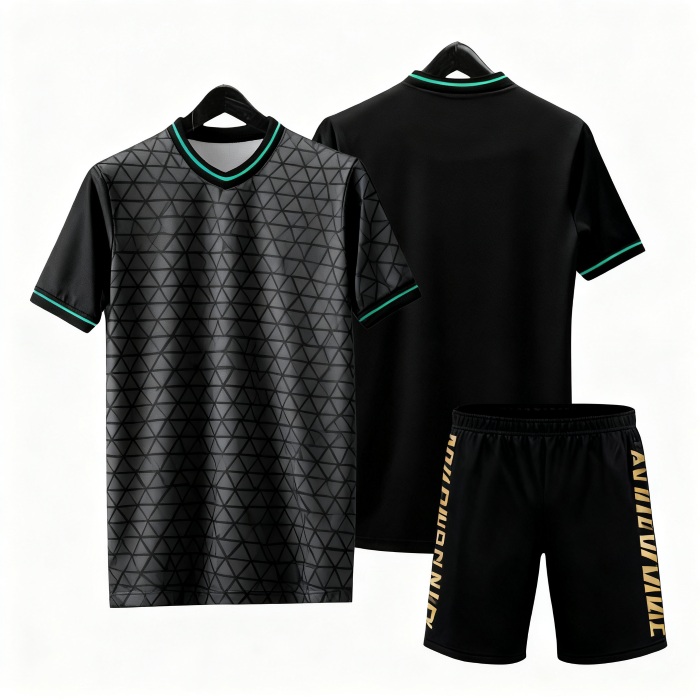
Start with the wearing environment. A recreational team playing occasional matches has different needs from a club running weekly training, league fixtures, and tournament travel. The correct sourcing decision is to specify the operating conditions first, then check whether the supplier’s stated construction fits them.
Hening uses 100% polyester fabric with moisture-wicking and 4-way stretch properties. The stated fabric range is 140–160 gsm, intended for breathability. This specification is a practical fit for teams seeking a lighter soccer uniform for active play in warm or moderate conditions, where moisture movement and range of motion matter.
The limit is equally relevant: fabric weight alone does not prove that a garment will survive a full season. Buyers still need to request confirmation of the proposed fabric for their order, inspect a physical sample where the order value justifies it, and agree on care instructions for the club or retail customer. A 140–160 gsm garment may be suitable for breathable matchwear, but a buyer seeking insulated sideline apparel should source that item separately, such as a Custom Sport Jacket, rather than expect a match shirt to perform as outerwear.
For fully customized soccer designs, dye-sublimation is the print method to assess. Hening uses fade-resistant dye-sublimation printing with locked-color inks intended to keep colors clear after washing. This is relevant when a club has large color panels, all-over graphics, sponsor artwork, player names, or numbers that should remain visually consistent across repeat orders.
The practical conclusion is simple: use sublimation when the order requires integrated graphics rather than a basic blank garment with a separate decoration process. It is particularly suitable for club kits that need the same artwork reproduced for first-team, youth, and replacement orders. It does not mean every supplied artwork file will print correctly without review. Buyers should provide logos in the best available format, confirm team colors against an approved proof or sample, and identify which elements must remain unchanged in later reorders.
For buyers comparing product ranges across sports, our Custom Team Jerseys category can help establish whether the same supplier is appropriate for a broader teamwear program. However, do not assume that a basketball or baseball garment uses the same fit, neckline, or panel layout as a soccer shirt. Each sport should be specified separately.
Use the checklist below in every supplier comparison. It connects the parts of a soccer set that affect repeat wear with the evidence a buyer should request. Where Hening has a documented term, it is shown clearly. Where details have not been supplied, that gap should be raised during the quotation stage rather than assumed.
| Durability control | What to request or verify | Why it matters over a season | Hening position and buying limit |
|---|---|---|---|
| Fabric weight | Confirm the fabric specification stated on the quotation and sample. | Weight affects the balance between breathability, feel, and intended use. Teams need a consistent specification for repeat orders. | 100% polyester, moisture-wicking, 4-way stretch fabric at 140–160 gsm is stated. It fits breathable active teamwear; confirm the selected fabric for the final order. |
| Seam construction | Ask which seams join the shoulder, side, sleeve, short inseam, and waistband areas. Inspect the sample under stretch. | These areas receive repeated movement and pulling during play, laundering, and changing. | Seam construction details are not stated in the supplied factory information. Do not assume stitch type, reinforcement, or panel construction; add the required details to the RFQ. |
| Print method | Specify dye-sublimation for all-over artwork and ask for approval of logos, colors, names, and numbers before production. | Print quality affects club appearance after repeated washing and determines whether top-up pieces match the original order. | Fade-resistant dye-sublimation with locked-color inks is offered, with a 1-year colorfastness guarantee. The guarantee applies to colorfastness, not every possible garment issue. |
| Size control | Request the size chart, collect player measurements, and confirm whether youth and adult sizing are both needed. | Inconsistent sizing leads to unused stock, late exchanges, and unhappy players. | Hening uses a verified size chart and offers free reprints for a wrong size. Buyer-supplied measurement errors should be clarified before ordering. |
| Replacement-piece policy | Ask how printing defects, incorrect supplied sizes, replacement names, and later top-up orders will be handled. | A club often needs one or two replacement shirts after the initial delivery, not a complete new set. | Free reprints are stated for printing defects or wrong sizes. No MOQ can support small replacement quantities, but pricing remains quantity-based and top-up design matching should be agreed. |
This checklist is most useful for clubs planning a season rather than a one-off event. For a single promotional match, buyers may accept a simpler specification. For a private-label program or multi-team club, each item should be included in the purchase record so the next order uses the same approved information.
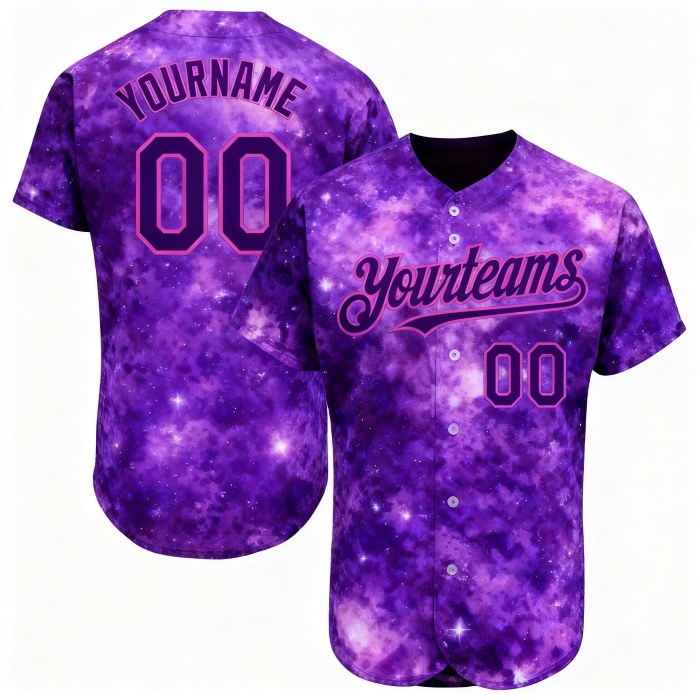
Capacity should be assessed in relation to the order type. A supplier able to make a large quantity of generic garments is not automatically prepared for individualized player names, numbers, multiple sizes, and several club colorways. Buyers should ask how the supplier’s stated setup relates to the actual order complexity.
Hening states daily output of more than 1,000 custom jerseys and operates five automatic dye-sublimation printing lines. That is relevant for a buyer needing recurring custom work rather than only plain stock products. Standard production is stated as 7–10 days, with rush orders available. This may suit a club facing a fixed league or tournament date, provided the buyer confirms when the production clock begins and allows time for artwork approval and shipping.
The company also holds ISO 9001 quality management system certification and ISO 14001 environmental management system certification. For procurement teams, these certifications are useful supplier-screening evidence. They should not be treated as a substitute for approving the actual garment specification, size chart, print layout, or commercial terms for a particular order.
Documented order examples add relevant scope evidence. Hening supplied more than 500 sublimated jerseys for a US high school basketball league, produced full custom uniforms for an Australian soccer club’s three teams, and delivered 1,000 event jerseys for a European marathon. These cases show experience with customized team and event apparel at different order scales. They do not establish a universal delivery outcome, identical product specification, or automatic suitability for every soccer program.
For a soccer buyer, the Australian three-team club order is the closest reference because it involved full custom uniforms across multiple teams. Ask for a quotation that separates each team, size range, shirt, short, and sock requirement. That prevents the common mistake of receiving one total price that hides differences in personalization, garment mix, or repeat-order needs.
A useful RFQ gives every shortlisted supplier the same information. The goal is not to create unnecessary paperwork; it is to make quote comparisons fair. If one factory prices a shirt only while another prices a shirt-and-short set with names and numbers, the lower figure tells you very little.
This approach fits recurring club procurement and private-label buying because it creates a usable reorder file. It may be more detail than a casual team needs for ten basic shirts, but even small teams benefit from confirming the size chart and print approval before production.
Hening is a reasonable supplier to qualify when the buying requirement includes customized polyester soccer apparel, dye-sublimated artwork, small-order flexibility, and the possibility of recurring replacements. The combination of no MOQ, quantity-based pricing, 7–10 day standard production, a stated daily output above 1,000 custom jerseys, and free reprints for printing defects or wrong sizes provides concrete points for a club buyer to assess.
The best fit is a team or procurement program that can provide clear artwork, size quantities, and delivery requirements. A buyer should also be prepared to confirm open details that are not established in the stated information, including seam construction, exact garment components, freight arrangements, replacement ordering terms, and the procedure for approving colors and artwork.
For matchwear options and design direction, review the available Soccer Jerseys and submit your quantity breakdown, artwork, size range, and required delivery date for a focused quotation.






 WhatsApp
 Email
 +8618978569271