Loading
Club managers sourcing Badminton Jerseys can regret one omission more than a design choice: failing to confirm the complete size list, player-name data, color reference, and quantity basis before asking for a quote. A shirt may look correct in a digital mock-up but still create problems if the supplier receives conflicting names, incomplete sizes, or an unclear club color standard.
For a club order, the supplier decision is not only about fabric or artwork. It is about whether the supplier can produce personalized teamwear within the required quantity range, delivery window, and print-quality expectation. Hening Clothing Co., Ltd. produces custom sportswear using dye-sublimation printing, with no stated minimum order quantity. This can suit a small badminton club replacing a few player shirts as well as a larger association preparing tournament uniforms. Pricing, however, is based on quantity, so buyers should request a quote against a confirmed quantity breakdown rather than a rough estimate.
Our standard production time is 7–10 days, with rush-order options available. That timing can work well for a club that has finalized its roster and artwork, but it should not be treated as a substitute for early planning. A buyer still needs to confirm the delivery destination, required in-hand date, and whether late player additions may occur.
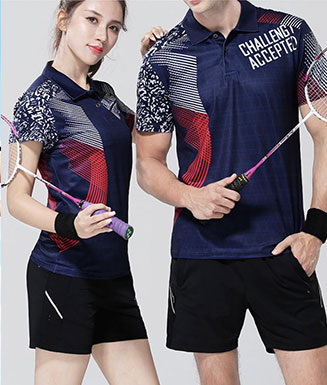
Best fit: clubs, schools, tournament organizers, and teamwear buyers that need custom polyester jerseys with individualized details and want flexibility on order quantity. Less suitable: buyers who require a supplier to accept undefined artwork, unconfirmed player data, or a fixed delivered price before quantities and personalization details are known.
The first sourcing decision is simple: select a supplier whose stated production method and garment specification fit active indoor sport, then verify the parts that are not documented. Hening uses 100% polyester fabric with moisture-wicking and 4-way-stretch properties. The stated fabric weight is 140–160 gsm, intended to support breathability. For badminton, this is a practical starting point because players commonly need a light shirt that allows arm and shoulder movement during overhead shots.
Our factory has 100+ workers, five automatic dye-sublimation printing lines, and a stated daily output of 1,000+ custom jerseys. These facts matter when a club needs coordinated shirts across adult, youth, men’s, women’s, and reserve-player size runs. Capacity alone does not confirm availability for a specific date, so request confirmation against your actual order timing.
| Buyer requirement | Relevant stated capability | What to confirm before ordering | When it may not be enough |
|---|---|---|---|
| Light, activewear-oriented jersey | 100% polyester, moisture-wicking, 4-way stretch, 140–160 gsm | Garment style, sleeve length, collar preference, and size chart | If your competition has a mandatory fabric, logo-placement, or collar rule |
| Club colors and detailed graphics | Dye-sublimation printing with fade-resistant, locked-color inks | Approved artwork files and color references | If you need an exact match to a physical color standard not supplied in the artwork |
| Individual player personalization | Custom jersey production | Final spelling, numbers, and mapping of each player to each size | If player data is still changing close to production |
| Small replacement batch | No MOQ requirement | Quantity-specific quotation and required date | If the club expects large-order unit pricing for a very small reorder |
| Time-sensitive club event | 7–10 day standard production; rush options available | Artwork readiness, order details, delivery destination, and in-hand deadline | If the deadline leaves no time for data corrections or transport planning |
A useful comparison is between dye-sublimated graphics and add-on decoration. Dye-sublimation is particularly relevant for all-over club patterns, gradients, sponsor marks, player names, and numbers because the design is printed into the polyester fabric rather than applied as a separate layer. Hening’s fade-resistant printing is intended to keep colors clear wash after wash, addressing a common teamwear complaint about fading prints. The one-year colorfastness guarantee adds a defined point of protection, although buyers should still agree on artwork approval and care expectations before production.
For clubs ordering several sports categories, keep designs connected but specify each product separately. A training package might combine badminton shirts with Custom Sport Jacket items for travel or warm-up use. Do not assume the same size fit or construction applies across different garment types; request the relevant size information for each item.
Recommendation: submit one controlled order sheet with every jersey line item before requesting final pricing. This reduces avoidable quote revisions, prevents player-name mismatches, and lets the supplier price the actual quantity rather than an assumed bulk volume. It is especially useful for clubs with mixed age groups, several teams, or individual names and numbers.
The stated no-MOQ policy means a club is not required to inflate its order simply to meet a published minimum. The limit is commercial rather than procedural: pricing depends on quantity. Ask for a quote based on your true order split, including any replacement shirts or staff garments, instead of combining uncertain future demand into the current order.
| Checklist item | Information to provide | Why the supplier needs it | Buyer action before approval |
|---|---|---|---|
| Size run | Quantity by size, garment type, and team | Sizes affect the production list and total quantity | Use the verified size chart and collect each player’s selection in writing |
| Colorway | Approved artwork plus club color reference within the design file | Prevents one team using a different version of the club colors | Nominate one club approver for the final artwork |
| Player names | Exact spelling, capitalization, name position, and linked size | Personalized print data must match each garment | Check every name against the roster, not verbal messages |
| Numbers | Player number and linked player name, if used | Stops duplicate or mismatched identifiers | Confirm numbers are final under league rules |
| Quantity basis | Total units and breakdown by design, team, and size | Pricing is quantity-based even though there is no MOQ | Separate confirmed units from possible future additions |
| Delivery target | Destination and required in-hand date | Production timing must be assessed against the actual deadline | Allow time for your own roster checks and delivery planning |
A master roster should have one row per jersey, not just one row per player. This is the safer approach when a player receives home and away colorways, a spare shirt, or more than one garment style. Include team name, player name, number, size, colorway, quantity, and any special note. Keep a version date on the file.
Scenario: a club orders shirts for two adult squads and a junior squad. One player receives two shirts in different colorways, while coaches receive unnumbered tops. A roster that lists only player names can miss those distinctions. A line-by-line sheet makes the requirement usable for quotation and production review. This method is less necessary for identical non-personalized event shirts, but it remains useful for confirming the size mix.
No MOQ gives buyers order flexibility. It does not mean the unit price for five shirts will match the unit price for fifty or five hundred. Request pricing against the confirmed number of garments and ask the supplier to identify what is included in the quoted garment scope. If you expect late replacements, request a separate quantity-based quote for that possibility rather than assuming the original price will apply.
This is particularly relevant for a small club that wants to avoid holding unused stock. It may not be the lowest unit-cost route, but it can reduce wasted garments and allow a team to order to its current roster.
A quote request should allow the supplier to assess both the garment and the order risk. Sending only a logo and “need 40 shirts” often produces follow-up questions because size allocation, personalization, and delivery expectations are absent. The buyer can avoid delays by submitting the decision points together.
This approach fits clubs that need controlled personalization and have one person responsible for sign-off. It may be excessive for a simple non-personalized order with one logo and a single size, but even then, a clear quantity and deadline remain necessary.
Supplier claims carry more weight when they connect to relevant production evidence. Hening Clothing Co., Ltd. operates under ISO 9001 quality management system certification and ISO 14001 environmental management system certification. For a club buyer, these certifications are useful indicators that documented quality and environmental management systems are in place. They do not replace reviewing your own artwork, size data, and quote details.
Our stated production setup includes a 1,000 sqm factory in Guangzhou, China, more than 100 workers, and five automatic dye-sublimation printing lines. The company also states a daily output of more than 1,000 custom jerseys. These details support discussions with clubs that need coordinated teamwear at scale, but an individual production slot should always be confirmed before an order is committed.
There are relevant examples of larger custom-sportswear supply: Hening supplied more than 500 sublimated jerseys for a United States high school basketball league, produced full custom uniforms for an Australian soccer club’s three teams, and delivered 1,000 event jerseys for a European marathon. These are evidence of work across team and event order types. They are not proof that every badminton club order has the same quantity, deadline, or garment requirement.
Buyers handling more than one club sport can also compare product needs across categories. For example, Tennis Jerseys may share moisture-management expectations with badminton tops, while fit preferences and competition requirements can differ. Keep each sport’s design and size information separate in the RFQ.
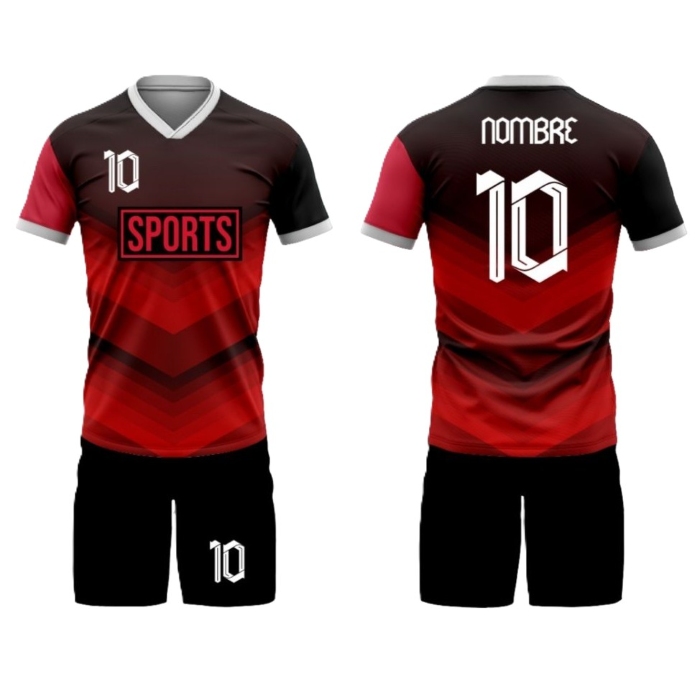
Before placing the order, distinguish between a confirmed supplier commitment and an item that still needs agreement. Hening states that it offers a free reprint for a printing defect or wrong size, plus a one-year colorfastness guarantee. These terms directly address two recurring risks: print defects and size errors. They should not be broadened into an assumption that any change of mind, roster update, or artwork revision qualifies for a reprint.
The right supplier fit is a club that can provide finalized order data, wants dye-sublimated polyester teamwear, and values flexible quantities without an MOQ requirement. The main unresolved points should be settled in the quote: final garment design, size chart selection, personalization roster, quantity, destination, and required in-hand date.
Send your club roster, artwork, size breakdown, and required delivery date to request a quantity-specific quote for your next order.






 WhatsApp
 Email
 +8618978569271