Loading
Most clubs get burned not on the invoice, but after it. A quote for 60 jerseys looks cheap until freight, duty, and a reprint for faded sublimation push the real number 30-40% higher than the original number you approved. Before you sign an RFQ for a Volleyball Uniform order, you need the full cost trail — not just the unit price line a supplier emails you first.
This matters more for volleyball than most sports. The panel sublimation runs edge to edge, the fabric has to stretch four ways without losing shape mid-rally, and rosters change every season, which means reorders happen more often than clubs expect. Getting the first order right saves you from paying twice.
Buyers usually compare two or three quotes on unit price alone. That’s the mistake. The real gap between suppliers shows up in five places that rarely appear on the first page of a quote.
A factory with no minimum order requirement — pricing that scales with quantity instead of gatekeeping small clubs — removes that last problem outright, which matters if your roster is under 40 players.
Clubs rarely evaluate uniform spend past the first invoice. But most teams reorder every 1-2 seasons as rosters turn over, sponsors change, or fabric wears out. Modeling five years of ownership — not one purchase — is how you catch suppliers who look cheap upfront but expensive over time.
The table below separates what you can confirm from a quote, what you must estimate yourself, and what stays genuinely unknown until the first batch ships.
| Cost Component | Status | What Drives It |
|---|---|---|
| Unit garment + print price | Confirmed (on quote) | Fabric weight (140-160 gsm polyester), print complexity, order quantity tier |
| Decoration setup / proof fee | Confirmed (on quote) | One-time per design; ask if it’s waived on reorders |
| Freight (sea or air) | Estimated | Season, carrier surcharges, shipment size — get a quote for both modes |
| Import duty & customs clearance | Estimated | Destination country HS code for polyester apparel; varies by market (US, EU, UK, Australia) |
| Replacement / reprint orders | Unknown until batch inspection | Wrong size runs, faded prints, or late roster additions — a free reprint policy for genuine defects caps this risk, but it doesn’t cover late name changes you request |
Run this across five annual reorders and the gap between “cheapest quote” and “lowest five-year cost” usually shows up in row three and five — freight efficiency and defect rate — not in the unit price most buyers fixate on. A supplier running 1000+ jerseys daily across five automatic dye-sublimation lines typically holds tighter consistency batch to batch, which lowers your replacement-order line over time. That’s an estimate based on production scale, not a guaranteed number — treat it as a planning assumption, not a contract term.
Put every quote into the same format before comparing. Side by side, a $14 jersey with hidden fees can end up pricier than a $16 jersey with everything itemized.
| Quote Line Item | Ask the Supplier | Red Flag |
|---|---|---|
| Fabric spec | Confirm gsm, polyester %, 4-way stretch | “Standard fabric” with no numbers given |
| Print method | Dye-sublimation vs screen/vinyl | Vinyl numbers on a sweat-heavy sport like volleyball |
| Size chart | Ask for a verified chart with measurements, not just S/M/L labels | No chart offered before production |
| Lead time | Standard production window vs rush option | No written lead time, only “as soon as possible” |
| Defect policy | Free reprint terms, colorfastness guarantee length | No warranty mentioned at all |
| MOQ | Minimum order and price break points | Forces you to overbuy past your roster size |
A standard production window of 7-10 days with rush options available gives you a benchmark — if a supplier quotes 3-4 weeks with no rush path, that’s a scheduling risk for mid-season reorders, not necessarily a dealbreaker for pre-season bulk orders placed early.
This sequence is built around the failure points clubs hit most: faded prints, wrong sizing, and late delivery.
Teams that browse a supplier’s volleyball uniform collection before requesting a custom quote usually get a faster, more accurate estimate — the base specs are already visible, so the RFQ only needs to cover colors, logos, and quantity.
Here’s a scenario worth running through your own numbers. A US high school league needing 500+ jerseys compared two suppliers: Supplier A quoted $11/piece with no warranty language; Supplier B quoted $13.50/piece with a 1-year colorfastness guarantee and free reprints for defects. On paper, Supplier A saves $1,250 across the order. But if even 8% of that batch needs reprinting for fade or sizing — a realistic rate for unverified suppliers — the reprint cost alone erases the savings and adds weeks to delivery. This is close to the type of order fulfilled for a US high school basketball league, where consistency across 500+ pieces mattered more than the per-unit price gap.
This logic holds for club-level orders too. An Australian soccer club ordering uniforms for three separate teams needed color-matching to stay consistent across all three kits — a scenario where one supplier’s dye-sublimation line, not three separate vendors, kept the color lot identical. Splitting an order across cheaper suppliers to save a few dollars per piece often costs more in mismatched shade lots than it saves.
Where the cheap-quote strategy does work: one-off event jerseys, like a single marathon batch of 1000 pieces delivered for a European race, where color consistency across future reorders isn’t a factor because there won’t be a reorder. Match your sourcing strategy to whether you’re buying once or buying for five years.
If you’re also outfitting players for warm-ups or travel, pairing your jersey order with matching pieces from a custom sport jacket line or custom team jerseys catalog can consolidate freight into one shipment, which lowers your per-piece landed cost more reliably than chasing a lower unit price alone.
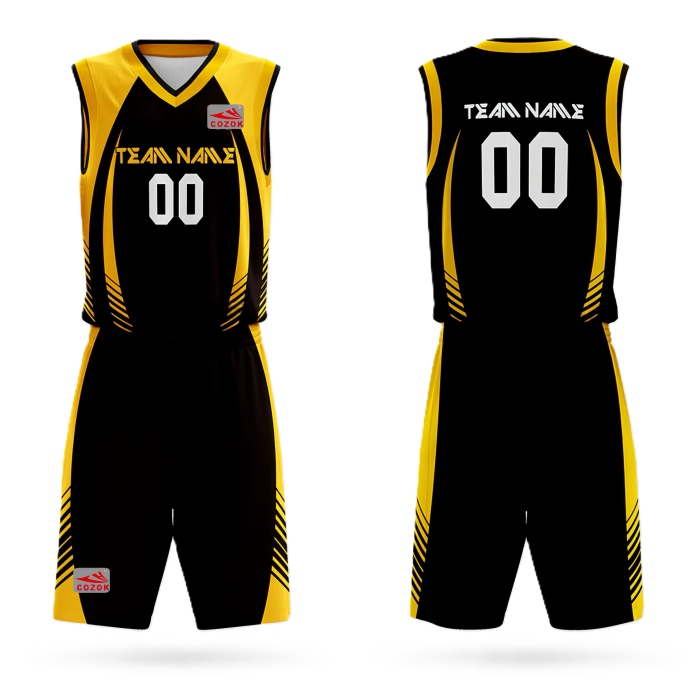
A club that gets the size chart, print method, and warranty terms confirmed before production rarely ends up in a reprint cycle. That’s the difference between a one-time saving and a five-year cost problem.
If you’re comparing quotes for an upcoming season, send us your roster size, target delivery date, and design file — we’ll return a quote broken into unit price, decoration, and estimated freight so you can run your own landed-cost comparison before committing.






 WhatsApp
 Email
 +8618978569271