Loading
As a sportswear production specialist, I see teams make the same mistake every season. They get a low initial quote for their name & number baseball jersey custom order and think they’ve found a great deal. But a year later, when they need two extra jerseys for new players or a replacement for a damaged one, the costs spiral. The supplier hits them with high “small-batch” fees, or worse, flat-out refuses the order because it doesn’t meet a minimum order quantity (MOQ).
The initial price is only one part of the total cost of ownership. For clubs, schools, and resellers managing a uniform program over several seasons, the real cost lies in reorders, roster changes, and replacements. Before you place your next order, you must look beyond the price per jersey and evaluate a supplier’s flexibility and long-term fee structure. An attractive upfront price can easily be undone by inflexible reorder policies.
Budgeting for team uniforms requires a multi-year perspective. Player turnover is a given, and you need a supplier who can support your team’s needs without penalizing you for small reorders. To illustrate this, let’s compare two common supplier models over a five-year period for a fictional team of 20 players.
Scenario Assumptions:
This table models the estimated total spend. “Supplier A” represents a typical manufacturer with a 20-piece MOQ, while Hening Clothing represents our “No MOQ” model.
| Cost Factor | Supplier A (20-Piece MOQ) | Hening Clothing (No MOQ) | Notes & Analysis |
|---|---|---|---|
| Year 1: Initial Order (20 units) | $700 (@ $35/jersey) | $700 (@ $35/jersey) | Initial costs are often competitive and appear identical. The key differences emerge in subsequent years. |
| Year 2: Reorders (4 units) | $700 (Forced to order 20) | $160 (@ $40/jersey) | Supplier A’s MOQ forces you to buy 16 unneeded jerseys. We produce only what you need, even if the per-unit price is slightly higher for small runs. |
| Year 3: Reorders (4 units) | $700 (Forced to order 20) | $160 (@ $40/jersey) | The pattern of over-purchasing continues, leading to wasted budget and excess inventory you may never use. |
| Year 4: Reorders (4 units) | $700 (Forced to order 20) | $160 (@ $40/jersey) | Our model provides predictable, manageable costs that scale directly with your team’s actual needs each season. |
| Year 5: Reorders (4 units) | $700 (Forced to order 20) | $160 (@ $40/jersey) | The financial waste from MOQ restrictions accumulates significantly over time. |
| Total 5-Year Cost | $3,500 | $1,340 | The No-MOQ model saves over 60% in this scenario. The flexibility to order just one or two jerseys at a time is the single most important factor in controlling long-term uniform costs. |
This model makes the financial impact clear. Suppliers with high MOQs are a poor fit for any organization that anticipates roster changes. At Hening Clothing, our entire production is built to support teams of all sizes, which is why we have no minimum order quantity. Whether you need 500 Basketball Jerseys for a league or a single replacement uniform, the order is treated with the same priority.
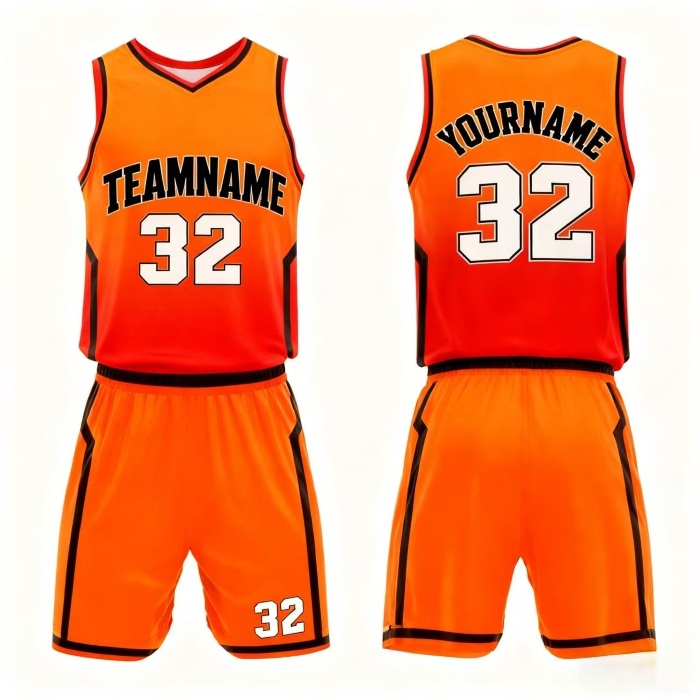
Cost isn’t just about order quantities; it’s also about longevity. A jersey that fades, cracks, or peels after a few washes needs to be replaced sooner, adding to your total spend. Many teams struggle with this, especially with screen-printed or heat-transfer vinyl numbers that degrade over time.
We solve this problem by using dye-sublimation printing exclusively for our Baseball Jerseys. Here’s how it works and why it’s better:
Our five automatic dye-sublimation printing lines ensure consistent color and quality across every order, from a single piece to a thousand. This was essential when we produced 1000 event jerseys for a European marathon, where every single garment had to match brand standards perfectly.
Before committing to a supplier for your team’s uniforms, use this checklist to ask the right questions. Getting these details upfront will save you from costly surprises down the road.
Your team’s performance depends on reliable gear, and that reliability starts on the factory floor. Our facility isn’t just a workshop; it’s a systematic production environment designed for quality and speed. With over 100 skilled workers and a daily output of over 1000 custom jerseys, we have the capacity to handle orders for large leagues, like the 500+ jerseys we supplied for a US high school basketball league, while maintaining the flexibility for small club reorders.
Being located in Guiping, a famous jersey-making town, gives us access to a complete local industrial chain. This means we source high-quality fabrics and materials efficiently, which helps us maintain our 7-10 day production standard. Our commitment to quality is formalized through our ISO 9001 certification, ensuring every step from fabric inspection to final stitching meets international standards. This structured process is how we consistently deliver high-quality Custom Team Jerseys that teams in the United States, Australia, and Europe trust season after season.
When you partner with us, you’re not just buying a jersey. You’re gaining a production partner dedicated to getting your order right and delivering it on time.
If you’re planning your team’s budget and want to see how our no-MOQ model can provide long-term savings, please send us your requirements. We’d be happy to prepare a detailed, multi-year quote for you.






 WhatsApp
 Email
 +8618978569271