Loading
Two factories quote the same price for a Pro Training Football Kit. Both list 100% polyester and sublimation printing. Eight weeks after delivery, one club’s crest has faded to a dull shade and the shorts have shrunk a size. Nobody saw it coming, because the quote said nothing about what happens in a washing machine.
This is the gap we want to close. Once initial quotations are in, price and lead time stop separating suppliers. Wash behavior does. Below is a practical method for private-label buyers and academies to compare factories on wash evidence before approving production, plus the facts about Hening that you can check against it.
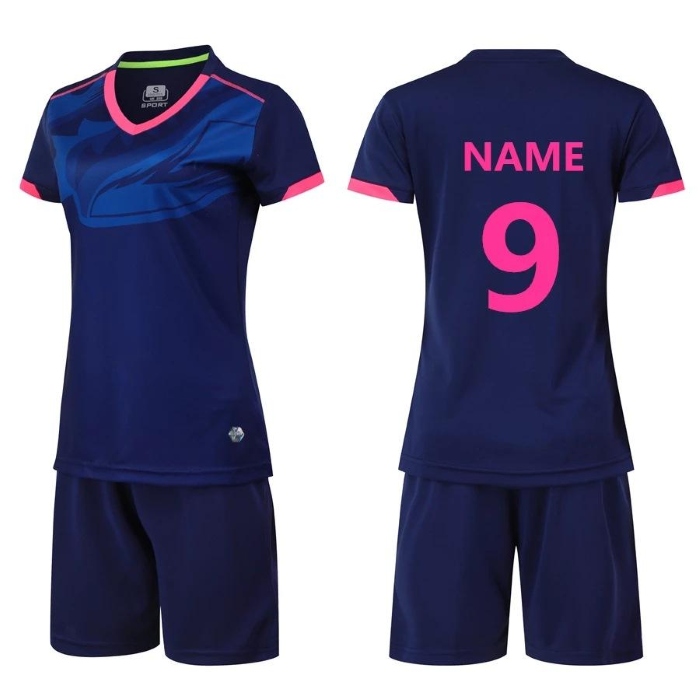
Hening Clothing Co., Ltd. makes custom sportswear from a 1000 sqm factory in Guangzhou, China. The team is 100+ workers, and printing runs on 5 automatic dye-sublimation lines. Daily output is 1000+ custom jerseys. Standard production takes 7-10 days, and rush orders are available. There is no MOQ, though unit pricing depends on quantity, so a 30-piece academy order and a 1,000-piece event order will not price alike.
The fabric is 100% polyester, moisture-wicking, with 4-way stretch at 140-160 gsm. For football training, that range suits breathable tops and shorts. A heavier fabric may suit cold-weather layers, and for those we would point you to our Custom Sport Jacket range rather than stretching one fabric across everything.
Our quality system is ISO 9001 certified, and our environmental management is ISO 14001 certified. These certify management systems. They are not a guarantee of any single garment’s wash result, and we would not ask you to read them that way. That is why the wash test below matters.
The idea is simple: make each candidate factory produce the same test garment, wash all of them under the same conditions you set, and score the results on four properties. You decide the wash routine, so it should mirror how your players’ kits are actually laundered, whether that is a club machine, a parent’s home wash or a commercial service.
| Property | What to inspect after washing | Why it matters for training kits | Fail signal |
|---|---|---|---|
| Print adhesion | Crest, sponsor logos, numbers and edges, with a fingernail rub and a stretch test | Training tops are stretched and gripped constantly | Cracking, flaking or ghosting when the fabric is pulled |
| Colorfastness | Side-by-side with an unwashed reference; a white cloth wetted and rubbed on dark areas; the wash water and any white test piece | Faded club colors look inconsistent across a squad | Visible shade shift, or dye transfer onto white |
| Pilling | Underarms, side seams, shorts hems and inner thigh areas under good light | Friction zones show wear first in training | Surface fuzz or pill balls in friction areas |
| Shape retention | Measure chest width, body length and shorts inseam before and after; check collar and hem recovery | Sizing disputes usually start after the first wash | Measurements outside the tolerance you wrote into the order |
This method has limits. A few washes will not reveal long-term wear, and sample behavior does not automatically equal bulk behavior. It also does not replace checking the factory’s own records. Treat it as strong evidence about the sample, and a reason to ask better questions about the production run.
Vague acceptance language is where claims get stuck. Before approving production, agree the following in writing, and keep the numbers specific to your own tolerance, not ours.
On remedies, our terms are a free reprint for any printing defect or wrong size, and a 1-year colorfastness guarantee. We use locked-color inks and a verified size chart to reduce those two failures at the source. Exact claim procedure, such as photos required and reporting window, should be confirmed in your order paperwork before production starts.
| Buyer concern | Relevant fact | What you should still ask |
|---|---|---|
| Faded prints after washing | Dye-sublimation on 5 automatic lines, locked-color inks, 1-year colorfastness guarantee | Which colors and print coverage the guarantee applies to |
| Inconsistent sizing | Verified size chart; free reprint for wrong size | Measurement points and tolerance on your specific cut |
| Slow delivery | 7-10 day standard production, rush available, 1000+ jerseys per day | Your confirmed date once artwork and sizes are approved |
| Small team budgets | No MOQ, price based on quantity | Price breaks at your likely order volume |
Beyond the facility, there is delivery history. We supplied 500+ sublimated jerseys for a US high school basketball league, produced full custom uniforms for an Australian soccer club’s three teams, delivered 1000 event jerseys for a European marathon, supplied training sportswear for sports retailers in New Zealand, and produced running singlets for road-race events across Zimbabwe. These cases show we handle multi-team, event-scale and retail-supply orders. They are not a promise that every order will match the same timeline or result, and our target markets (United States, Australia, United Kingdom, Europe, Japan) do not imply local offices or stock in those regions.
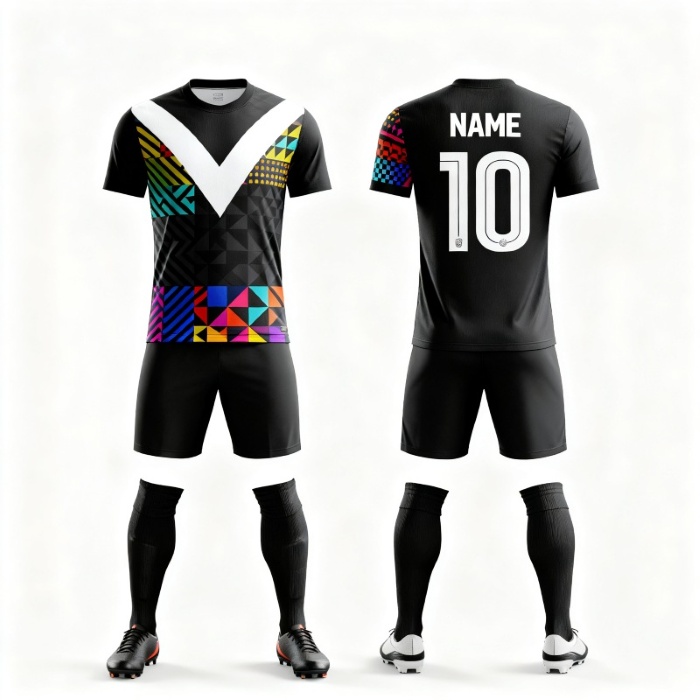
What we can state: no MOQ, quantity-based pricing, 7-10 day standard production with rush options, and the reprint and colorfastness terms above. What we do not want you to assume: that every project follows one fixed sequence. If you are comparing us after a first quote, these points should be settled before you approve anything:
For squad kits built around matching sets, our Soccer Jerseys and Custom Team Jerseys categories show the formats we produce. If a club also plays another sport, the Basketball Jerseys page covers that line.
Say an academy needs training tops and shorts for three age groups in dark navy with white and gold print. It requests samples from three factories, each in the same size, and washes them together using the club’s usual routine. Supplier A shows slight gold edge lift, Supplier B shows navy transfer onto the white cloth, and Supplier C passes all four checks but shrinks at the hem. The result is not one winner by default. A has a fixable print issue, B has a dye problem to question hard, and C needs a size-chart conversation. The value is that the follow-up questions are now specific, and you can put them in writing before any production is approved.
If you are comparing factories on a Pro Training Football Kit, send us your artwork, color references, size range, expected quantity and the wash routine you want to test against. We will confirm pricing for your volume and the sample and reprint terms that apply, so your approval is based on evidence rather than a quote.






 WhatsApp
 Email
 +8618978569271