Loading
Ordering custom polo shirts for your team or business seems straightforward until your first bulk shipment arrives. A polo that looks sharp in a photo can quickly become a liability after a few washes—the collar curls into a bacon-like wave, the placket puckers, and the colors start to fade. This is a common sourcing regret, turning a uniform investment into a lesson in poor quality control.
As a sportswear production specialist with 10 years on the factory floor, I’ve seen exactly what separates a durable, professional polo from one that fails in a month. The difference is in the manufacturing details and the quality systems a supplier has in place. Before you commit to a large order, you need to know which specific quality checks to demand from your factory.
A polo shirt’s collar and placket are its most visible structural elements. When they fail, the entire garment looks cheap and unprofessional. These failures are not random; they are direct results of specific material choices and production shortcuts.
From my experience, the three main culprits are:
Understanding these root causes is the first step. The next is knowing how to screen for them during the supplier vetting process.
A reliable manufacturer should be able to provide evidence of their quality control process. When you receive a pre-production sample, or even when just discussing specifications, you should ask about these specific checkpoints. Our own ISO 9001-certified quality management system formalizes these checks for every batch we produce.
Here is a checklist of what to look for and what questions to ask your supplier:
A supplier who can answer these questions with specific details, rather than vague assurances, is more likely to have a robust quality system in place.
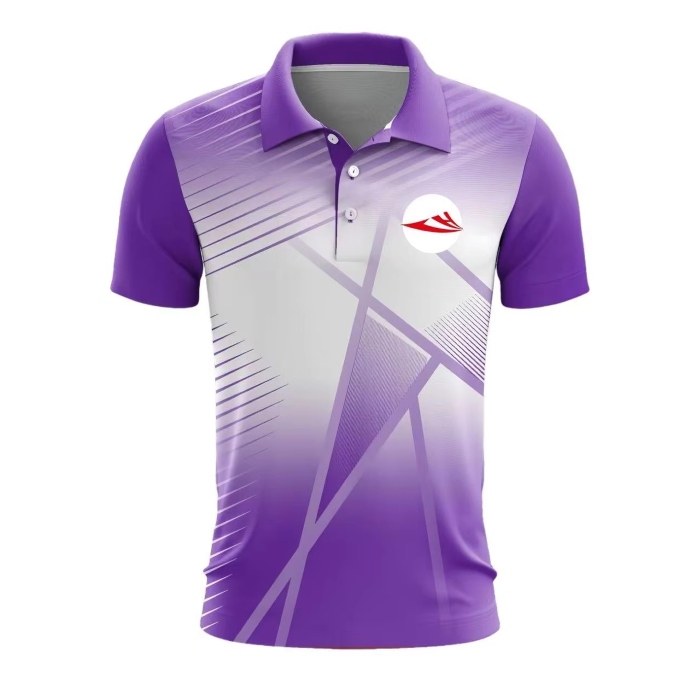
“Good quality” is subjective. To protect your investment, you need objective, measurable standards. When you place an order, you should have a clear agreement with your factory on what constitutes an acceptable garment versus a defect. A professional manufacturer will have these tolerances defined in their internal quality control documents.
Here is a table outlining common failure points for Custom Casual Wear and the factory test evidence you should ask for.
| Quality Parameter | Acceptance Standard (Pass) | Common Failure (Fail) | Required Factory Test Evidence |
|---|---|---|---|
| Collar Curling/Warping | Collar lies flat with no more than 0.5 cm of lift at the points after three standard home washes. | Collar edges curl upwards (“bacon collar”) or the entire collar looks distorted and wrinkled after washing. | A wash test report showing photos of the sample before and after washing, measured against a flat surface. |
| Placket Alignment/Puckering | Placket remains straight and flat with no visible twisting or puckering along the stitch lines after washing. Deviation is less than 0.3 cm from a straight line. | The placket twists to one side, or the fabric around the stitching bunches up, creating a wavy, unprofessional appearance. | Dimensional stability test report; pre- and post-wash photos with a ruler showing alignment. |
| Post-Wash Shrinkage | Dimensional change is less than 3% in both length and width after three washes at 40°C. | The shirt becomes noticeably shorter or tighter, changing the fit. A size ‘L’ fits like a ‘M’ after one wash. | An official fabric test report (e.g., from SGS, Intertek) or an in-house lab report for dimensional stability (ISO 6330 standard). |
| Colorfastness to Washing | Color change is Grade 4-5 on the greyscale, and color staining is Grade 4-5 after a standard wash test (ISO 105-C06). | Visible fading, especially on dark colors. The white trim on a dark polo turns grey or picks up color bleed from the main body. | A colorfastness test report. Reputable suppliers like us offer a 1-year colorfastness guarantee as a commitment to quality. |
While the collar is a critical quality indicator, the overall performance of the polo depends on the body fabric and construction. For sports teams, corporate events, or work uniforms, you need more than just a good-looking shirt; you need one that performs.
We manufacture performance apparel for a range of clients, from an Australian soccer club needing full team uniforms to supplying training wear for sports retailers in New Zealand. Across all these applications, the core material specifications remain paramount.
The standard for modern performance polos is 100% polyester. But not all polyester is the same. Key features to specify include:
Here’s a quick guide to choosing the right fabric weight for your needs:
| Fabric Weight (GSM) | Common Use Case | Feel & Performance |
|---|---|---|
| 130-140 GSM | Running singlets, hot-weather event shirts | Extremely lightweight and breathable, ultra-fast drying. |
| 140-160 GSM | All-purpose team sports (soccer, basketball), corporate uniforms | The sweet spot. Offers excellent breathability with enough structure and durability for regular use. This is our standard range. |
| 160-180+ GSM | Manager polos, coaching staff apparel, premium corporate wear | Heavier, more structured feel. Drapes well and is very durable, but can be warmer. |
Inconsistent sizing is a major risk in bulk orders. A “Large” from one batch should match a “Large” from the next. This issue is why we use a verified size chart with strict +/- 1.5 cm tolerances. When placing an order, always request your supplier’s detailed size chart and tolerance policy. Do not rely on generic S/M/L labels. A good supplier will also offer services for Custom Team Jerseys with fully custom sizing if needed.
Talk is cheap. You need a simple process to validate a potential supplier’s promises before committing thousands of dollars.
By following this structured approach, you move from hoping for good quality to actively verifying it. It puts you in control of your sourcing process and ensures the final product meets your team’s or company’s standards.
If you have a design for custom polo shirts or need guidance on selecting the right specifications, our team can provide a detailed quote and a production plan tailored to your needs. Contact us to get started.






 WhatsApp
 Email
 +8618978569271