Loading
Placing a bulk order for a custom soccer jacket that fails in its first downpour is a costly mistake. A supplier’s catalog might promise “weather-resistant” or “durable,” but without concrete evidence, you are risking your budget and your team’s comfort. The difference between a jacket that performs and one that disappoints lies in the proof you demand before production begins. Many teams and retailers, from US high school leagues to Australian soccer clubs, have learned that unverified claims lead to jackets with peeling logos, stuck zippers, and fabrics that soak through in minutes.
As a sportswear production specialist with over a decade on the factory floor, I’ve seen firsthand what separates reliable manufacturers from the rest. It isn’t about marketing claims; it’s about a transparent process backed by documentation and physical samples. Before you commit to an order, you need to move beyond promises and ask for specific, verifiable proof of performance. This guide outlines the critical evidence you should request from any potential factory to ensure your jackets meet your standards for weather resistance, durability, and appearance.
When evaluating a factory for weather-specific apparel like a Custom Sport Jacket, your due diligence must go beyond a simple price sheet. You need to verify claims related to water repellency, component durability, construction quality, and branding consistency. Here is a breakdown of the four non-negotiable proofs to require.
This table outlines what to ask for and why each piece of evidence is critical for your order’s success.
| Proof Requirement | What It Is | Why It Matters | What to Look For |
|---|---|---|---|
| Water-Repellent Test Report | A lab report (e.g., AATCC 22 spray test) that quantifies how well the fabric resists water penetration. | This replaces subjective terms like “water-resistant” with a measurable performance grade. It proves the fabric has been treated and tested to a specific standard. | Look for a clear rating (e.g., ISO 4920 or AATCC 22 score of 80 or higher). The report should specify the exact fabric batch tested. |
| Zipper Cycle Evidence | Documentation or a sample from a test showing the zipper can withstand thousands of open/close cycles without failing. | The zipper is the most common point of failure on a jacket. Proof of cycle testing ensures you aren’t using a cheap component that will break after a few uses. | Ask for the brand and model of the zipper used (e.g., YKK, SBS) and any accompanying testing data. A physical sample allows you to feel the quality and smoothness. |
| Physical Seam Samples | A small swatch of fabric showing the exact stitching and/or seam sealing method that will be used on the final product. | Stitching is where water is most likely to penetrate. A sample lets you inspect for puckering, loose threads, and the quality of any waterproof taping. | For wet-weather gear, look for flat-felled or taped seams. The stitching should be dense and even. Pull on the seam to test its strength. |
| Repeatable Logo Placement Guide | A digital or physical template (a “marker”) that shows the exact coordinates and dimensions for all logos, names, and numbers. | This ensures that a logo on a size Small jacket is proportionally correct and in the same location as on a size XXL. It prevents inconsistent, unprofessional branding. | The guide should be part of the official tech pack approval process. Confirm that the factory uses it for every single garment, not just the first one. |
The performance of any team jacket begins with the fabric. For training and sideline wear, 100% polyester is the industry standard for good reason. It provides an excellent base for dye-sublimation printing and offers inherent durability. However, not all polyester is created equal.
We recommend a fabric weight of 140-160 gsm (grams per square meter) for most soccer jacket applications. This range offers an ideal balance:
Beyond weight, the weave affects both the feel and performance. A tight interlock knit, for example, provides a smooth surface that resists snagging and enhances the vibrancy of sublimated colors.
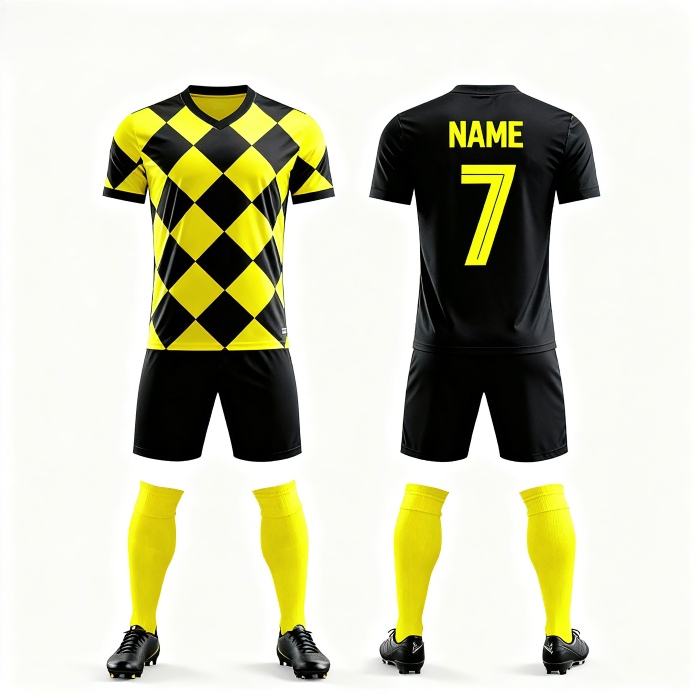
One of the biggest complaints from teams is color fading after just a few washes. This is a common problem with low-quality printing methods. At Hening Clothing, we solve this with advanced dye-sublimation technology.
Instead of printing on top of the fabric, sublimation infuses the ink directly into the polyester fibers. This process, when done correctly, makes the design a permanent part of the garment. It won’t crack, peel, or fade. We are so confident in our process that we offer a 1-year colorfastness guarantee on all our custom apparel. We use specialized locked-color inks that maintain their vibrancy, a key factor for clients like the European marathon we supplied with 1000 event jerseys that needed to look sharp on race day and long after.
A great design and quality materials mean nothing if the factory can’t execute reliably and on schedule. Our 1000 square meter facility in Guangzhou is built for consistency and speed, operating under strict ISO 9001 (Quality Management) and ISO 14001 (Environmental Management) certified systems. With over 100 skilled workers and 5 automatic dye-sublimation printing lines, we have the capacity to produce over 1000 custom jerseys and jackets daily.
This scale allows us to offer flexible terms that many other suppliers cannot. We have no MOQ (Minimum Order Quantity), making us an ideal partner for small clubs needing a few pieces or large organizations outfitting multiple divisions, like the Australian soccer club for whom we produced full custom uniforms for all three of their teams. Our standard production lead time is just 7-10 days, with rush options available when your deadline is tight.
To avoid miscommunication and ensure your order is produced correctly, use this checklist to confirm key details with your supplier before approving the start of production. This is the process we follow with all our clients.
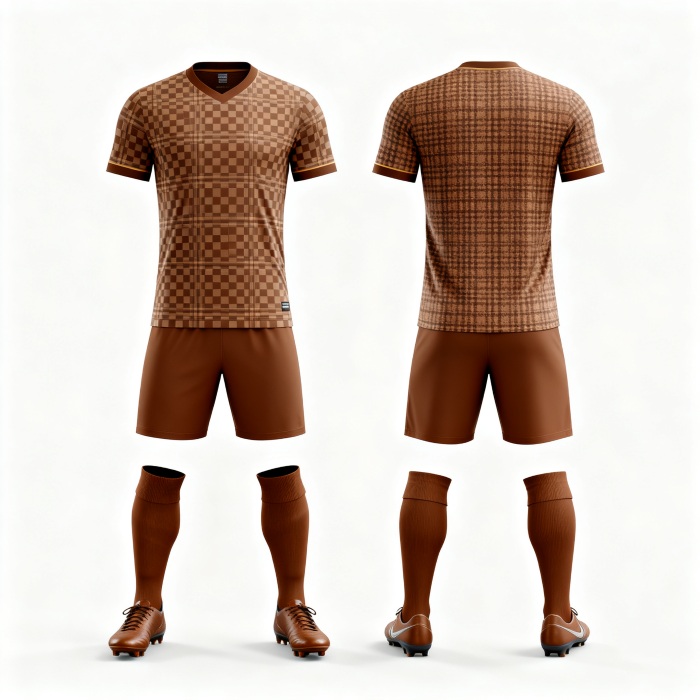
Over the years, I’ve helped many clients who came to us after a bad experience with another factory. The issues are almost always avoidable and stem from a few common oversights during the sourcing process.
Mistake 1: Focusing Only on Price
The lowest quote often hides compromises. These can include thin, non-wicking fabric, cheap zippers that snag, or inks that fade quickly. A slightly higher price from a reputable manufacturer like us, located in the famous jersey-making region of Guiping with a full local industrial chain, often means better materials and a longer-lasting product. For example, our work with sports retailers in New Zealand focuses on delivering training wear that withstands heavy use, justifying the investment in quality.
Mistake 2: Not Scrutinizing the Details
Failing to specify details like seam type, zipper brand, or drawstring ends leaves the decision up to the factory, who may default to the cheapest option. Always provide a complete tech pack. Our team helps clients create these tech packs to ensure every detail is accounted for before a single yard of fabric is cut.
Mistake 3: Ignoring Sizing Inconsistencies
A “Large” from one factory can be a “Medium” from another. Never assume standard sizing. Always demand a detailed size chart with specific measurements and, if possible, order a size set for your team to try on. We eliminated this problem by developing a verified size chart based on feedback from thousands of orders, including large ones for Basketball Jerseys and other team sports.
Mistake 4: Overlooking the Supplier’s Production Capacity
Slow delivery is a frequent complaint. A small workshop may offer a great price but can get quickly overwhelmed, leading to delays. Be sure your chosen supplier has the proven capacity to handle your order volume. Our daily output of 1000+ pieces and clear 7-10 day lead time give our clients, including those ordering Soccer Jerseys, confidence that their deadlines will be met.
By requesting the right proof and verifying these key details, you can source custom jackets with confidence, knowing you’ll receive a high-quality product that performs as promised and represents your team well, season after season.
If you have a design for your team’s next jacket, send it to our team. We can provide a detailed quote and a plan for production that includes all the quality assurances mentioned here.






 WhatsApp
 Email
 +8618978569271