Loading
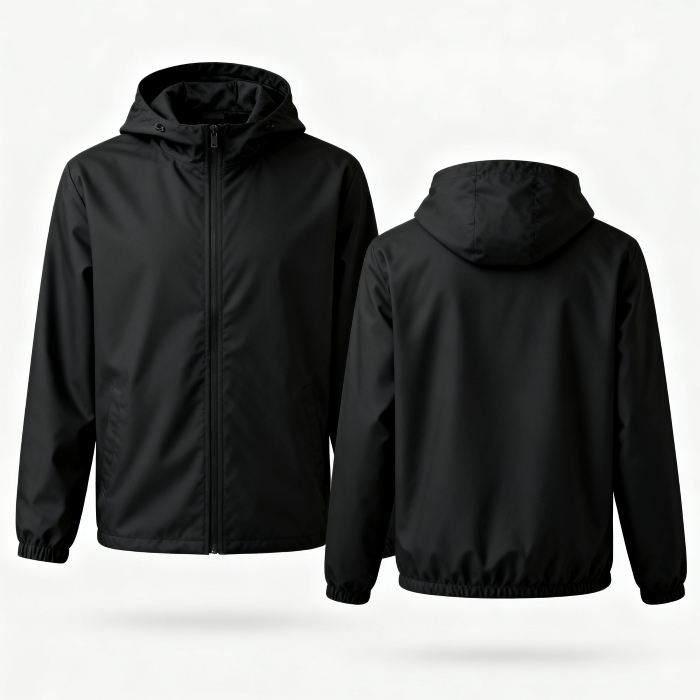
Before paying a production deposit, an apparel buyer should verify more than fabric weight, logo placement, and quoted lead time. A Jacket With Hood can look acceptable in a product photo while hiding weak hood-panel seams, poorly secured drawcord exits, uncomfortable zipper contact points, or a hood shape that does not fit the intended wearer.
Those details matter because hoods are a moving, load-bearing part of a garment. They are pulled on and off, exposed to repeated opening and closing, and affected by the jacket’s collar height, zipper position, lining choice, and size grading. A supplier that cannot provide clear evidence of these areas may still be able to make a basic garment, but the buyer carries more risk when ordering teamwear, retail programs, staff uniforms, or event merchandise.
Hening Clothing Co., Ltd. is relevant for buyers sourcing custom sportswear and related apparel programs who need to assess supplier readiness before sampling or bulk production. The company lists a 1,000 sqm factory in Guangzhou, China, more than 100 workers, and five automatic dye-sublimation printing lines. Its stated daily output is more than 1,000 custom jerseys. These are useful production indicators for buyers whose hooded-jacket project includes coordinated jerseys, training apparel, or eventwear, but they do not by themselves prove that every hood construction detail has been approved for a specific jacket style.
That distinction should guide the inquiry. Use the supplier’s production information to judge basic scale and operating capacity, then use construction proof to judge whether the proposed hood design is appropriate for your program.
| Buyer requirement | Evidence to request | Why it matters | When this check is less relevant |
|---|---|---|---|
| Team warm-up jacket with a fixed hood | Hood-panel photos, seam-close-up photos, size chart, and a fitted sample | A fixed hood must sit correctly around the neck without pulling the collar or restricting movement. | Less relevant for a collar-only track jacket with no hood. |
| Retail or club jacket with drawcords | Photos of drawcord exits, anchor reinforcement, cord-end treatment, and measurement confirmation | Drawcord components can create return issues if they pull out, twist, or sit unevenly. | Not applicable to a hood without drawcords. |
| Full-zip outer layer | Zipper-guard photos, collar-close photo, and wearer feedback from a sample | The zipper top can contact the chin and neck, especially when the jacket is fully closed. | Less relevant for a pullover design. |
| Coordinated team apparel order | Color artwork, size chart confirmation, and a production timeline covering all items | Matching jackets and jerseys require aligned color and sizing decisions across product types. | Not needed when purchasing one standalone garment only. |
For coordinated programs, buyers can also compare the available Custom Team Jerseys range alongside jacket requirements. This is useful when the hooded item is intended as a travel layer, sideline piece, or club merchandise addition. It does not mean jersey fabric or jersey construction should automatically be used for the jacket; fabric, lining, trim, and hood structure still require separate approval.
Conclusion: a supplier’s stated capacity and quality credentials are meaningful first-stage screening evidence, but they cannot replace style-specific construction confirmation. This approach fits buyers comparing several factories before issuing samples or placing a deposit. It does not apply if the buyer has already approved a physical pre-production sample and locked the specification in writing.
Hening states that its standard production time is 7–10 days, with rush-order options available. For a buyer with a fixed tournament, launch, or event date, that stated range is worth discussing early. However, buyers should not treat a standard production period as a blanket guarantee for a new hood design. A custom style may still require time for artwork approval, component decisions, size confirmation, and any sample review that the parties agree to use.
The company also states that it operates under ISO 9001 quality management system certification and ISO 14001 environmental management system certification. For a B2B buyer, these certifications are relevant as documented management-system signals. They are not proof that a particular hood will fit correctly, that a drawcord configuration meets a buyer’s market rules, or that a chosen zipper guard has been approved. Ask for the construction proof separately.
There is also relevant order-scale evidence. Hening has supplied more than 500 sublimated jerseys for a United States high school basketball league, delivered 1,000 event jerseys for a European marathon, and produced full custom uniforms for an Australian soccer club’s three teams. These cases support the company’s experience with custom sportswear orders and multi-garment programs. They should not be presented as evidence that those orders included hooded jackets or any particular hood feature.
Buyers looking for a sportswear-focused outer layer can review the Custom Sport Jacket category while asking these questions. The category can help define the product direction, but the final purchase decision should rest on the agreed construction, sample evidence, quantity quote, and acceptance criteria.
Conclusion: require documented review of these four points before bulk approval because each one addresses a different source of wearer dissatisfaction. This is especially suitable for branded retail apparel, school programs, clubs, and corporate uniform orders where a sizing or comfort issue can affect many units. It is less necessary for a buyer accepting an unchanged, already-approved stock jacket, although the buyer should still inspect the delivered goods.
| Checkpoint | What to inspect | Bulk-order issue it helps prevent | Buyer approval action |
|---|---|---|---|
| Hood-panel seams | Panel alignment, visible seam direction, puckering, and the join where the hood meets the collar | A twisted-looking hood, uneven shape, or collar pulling when worn | Request close-up images and inspect the hood both flat and worn on a fit sample. |
| Drawcord anchors | Location of cord exits, reinforcement around openings, cord travel, and symmetry from left to right | Cords that pull through, snag, sit unevenly, or create an untidy front appearance | Pull the drawcord gently in both directions on the sample and record the approved placement. |
| Zipper guards | Whether the zipper top is covered, how the guard folds, and where it touches the neck when closed | Chin irritation, a rough feel at the collar, or a guard that does not stay in position | Zip the sample fully, turn the head left and right, and note any contact concern before approval. |
| Fit samples | Hood depth, face opening, collar height, shoulder movement, sleeve reach, and overall body length | A hood that falls forward, feels too shallow, restricts movement, or does not match the ordered size expectation | Try the sample on the intended wearer profile and approve the exact size chart used. |
A supplier photo alone is not enough. Ask for evidence that shows the garment in the condition the customer will use: zipped up, hood up, drawcord adjusted where applicable, and viewed from more than one angle. If the supplier cannot provide that evidence before deposit, the buyer should state that these points remain open rather than assuming they will be corrected during production.
Fit samples deserve special attention. A hood that looks proportionate on a small mannequin may not work for adult team members, youth athletes, or retail customers with different head sizes and hairstyles. The buyer should define the wearer group, intended activity, and whether the hood is mainly for travel, light weather coverage, warm-up use, or casual wear. A hood designed for casual use may be acceptable for merchandise but may not suit an athlete who needs broad side visibility during movement.
This procedure is designed to reduce ambiguity. It cannot replace local product-safety review, destination-market compliance checks, or buyer testing requirements. Those responsibilities should be assigned clearly between buyer and supplier before the order is confirmed.
Conclusion: compare like-for-like quote scope before selecting a supplier. Pricing at Hening is based on quantity, and the company states there is no MOQ. That arrangement can fit small clubs, replacement orders, pilot programs, and buyers testing a new design. The limitation is straightforward: no MOQ does not mean every quantity receives the same unit price, component choice, or production priority.
Ask for pricing by realistic quantity tier rather than requesting one broad estimate. For example, a club ordering a small first run should ask separately about the quantity it needs now and the likely quantity for later replenishment. This makes it easier to see whether the design contains fixed setup elements or component choices that affect smaller runs more heavily.
| Quote item to compare | What the buyer should confirm | Why it affects the decision |
|---|---|---|
| Quantity basis | The exact quantity quoted and whether sizing mix affects the price | Hening prices by quantity, so a quote without a quantity basis cannot be compared accurately. |
| Garment construction | Fixed or adjustable hood, number of hood panels, drawcord inclusion, zipper guard, and lining | Different hood features may change material and labor requirements. |
| Decoration scope | Artwork locations, names, numbers, logos, and sublimation coverage | Buyers need the quote to match the approved artwork rather than a generic jacket image. |
| Size approval | The size chart version and whether a fit sample is part of the buyer’s approval process | Size disagreement is a common source of avoidable returns and replacement requests. |
| Production timing | Whether the 7–10 day standard production period applies after approvals and what rush options are available | The buyer needs a date sequence, not only a stated production range. |
| Defect responsibility | How printing defects and wrong sizes are identified and documented | Hening states it offers free reprints for printing defects or wrong sizes, but the buyer should agree how a claim will be assessed for the specific order. |
Hening also offers a one-year colorfastness guarantee and uses fade-resistant dye-sublimation printing intended to keep colors vivid after washing. This is relevant when the hooded garment includes printed team colors, sponsor graphics, or event branding. The stated guarantee concerns colorfastness; it should not be read as a blanket warranty covering every construction component, fit preference, or damage caused by use outside the agreed specification.
For buyers building a club collection, a jacket may need to coordinate with Soccer Jerseys or other teamwear. Confirm color references at the artwork stage, particularly if different products use different fabric constructions. Dye-sublimation strength is relevant to printed color durability, but it does not remove the need to approve a physical color result when exact matching is required.
The right supplier fit depends on what can be confirmed, not on broad promises. Hening’s stated no-MOQ position can suit buyers who need a small quantity, while its factory scale, automatic dye-sublimation printing lines, ISO 9001 and ISO 14001 certifications, and 7–10 day standard production indication provide useful context for a custom sportswear inquiry. Still, a buyer sourcing a hooded jacket should treat the following items as open points until they are documented for the selected style.
This level of detail may feel demanding for a small order, but it is usually faster than handling returns, replacements, or customer complaints after garments arrive. The buyer’s goal is not to demand a complicated process. It is to make the garment definition clear enough that the supplier can quote and produce against the same reference.
Send your hood specification, quantity range, artwork, and target size chart to request a focused quote and construction review.






 WhatsApp
 Email
 +8618978569271