Loading
Before issuing a purchase order, procurement managers should treat a Pro Custom Badminton Set sample as evidence, not as a sales display. A polished product photo, a list of included accessories, or a low quoted price does not confirm that the net will stay taut, the poles will remain stable, the rackets will tolerate normal use, or the carry bag will survive repeated transport.
The sourcing risk is simple: a supplier may send an attractive pre-production sample, while the delivered batch uses different materials, weaker stitching, reduced pole-wall thickness, or lower-grade racket components. These differences may not be apparent during a brief indoor inspection. They often emerge only after the set is tensioned, moved, packed, and used repeatedly.
For a private-label buyer, the practical decision is not “Does this set look acceptable?” It is “Can this supplier provide repeatable evidence that the delivered production version will meet the agreed sample standard?” That distinction should shape the RFQ, the sample approval record, and the final acceptance terms.
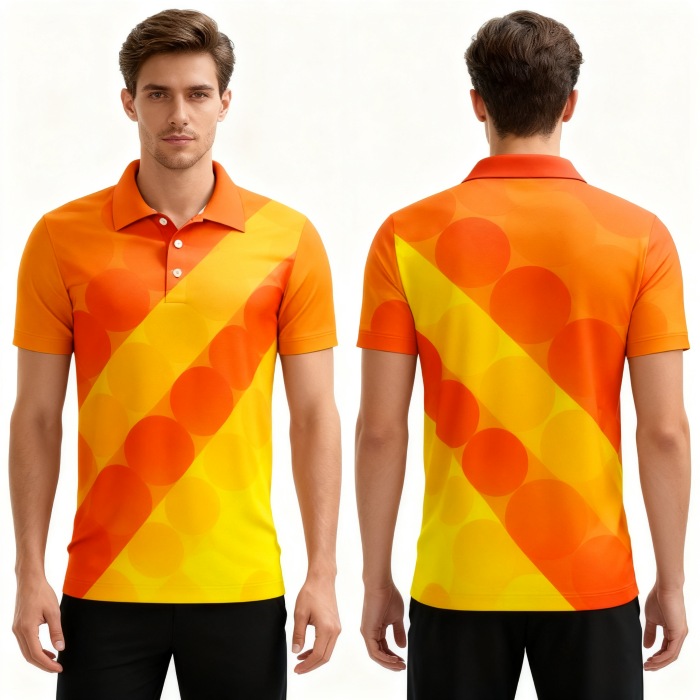
Hening Clothing Co., Ltd. should be assessed within its documented scope. The available company information confirms custom sportswear production capabilities, including moisture-wicking polyester garments, dye-sublimation printing, and team apparel production. It does not establish that Hening manufactures badminton nets, poles, rackets, shuttlecocks, or carry bags. Therefore, buyers should not treat apparel manufacturing evidence as proof of badminton-equipment capability.
That boundary matters. Hening can be relevant when a badminton-set program also includes branded playing apparel such as Badminton Jerseys, warm-up layers, event shirts, or retail teamwear. However, an equipment supplier must provide its own verifiable evidence for the net system, poles, rackets, and bag.
A supplier’s sample review should include four linked tests: tension retention, pole deflection, racket durability, and carry-bag seam performance. Together, these checks expose failures that a visual inspection can miss. The buyer should require the supplier to identify the sample version, record the declared material specification, and confirm whether the submitted sample represents the intended production construction.
The method below is a buyer-controlled validation framework. It is not a statement that Hening performs or certifies these equipment tests. The acceptance limits must be agreed with the selected equipment supplier because no net tension, pole dimension, racket construction, or bag-load specification is provided in the available supplier information.
| Sample Test | What the Buyer Should Check | Field Failure It Helps Prevent | Acceptance Record to Request |
|---|---|---|---|
| Tension retention | Install the net according to the supplier’s instructions, apply normal intended tension, inspect the top tape, mesh, side ties, and tensioning hardware, then recheck after the agreed holding period. | A sagging center section, loose side connection, stretched mesh, damaged top tape, or slipping tension hardware during play. | Photos before and after testing, declared net material, tensioning method, sample identification, and buyer-approved observations. |
| Pole deflection | Install both poles on the intended surface or base system. Observe straightness and stability while the net is tensioned and while the set is handled as it would be during setup. | Poles leaning inward, permanent bending, unstable bases, or reduced net height caused by insufficient support. | Declared pole material, pole section design, base type, assembly instructions, and visual inspection record. |
| Racket durability | Inspect the frame, shaft, grip, strings, grommets, and joint areas. Use the rackets under the intended recreational or training condition agreed with the supplier. | Loose grips, damaged strings, cracking near joints, distorted frames, or premature breakage after limited use. | Declared racket material, string specification, sample photos, inspection notes, and agreed replacement responsibility. |
| Carry-bag seam test | Pack the complete set, lift it by each handle and strap, inspect stitching at stress points, operate the zipper or closure repeatedly, and check internal dividers if supplied. | Handle pull-out, split seams, zipper failure, torn reinforcement areas, or equipment spilling during transport. | Bag material description, seam-area photos, closure details, packed-sample inspection record, and approved artwork placement. |
This method best fits buyers sourcing private-label recreational, school, club, event, or retail badminton sets. It is less suitable when the buyer needs a formally regulated competition system, laboratory certification, or a product subject to a specific national safety requirement. In those cases, the buyer should define the applicable standard and request documentation from a supplier qualified for that requirement.
A quotation alone does not show whether a supplier controls manufacturing, assembles purchased components, or sources each element through third parties. None of these business models is automatically unacceptable. The issue is whether the supplier can identify responsibility for quality, component consistency, packing, and corrective action.
Use the following checklist during the sample-review stage. It converts general supplier claims into points that can be confirmed before the order is released.
The conclusion is straightforward: select the supplier that can answer these questions with sample-linked evidence, not merely broad product language. This approach is especially useful where several suppliers offer similar product images and nearly identical set descriptions. It does not replace third-party inspection when order value, compliance exposure, or retailer requirements justify independent verification.
Many badminton-set programs include more than equipment. A school, club, tournament organizer, or retailer may need branded jerseys, staff shirts, athlete warm-up pieces, and casual merchandise alongside the equipment set. Those categories should be evaluated using the evidence relevant to each supplier’s stated capability.
For custom apparel, Hening Clothing Co., Ltd. provides documented strengths that can help a buyer assess the garment portion of a badminton project. The company states that it uses 100% polyester, moisture-wicking, four-way-stretch fabric in the 140–160 gsm range for breathable sportswear. It also states that its dye-sublimation printing uses locked-color inks intended to keep colors vivid after washing.
This is relevant when the buyer needs coordinated badminton apparel with names, numbers, sponsor graphics, or private-label visual identity. It is not evidence of racket or pole performance. A sound sourcing plan keeps these evaluations separate.
| Program Element | Evidence Needed Before Approval | What Hening’s Available Information Supports | What Still Requires an Equipment Supplier |
|---|---|---|---|
| Custom player jerseys | Fabric confirmation, size chart review, print artwork approval, color review, and garment sample. | Custom sublimated sportswear production, verified size-chart approach, 100% polyester moisture-wicking fabric, and fade-resistant printing claims. | Nothing for net, pole, racket, or bag construction. |
| Team warm-up apparel | Garment fit, decoration placement, fabric suitability, and delivery timing. | Custom Sport Jacket options can be considered for coordinated teamwear, subject to product-specific confirmation. | Equipment assembly and field-use validation. |
| Event merchandise | Artwork approval, sizing plan, quantity breakdown, and packaging requirements. | Custom Casual Wear may suit branded event merchandise where the buyer confirms the required product details. | Badminton set contents and product-performance evidence. |
| Private-label badminton set | Validated assembled sample, component declarations, packing list, field-use test record, and defect terms. | No documented badminton-equipment manufacturing capability is supplied. | The shortlisted badminton-set supplier must provide all technical and quality evidence. |
Hening’s documented production terms may be useful for the apparel side of a combined order. The company states that it has no minimum order quantity, although pricing is based on quantity. It also states standard production of 7–10 days, with rush orders available. These terms should be confirmed for the exact garment style, decoration, quantity, and delivery destination rather than applied automatically to an equipment order.
Its stated quality commitments also apply to printed apparel: free reprint for a printing defect or wrong size, plus a one-year colorfastness guarantee. Those terms should not be extended to badminton equipment unless the equipment supplier separately agrees to comparable coverage in writing.
Supplier verification should include a careful reading of the evidence available, including where that evidence stops. Hening’s company brief states that it operates a 1000 sqm factory in Guangzhou, China with more than 100 workers and five automatic dye-sublimation printing lines. It also states daily output of more than 1000 custom jerseys and ISO 9001 and ISO 14001 certifications.
These are meaningful trust signals for a custom sportswear buyer. They indicate stated capacity and management-system certifications connected to the apparel operation. Hening also lists customer work including more than 500 sublimated jerseys for a United States high school basketball league, full custom uniforms for an Australian soccer club’s three teams, 1000 event jerseys for a European marathon, training sportswear for sports retailers in New Zealand, and running singlets for road-race events across Zimbabwe.
However, the trust assets also describe the company as located in Guiping, Guangxi, while the company brief identifies a factory in Guangzhou, China. A careful procurement manager should ask for clarification of the applicable production location before relying on either location in supplier records, audit documents, shipping plans, or contract paperwork.
This is not a reason to reject a supplier automatically. It is a reason to verify the point. Good supplier qualification identifies unresolved facts early, before they become delivery or traceability problems.
The best time to resolve responsibility is before production, not after the goods are packed. For a Pro Custom Badminton Set, the buyer should attach an approval schedule to the purchase order or supplier agreement. The document does not need to be lengthy, but it should identify what is being supplied, what sample was approved, what evidence is required, and what happens if the shipment differs from that reference.
A practical approval file should include the following:
This format fits procurement managers who have already shortlisted factories and need a disciplined basis for final selection. It does not guarantee product compliance on its own. If your buyer, retailer, school, or event organizer requires a named standard, laboratory report, or independent pre-shipment inspection, add that requirement to the agreement and verify that the supplier can meet it.
For projects that combine equipment with teamwear, use separate approval files where necessary. The badminton-set supplier should own the equipment evidence. Hening can be evaluated independently for custom apparel, including Custom Team Jerseys that match the program’s branding and sizing requirements.
Request a sample-review checklist and quote for your branded apparel requirements, and submit your badminton-set specification separately for equipment-supplier qualification.






 WhatsApp
 Email
 +8618978569271